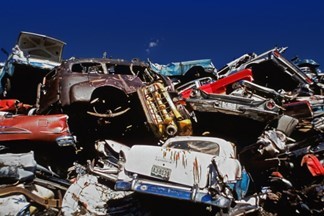
Scrapyards may be associated with old, worn-out vehicles that get dumped once they’re no longer usable, but that couldn’t be further from the truth. They may deal in junk cars, but they’re the ones who take apart those rusted, crumpled, or faded shells and find all the parts that still have plenty of life left in them. The fact is that the average junk car still has thousands of dollars’ worth of parts somewhere inside it; all it needs is someone to take it apart and find out which parts are still viable. If the vehicle is in fairly good condition (apart from the fact that it can’t actually run), many of the parts can be refurbished and sold. Even if they aren’t in working order, up to 85% of almost all vehicles can be either reused or recycled as scrap metal.
Speaking of finding value in junk cars, these vehicles are more valuable now than ever. You could probably search “cash for junk cars near me” and find several companies who’d buy your car on the spot in a matter of seconds. Say you find someone who gives you a competitive price for your junk car, and they haul it off to the junkyard. What happens next? Let’s take a closer look.
The depollution process begins
The first step of the recycling process is to remove the various fluids. There’s usually some gasoline left in the tank, and of course there’s brake fluid and engine oil too, among other things. Junkyards have to follow strict regulations when disposing of these fluids, to make sure that none of them end up seeping into the groundwater.
The vehicle is dismantled
This is where the scrapyard mechanics find out what they’re really working with. The engine block is where a lot of the valuable parts are located, but that’s only part of the car’s potential value. They might also be able to resell the axles, seats, stereo system, and more. The typical scrapyard has connections with mechanics and used car dealerships in the area, supplying them with used car parts and keeping an eye out for in-demand models that could be refurbished.
What’s left after taking out the usable parts is crushed and shredded
This is the image that most people associate with junkyards – the car shell being crushed in a giant compactor until it’s little more than a metal pancake. Once that’s done, it’s shredded into small pieces, and the steel and aluminum are separated from the other materials. With about 85% of US steel coming from recycled sources, there’s always plenty of demand for all the steel that junkyards can produce. The same goes for aluminum; demand is high, and the opportunity to use recycled aluminum is both more efficient and more cost-effective.
Other materials are recovered from what remains
The 15 to 20% of the car that can’t be recycled in any way is called Auto Shredder Residue (or auto-fluff), and it’s made up of wood, plastic, dirt, rubber, paper, glass, lead, cadmium, and whatever else can’t be recycled. The current procedure is to send this material to landfills, and while it definitely isn’t ideal to dump things like lead and cadmium along with wood and glass, we’re making technological advances in recycling every year; hopefully things will improve in the near future.
Once the auto-fluff is disposed of, what’s left is metal. It’s further sorted into ferrous or non-ferrous lots; it isn’t as valuable as steel, but it’s still widely used in many industries, including the auto manufacturing industry.
The scrap metal is transported to manufacturing plants
The last step is taking the various types of scrap metal to the manufacturers who’ve purchased them. As mentioned above, it’s beneficial for everyone involved to use recycled scrap metal from junk cars. Not only does it help keep profit margins healthy; it also reduces environmental impact, since there’s less need to produce new steel.
How recycling junk cars impacts you
A junk car may be inoperable, but in many cases the majority of the parts are still in good shape. The main reason why people can’t take advantage of this themselves is because they simply don’t have the technical expertise to take an entire car apart, or the time to find buyers for all the parts. This is why they sell their junk cars to scrapyards instead – and why scrapyards are eager to buy them.
If you’re buying rather than selling, scrapyards can be a valuable resource. They generally sell most of their inventory to mechanics or car dealerships, but many of them welcome anyone who wants to show up and search for a specific part. Say you need to replace an axle, but you’d rather not have to pay for a brand-new one. A junkyard might have exactly what you need, for significantly less than what a new one would cost. The more volume a junkyard processes, the better your chances of finding what you’re searching for. Just to give you an idea of how many parts you can get from a junkyard, here’s a list of some of their most in-demand items:
- Front-end parts (like steering boxes, anti-sway bars, and control arms)
- Headlight assemblies, reflectors, and tail light lenses
- Transmissions
- Engines
- Starters
- Alternators
- Axles
- Tires/wheels
- Computers and various electrical components
- Interior parts (like dash pads, door panels, and seats)
- Brake parts (like brake drums, rotors, and power boosters)
If you’re shopping for parts at a scrapyard, remember that not all of them can be completely refurbished after a certain amount of wear and tear. For example, used transmissions can be hit-and-miss due to significant mileage or bad driving habits by the previous owner. Then there are parts like calipers and brake pads, which you simply shouldn’t buy used. If you aren’t sure about the part you’re hoping to get from a junkyard, a reliable mechanic can give you some advice on the matter. Once you’ve spent some time examining used car parts at the scrapyard, you’ll probably never look at a non-running car the same way again.