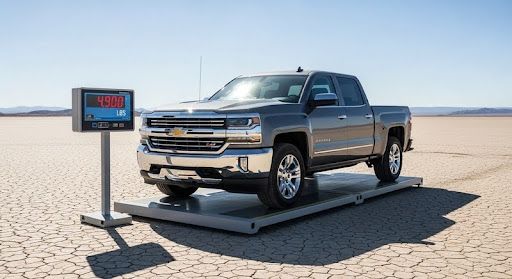
 Finding the exact weight of a Chevy Silverado isn’t as simple as reading a single number off a spec sheet. Because these trucks are so customizable, their weight shifts based on how you build them. In general, a Chevy Silverado weighs between 4,400 pounds for a basic 1500 Work Truck and can exceed 6,950 pounds for a fully loaded Silverado 3500 HD. This wide range exists because the truck’s purpose changes—from a light-duty daily driver to a heavy-duty towing machine.
The final weight on the scale depends entirely on the choices you make at the dealership. The specific model (1500 vs. 2500 vs. 3500), the cab size, the bed length, and even the engine under the hood all play a role. A truck built for fuel economy will naturally weigh less than one built to pull a massive horse trailer up a mountain.
Understanding these variations is crucial for safety and performance. Looking at how different car models evolve over time, such as changes in weight, engines, and features, can help put these differences into perspective. Knowing car models and their reliability can be beneficial before buying a used vehicle. Being aware of your specific truck’s weight allows you to calculate exactly how much cargo you can carry without overloading the suspension or putting extra strain on the brakes.
Chevy Silverado Weight & Trim Levels
When you pick out a Silverado, you usually start with a “Trim Level.” This is just a way of categorizing the features included in the truck. Lower trims, like the Work Truck (WT), are designed to be lighter and more utilitarian. They often have fewer luxury materials, manual seats, and lighter wheels. This keeps the curb weight down, which maximizes the amount of payload you can throw in the bed.
On the other hand, premium trims like the High Country or off-road trims like the ZR2 add significant weight. When you add heated leather seats, sunroofs, advanced sound systems, and heavy-duty steel skid plates for off-roading, the poundage adds up quickly. A fully equipped ZR2, for example, carries extra armor and specialized suspension dampers that make it one of the heaviest trucks in the light-duty class.
2025 Chevy Silverado 1500 Weight Specifications by Configuration
The Silverado 1500 is the most popular truck in the lineup, and it offers the most variety in terms of weight. To understand what your truck weighs, you have to look at the Cab Configuration. The size of the passenger cabin is the biggest physical variable in the truck’s construction.
Regular Cab Curb Weight and GVWR
The Regular Cab is the lightest configuration available. It features two doors and a single row of seats. Because it uses less steel and glass than the larger models, its curb weight typically sits around 4,400 to 4,500 pounds.
This lighter frame is a huge advantage for commercial drivers. Since the truck itself weighs less, more of the engine’s power can be used to haul cargo. That is why you often see Regular Cab models used as fleet vehicles or work trucks. They offer the highest payload potential relative to their size.
Double Cab Weight Specifications
The Double Cab serves as the middle ground. It adds a second row of seats and four doors, but the rear doors and rear legroom are smaller than the full Crew Cab. This configuration weighs more than the Regular Cab, typically ranging between 4,700 and 4,800 pounds.
Drivers who choose the Double Cab usually need to carry extra passengers occasionally but don’t want the extra bulk of a full-size family hauler. It balances the need for interior space with the desire to keep the truck relatively agile.
Crew Cab Weight Breakdown
The Crew Cab is the heaviest of the bunch. With four full-sized doors and a spacious rear seat area, this truck is built for comfort. Crew Cab models often weigh between 4,900 and 5,300 pounds, depending on the trim and engine.
While the extra weight slightly reduces the maximum payload capacity compared to a Regular Cab, the trade-off is worth it for families or work crews who need daily comfort. The larger cabin structure requires more material, and Crew Cab models are often paired with higher trim levels, further increasing the total mass.
Heavy-Duty Truck Weights: Silverado 2500 & 3500
When you step up from the 1500 series to the Heavy-Duty (HD) lineup, the weight numbers jump significantly. These trucks are built differently. They use thicker steel frames, heavier axles, and massive suspension components designed to handle extreme abuse.
Chevy Silverado 2500 Weight
The Silverado 2500 HD bridges the gap between a daily driver and a dedicated workhorse. The starting weight for a 2500 usually sits between 6,100 and 6,800 pounds. This is nearly a ton heavier than a base model 1500. The extra weight comes from the reinforced chassis required to support higher payload ratings and fifth-wheel towing capabilities.
Chevy Silverado 3500 Weight
The Silverado 3500 HD is the heavyweight champion of the family. If you choose the “dually” option (Dual Rear Wheels), the weight increases even further due to the extra tires, wheels, and wider rear axle housing. A fully loaded 3500 High Country Dually can easily tip the scales at over 6,900 pounds. This mass provides the necessary stability to tow massive trailers that can weigh over 30,000 pounds.
Engine Options Impact on Overall Weight
The engine you choose is one of the single heaviest components in your truck. It sits right over the front axle, so your choice here dramatically affects the truck’s balance and total mass.
The standard TurboMax engine in the 1500 series is relatively light, helping keep the front end agile. Moving up to the 5.3L or 6.2L EcoTec3 V8s adds moderate weight but provides that classic truck rumble and power.
How Much Does a Duramax Engine Weigh?
The biggest weight penalty comes with the diesel option. The 6.6L Duramax Turbo-Diesel V8 is a massive piece of machinery. Because diesel engines rely on high compression to ignite fuel, the engine block must be built with thicker iron walls to contain that pressure.
A standalone 6.6L Duramax engine weighs approximately 835 pounds. When you swap a gas engine for this diesel beast, you are effectively adding the weight of three large adults to the front of your truck permanently. However, this extra weight is necessary to generate the massive torque numbers required for heavy towing.
Two-Wheel Drive vs Four-Wheel Drive Weight Differences
Another major factor is the drivetrain. Two-Wheel Drive (2WD) trucks are simpler and lighter. They send power only to the rear wheels, which requires fewer parts.
Choosing Four-Wheel Drive (4WD) adds complexity and weight. To power all four wheels, the truck needs a transfer case, a front differential, and additional axle shafts. These components typically add 200 to 300 pounds to the truck’s curb weight. While this reduces your payload capacity slightly, the trade-off is essential for anyone driving in mud, snow, or loose gravel.
Weight Impact on Towing and Payload Capacity
Understanding weight isn’t just about curiosity; it is about safety and legality. To know what your truck can do, you need to understand two key terms: Curb Weight and GVWR (Gross Vehicle Weight Rating).
Curb Weight is what the truck weighs when it’s sitting empty in your driveway with a full tank of gas. GVWR is the maximum legal weight the truck can weigh when fully loaded with people, cargo, and fuel.
The relationship is simple: GVWR minus Curb Weight equals Payload Capacity.
If your truck is heavier (high curb weight), you have less room left over for cargo (lower payload), unless the manufacturer has rated the frame for a higher GVWR. This is why a lightweight Regular Cab truck can often carry more mulch in the bed than a luxury Crew Cab.
However, a heavier truck isn’t always bad. When towing a large camper or boat, a heavier tow vehicle is less likely to be pushed around by the trailer in high winds. The physical mass of the truck acts as an anchor, keeping the combination stable on the highway. For more context on why vehicle mass plays such a big role in safety and handling, you can read about the average weight of a car and why it matters.
Final Words
Choosing the right Chevy Silverado isn’t just about picking the color or the coolest wheels; it is about understanding how the weight of the truck impacts its job. Whether you need the lighter, agile nature of a 1500 Work Truck or the planted, heavy-duty mass of a 3500 Dually, every pound serves a purpose.
By knowing these weight figures, you can ensure you pick a truck that balances fuel efficiency, payload capacity, and towing stability perfectly for your specific needs. Always check the door jamb sticker on the specific vehicle you are buying to get the exact numbers, as even small accessories can change the final weight.