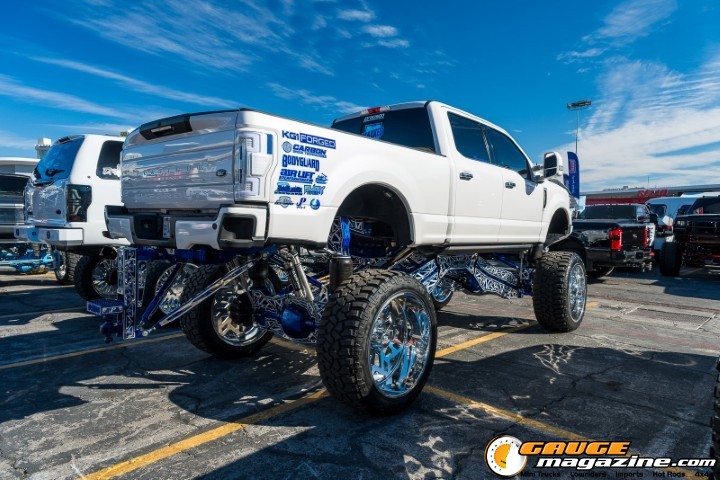
 Over the last ten years, the diesel performance community has expanded dramatically. The trucks coming out of enthusiast garages nowadays are almost unrecognizable as the stock versions they started out as. While initially, it was just a niche group of people who wanted to get more power from their working trucks, today it has turned into a full-fledged modification culture with its own specialists, events, and an ever-expanding and more capable aftermarket parts ecosystem.
The attraction is quite straightforward. A factory diesel truck/Cummins-powered Ram, Duramax-equipped GM truck, or a Power Stroke Ford comes with a conservative tuning that leaves a lot of performance untapped. The engineering margin is genuine, and the aftermarket has come up with ways to reliably reach it. For the passionate, the difference between the factory output and what the platform can really do is both the lure and the obsession.
Tuning: The Foundation Everything Else Builds On
If there is one change that has the greatest impact on performance relative to cost, it has to be an ECM tune. Phenomenally beneficial, it is a recalibration of the engine’s electronic control module that alters fueling, adjusts timing, sets target boost levels, and selects transmission shift points so as to unleash the power that the components are already capable of delivering. Diesel engines in their basic, unmodified state are tuned conservatively; as such, their calibration is set to meet a balance of fuel economy, emissions compliance, durability without relying heavily on maintenance, and enough power to suffice the widest possible range of usage scenarios, among other things. A performance tune will cut out those conservative buffers.
The magnitude of the tune alone-induced power increase is dependent on the vehicle platform as well as the quality of the tune but in most up-to-date diesel platforms, without any breaker posing changes in the underlying hardware, power gains in the 80 to 150 hp range are quite typical. If a 400-horsepower truck comes from the factory, that is a significant step that would very much alter the very nature of the vehicle, especially in the mid-range torque that diesel drivers use most in the towing and everyday driving situations.
Tune quality varies considerably across the market, and the difference between a well-developed tune and a poorly calibrated one goes beyond power numbers. A good tune maintains safe EGT limits, doesn’t push injection timing into ranges that stress pistons and rods beyond their design limits, and accounts for the specific platform’s known tolerances. Reputable suppliers like patriot diesel who focus specifically on diesel performance, understand these platform-specific nuances in ways that generic tuning providers often don’t and that knowledge is what separates a tune that makes power reliably from one that eventually causes expensive damage.
Intake and Exhaust: Letting the Engine Breathe
Once tuning has been implemented, a common next step that most builders consider is changing the way air flows in and out of the engine. Manufacturers have to make compromises when designing intake systems – they have to consider factors like packaging constraints, noise regulations, and cost targets, so maximum airflow is not the top priority. A performance intake will replace the limited factory airbox and inlet piping with a larger-diameter system that provides the turbocharger with more efficient airflow.
The most popular cold air intakes are those that take air directly from a location outside of the engine bay, where the temperatures are lower and the air density is higher. The power increase obtained from a new intake only is quite limited – from 10 to 20 horsepower, depending on the platform. However, the change in turbo spool behavior and throttle response is quite noticeable during everyday use. Once there are other modifications, the intake will be one of the major contributors to the overall system performance.
Intercooler Upgrades and Charge Cooling
Turbo diesels rely on compressor mechanisms to provide pressurized air, which is also hot, resulting in a decrease in density, therefore limiting fuel additions. Hence, the main purpose of an intercooler is to lower the temperature of the compressed air going to the engine. However, the stock unit is normally capable of handling factory boost levels and may not be able to deal with higher boost pressures generated by performance tuning.
A larger core volume and more efficient fin design intercooler reduce the charge air temperature considerably, which means denser intake charge, and more aggressive tuning can be done without being limited by heat. In cases where factory intercoolers represent a significant bottleneck, such as 6.7 Power Stroke and older Cummins engines, an intercooler upgrade results in power gain for the reason that the factory component severely limits the tune’s safe delivery.
Injector and Fuel System Upgrades
For those who are into seriously boosted power numbers and want their diesel truck to be in the genuinely fast category instead of just getting spirited with fuel system upgrades become the main change that enables everything else. The stock fuel system is designed to support stock fueling requirements with a reasonable safety margin; at very high power levels, that margin is gone and the fuel system becomes the limiting factor. Upgrading to different injectors is certainly one of the options.
Larger injectors are able to provide more fuel per cycle, thus the tune can command the amount of fueling needed for high power output without the stock injector duty cycle being maxed out. The downside is that bigger injectors need proper tuning and calibration; an oversized injector with a tune that is not properly developed for it will foul, smoke and perform poorly at light loads even if it is powerful at wide-open throttle.
Turbocharger Upgrades and What They Actually Change
Usually, installing a turbocharger is the point where a street build with a decent level of fun separates from a build aimed at the highest power levels. As a calibration, the factory turbocharger is designed to build boost quickly at low RPM the end result being a torque response that is so strong at the low-end that one can hardly perceive the contribution of a diesel truck but power at maximum output cannot be attained.
A large or more efficient aftermarket turbocharger moving more air at higher boost levels is capable of enabling the engine to support heavy fueling for extreme power numbers. However, the larger the turbo the slower the spool time so that your truck would feel like a monkey at the low RPM part, although it is capable of delivering more power to the end. Most of the building community tackles this by running twin turbo layouts or turbochargers with variable geometry that allows better response over the RPM range.