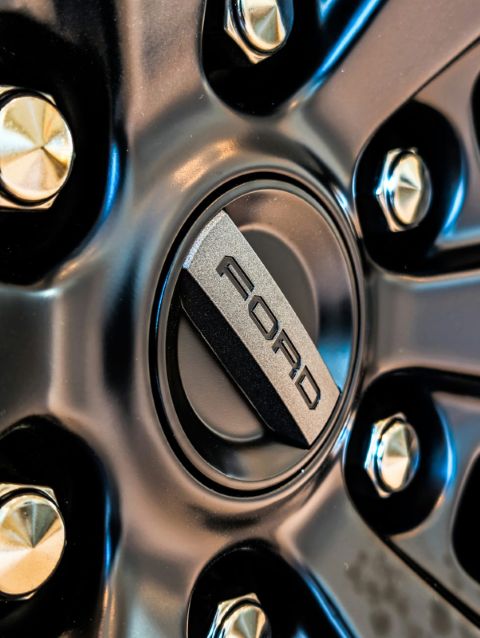
 If you’ve ever been at the parts counter asking for lug nuts and figured “a lug nut is a lug nut,” you’re not alone. I’ve had this conversation more times than I can count. My buddy Marcus called me about three years ago because he’d just bought a set of aftermarket wheels for his 2011 Camry and couldn’t figure out why the lug nuts from his stock wheels weren’t seating right. He was trying to force them on with a breaker bar. I told him to stop immediately.
The short answer: No, they are not universal. Keep in mind that when you buy lug nuts online that they vary by thread size, thread pitch, seat type, and even overall shape depending on your vehicle’s make, model and year. Getting the wrong ones isn’t just an inconvenience—it can be dangerous.
What Makes Lug Nuts Different From Each Other?
There’s actually quite a bit going on with a lug nut that most people don’t think about but it comes down to thread size & pitch, seat type, overall size, and style. Here’s more details about each:
Thread size and pitch — This is the big one and honestly kind of obvious. The thread diameter is that first number you see (like 12mm or 14mm), and the pitch is the second number (like 1.25 or 1.5). A 12mm x 1.5 lug nut will NOT work on a stud that takes 12mm x 1.25. They might look identical sitting in your hand but try threading one on and you’ll cross-thread it immediately. There’s a reason why trucks have HUGE lug nuts that are often mistaken for spikes.
Seat type — This is where the lug nut actually contacts the wheel. There’s conical (tapered at 60 degrees, the most common), ball/spherical, flat seat, and mag seat. When I worked at a shop in Fullerton, CA, the amount of times someone came in with ball seat lugs jammed onto conical seat wheels was alarming. DO NOT MIX THESE UP or you risk some serious wheel damage that’s sometimes irreversible.
Overall size and style — You’ve got your standard hex lugs, spline drive, tuner style, and then there’s lug bolts which are a whole different animal. European vehicles like BMW, Audi, Mercedes, VW—they love lug bolts. The bolt threads directly into the rotor hub instead of going onto a stud.
Common Lug Nut Sizes
Here are the sizes you’ll run into most often:
- 10mm x 1.25
- 12mm x 1.25
- 12mm x 1.50
- 12mm x 1.75
- 14mm x 1.25
- 14mm x 1.50
- 14mm x 2.0
- 7/16″ x 20
- 1/2″ x 20
- 9/16″ x 18
Most Japanese cars—your Toyotas, Hondas, Nissans—tend to run 12mm x 1.5. Lots of American trucks use 14mm x 1.5 or 14mm x 2.0. But that’s a generalization and you really need to verify for your specific vehicle, because even within the same brand things can change between model years so seriously, make sure to double check.
What Happens if You Use the Wrong Lug Nuts?
Bad things happen when you use the wrong lug nuts. Bad, bad things – so make sure to use the right fricking ones. Seriously, it’s not that hard.
Wrong lug nuts can lead to:
- Cross-threaded studs (which means you’re replacing studs now too)
- Wheels that loosen while driving
- Damaged wheel hub mounting surfaces
- In the worst case, a wheel coming completely off at highway speed
I’ve seen aftermarket wheels with ovalized lug holes — the holes get wallowed out because the wrong seat type was used and the lugs were wobbling around for weeks. Two brand new wheels, ruined because of $15 worth of wrong lug nuts. Flat seat lugs on conical seat wheels will do that every time.
The OEM Swelling Problem
A lot of factory lug nuts are actually two-piece construction — there’s a steel inner nut with an aluminum or chrome cap pressed over it. Over time, moisture gets between the two pieces, galvanic corrosion develops, and the cap swells up.
When that happens your regular lug wrench won’t fit over it. I’ve seen guys at shops just hammering a slightly larger socket onto swollen lugs to get them off, which works but it destroys the nut. If you’re dealing with capped OEM lug nuts that are starting to show any signs of swelling, replace them with solid one-piece aftermarket lug nuts before you end up stuck on the side of the road with a flat and a lug wrench that won’t grip anything.
How to Find the Right Lug Nut Size for Your Vehicle
Check your owner’s manual. It’ll list the thread size and pitch. If you don’t have the manual you can pull one lug nut off and take it to AutoZone or any parts store and they’ll match it. You can also look up your vehicle’s specs online — most manufacturers list this information.
If you’re switching to aftermarket wheels, don’t assume your factory lug nuts will work. Most of the time they won’t. The seat type is often different and you might need tuner lugs or a different overall length. Buy the right hardware when you buy the wheels. It’s usually like $30-40 for a full set and it saves you a massive headache.
FAQ
Can I use the same lug nuts for aftermarket wheels as my factory wheels?
Usually no. Most OE lug nuts are designed specifically for factory wheels and won’t properly fit aftermarket rims. The seat type is often different — your stock wheels might use a flat or mag seat while aftermarket wheels typically use a conical seat. Buy a wheel installation kit that matches your new wheels.
Is it safe to drive with a missing lug nut?
It is not safe to drive with a missing lug nut. While you can get away with it temporarily to get to a shop, but it’s not something you should ignore. The remaining lug nuts take on extra stress, which can wear them down over time and cause your wheel to wobble. Get it replaced as soon as you can — a single lug nut costs a couple bucks.
How do I know if my lug nuts are the wrong size?
You can tell the lug nuts are the wrong size if the lug nut doesn’t thread on smoothly by hand for the first few turns, stop. It shouldn’t require force to start threading. Also check that the lug nut sits flush against the wheel — if there’s a gap or it looks like it’s sitting at a slight angle, you’ve got the wrong seat type. Don’t force it.