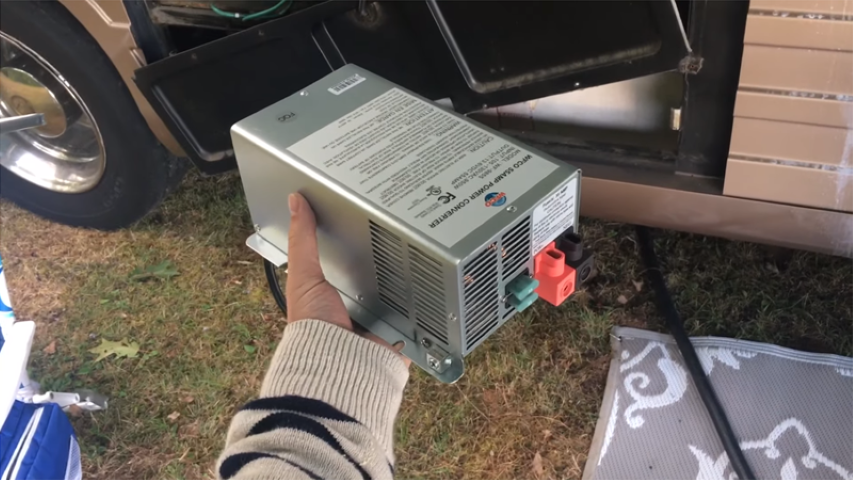
Do you want to know what an RV inverter does? The inverter works in a straightforward manner. It increases the voltage from a direct current power source. It also changes the current running in one direction by running in alternate direction. Simply, it’s a converter type that converts the direct current into an alternating current power.
We use this device, such as the pure sine wave inverter for RV, to allow the battery operate our recreational vehicle appliances. However, you should choose an inverter with enough wattage, so it can run the appliances that it needs to operate at once. It is the reason to know the correct size of an inverter you need. In today’s post, we’re discussing a few important things to know about an RV inverter, including how big is the one to choose to run all the appliances aboard your mobile home.
What Size Inverter Do I Need for My RV?
The inverter can only ensure can work in our recreational vehicle if it is the correct size. So, if you’re traveling while running off a solar panel, for instance, choose the right size of inverter you need. You might just need a small inverter if you’re not using many appliances in your mobile home because you’re just using it for sleeping outside.
A small inverter can also be enough if you’re planning to use it in emergencies when you must use something unplanned. On the other hand, you need a larger inverter if you would like to charge your phone or laptop or run other appliances while camping off the power grid.
In terms of the size, it depends on the kind and the number of appliances/devices/equipment you’re using simultaneously.
You might get some of them running at once with a 1500-watt inverter. But until you realize that it’s not enough, such as if you’re a full time RVer who also runs a microwave, DVD player and television, etc.
In a few technical terms, you should calculate the total wattage of all the appliances you need or want to run in the mobile home. The value you’ll get is the inverter size you need.
However, we recommend choosing one that has at least 20% higher wattage than the total wattage of the appliances, especially if you have appliances using an induction motor that needs twice the wattage rating during start up.
Nevertheless, you can calculate the wattage for your appliances easily by totaling the watts per appliance (usually in amps or amperes). Check this information on the specifications label. When all the amps of the appliances have been totaled, convert that figure into watts by multiplying amps by 120.
The result here is the total watts requirement of your RV appliances and the size of the inverter needed.
[You can also find online calculators to figure out the inverter size you need.]
How to Install Inverter Charger In RV?
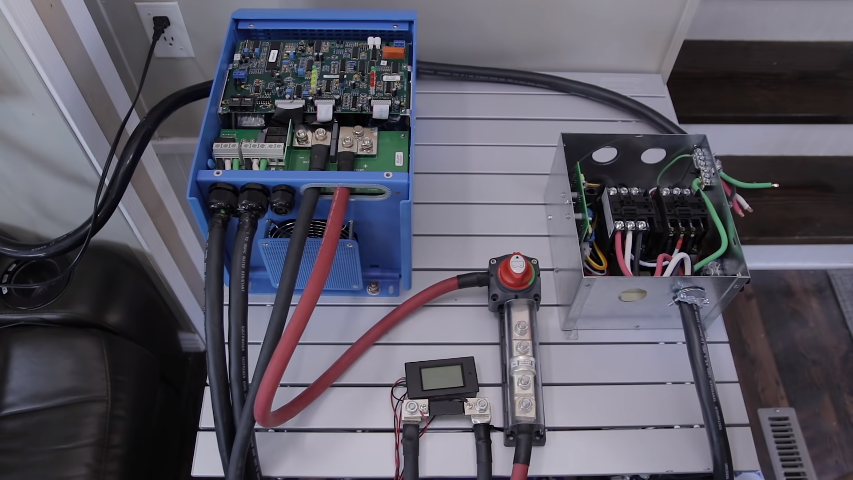
There’s a couple of ways to install it in your RV, but you just must make sure that the inverter output isn’t connected to generator or shore power before it. But nevertheless, you should wire the inverter with a 14 AWG. Another thing is that you should check that your converter is switched off when the inverter is on.
Connecting directly to the AC distribution box using a transfer switch
This method is the simplest way to install the inverter to the recreational vehicle. But then, make sure that you’re using the right kind of switch. It varies if you have a generator or depending on the RV inverter power). If shore power isn’t available, it will select the inverter, but the switch will choose the shore power if it’s available. You should use a split distribution panel to avoid powering the converter using the inverter. Install the converter on its part disconnected to the inverter.
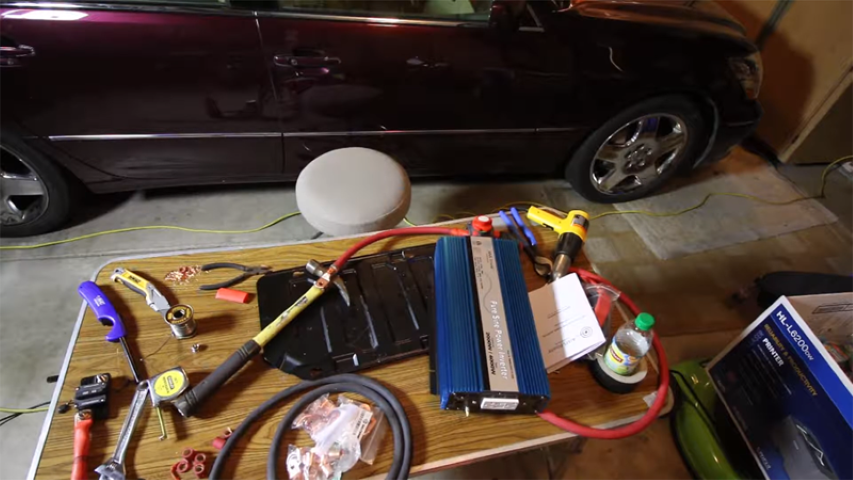
Connecting at least a dedicated outlet to the RV inverter
This method is another way of installing the RV inverter to your mobile home. You just must connect at least a dedicated outlet to the device. You can disconnect current outlets from the distribution box or install new outlets. However, this installation might be tricky if you the outlets are in a not so accessible location. That is why the difficulty level of this installation method depends on the position of your outlets as well as the difficulty in wiring to them.
Installing a 30-amp receptacle on your RV’s exterior
Another way to install the inverter is installing a 30-amp receptacle on the exterior of your vehicle, and then connecting it to your inverter output. So, if you’re using inverter power, all you must do is to unplug your camper, trailer or recreational vehicle from shore power before plugging it into the 30-amp receptacle.
Where Is the Inverter on My RV?
This question is another common one among new RV owners that want to install an inverter that can run their appliances simultaneously. To figure it out, you must check your mobile home or recreational vehicle’s user manual to locate the inverter.
How Big of An Inverter Do I Need for My RV?
Just as we’ve mentioned earlier, you need to select the right inverter size for your RV to operate the appliances you have on it and prevent their damage. Now, let us have an example. A model with 2000W can power up to the same total of watts at once, if you have enough batteries that can support it. In this example, what does a 2000W do? Your standard outlet can be rated at 15A (20V). It means 1800 max watts. Many recreational vehicle owners consider that a 2000W model is enough for what they need. Now, if you are just using laptops and phones, you can choose to one at most 500W.
What does an inverter do? You probably know the answer by now. So, if you’re shopping around for an inverter and figuring out the size you need, refer to the above for guidance in comparing your options. Stay tuned with us for more about things related to RVs.
Do you like custom RV’s? Check out this 1972 Chevrolet C-30 Custom Camper