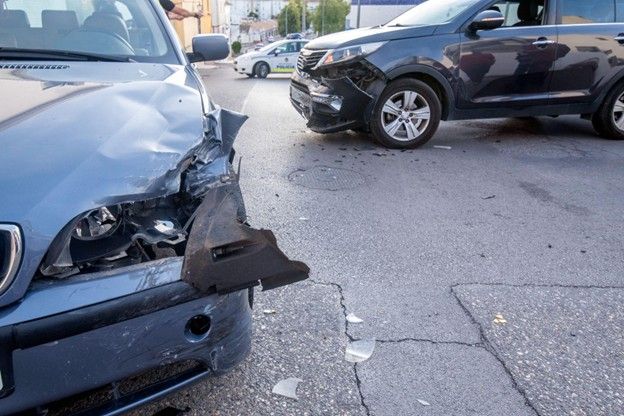
When two or more drivers share responsibility for a collision, determining who pays what becomes a legal question, not just a practical one. New York comparative negligence has a specific framework for handling these situations, and understanding how it works can help you make sense of what to expect if you file a claim or take your case to court.
New York Comparative Negligence and the Pure Comparative Negligence Rule
New York follows what is known as pure comparative negligence, codified under CPLR Section 1411. According to a West Seneca car accident lawyer, this rule allows an injured person to recover compensation even if that person was substantially at fault for the accident. Unlike states that bar recovery once a plaintiff’s fault reaches 50 or 51 percent, New York imposes no such threshold.
The law reduces your award in direct proportion to your share of fault. If a jury finds you 40 percent responsible for a crash and your total damages are $100,000, you would receive $60,000. That math applies regardless of how high your fault percentage climbs.
How Fault Is Assigned
Insurance adjusters, judges, and juries look at a range of factors when dividing fault after a car accident. These include traffic violations, speed, road conditions, witness statements, police reports, and physical evidence from the scene. Each party’s actions are measured against what a reasonably careful driver would have done under the same circumstances.
No single piece of evidence controls the outcome. Fault determinations are often disputed, and the final percentages can shift significantly depending on how the evidence is presented and argued. Gauge Magazine also explains how evidence can affect responsibility in determining fault in a car accident.
The Role of CPLR Section 1412
Under CPLR Section 1412, comparative negligence is treated as an affirmative defense. This means the defendant, not the injured person, bears the responsibility of pleading and proving that the plaintiff’s own conduct contributed to the accident. You are not required to prove that you were entirely free of fault in order to bring a claim.
This distinction matters in practice. If the opposing party fails to raise and support a comparative negligence defense properly, a court may not reduce your damages at all. The burden rests with whoever is seeking the reduction.
What “Pure” Means Compared to Other States
Most states use a modified comparative negligence system with a recovery bar. In those states, a plaintiff who is 50 or 51 percent at fault walks away with nothing, depending on the state’s specific threshold. New York does not follow that model.
Even a plaintiff found 90 percent responsible for an accident can theoretically recover 10 percent of their total damages under New York comparative negligence law. This makes the state’s approach more permissive than the majority of jurisdictions, though it also means defendants routinely argue for higher fault percentages to minimize what they owe. For comparison, Gauge Magazine has also covered California’s comparative negligence rule and how fault can affect accident claims in another state.
Assumption of Risk and Its Limits
CPLR Section 1411 also covers assumption of risk as a form of culpable conduct. In a car accident context, this typically comes up when a passenger knowingly rode with a driver who was impaired or otherwise unfit. Like comparative negligence, assumption of risk reduces the plaintiff’s recovery rather than eliminating it.
Courts interpret the assumption of risk narrowly in most vehicle cases. Simply riding in a car does not mean you accept the risk of another driver’s negligence.
How Fault Percentages Affect Settlement Negotiations
Fault allocation does not only matter at trial. Insurance companies use the same principles when evaluating how much to offer in a settlement. An insurer representing an at-fault driver will often argue that you shared responsibility for the crash in order to justify a lower payout.
Even a 10 to 15 percent shift in your assigned fault can change the settlement value of a case by thousands of dollars. Disputes over percentages are often where negotiations stall.
What Your Case Outcome Depends On
The evidence gathered after an accident lays the groundwork for how fault will ultimately be divided. Medical records, photographs, traffic camera footage, and accident reconstruction reports all carry weight. How that evidence is organized and presented shapes the numbers that follow.
If the facts are contested, the difference between a 20 percent fault finding and a 45 percent one can be the difference between a meaningful recovery and a fraction of your actual losses.
Understanding New York Comparative Negligence Before You Act
New York comparative negligence law gives you the right to pursue compensation even when your own actions played some role in the accident. What the law does not do is protect you from having that role calculated and applied against your award; the more fault attributed to you, the smaller your recovery.
Knowing how the system works before you enter a negotiation or courtroom puts you in a better position to evaluate what is being offered and why. It can also help you understand what to do immediately after a car accident so you do not unintentionally give insurers more room to shift blame onto you.