The top three lazy garage transformation hacks include claiming vertical ceiling space, installing modular snap-in wall controls, and utilizing mobile rolling workstations. These upgrades instantly reclaim floor space and streamline automotive projects for enthusiasts. For weekend builders, a cluttered shop drains project time and motivation entirely. The Department of Energy reports 25% of people with two-car garages have so much stuff they cannot park a car inside (gitnux.org).
Rather than committing to a massive weekend overhaul, implementing these strategic upgrades creates a highly functional workspace. These low-friction changes adapt directly to your evolving hobby needs without breaking the bank. You can finally stop navigating around piles of equipment and start focusing on your actual builds.
1. Claim the Ceiling For Storage Space
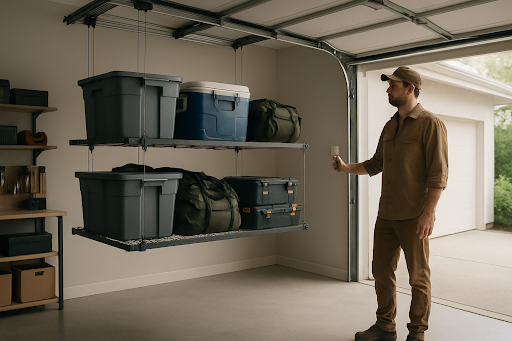
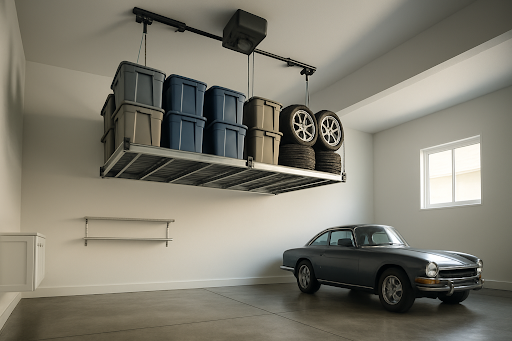
Here is the honest reality of most residential shops regarding physical footprint. Floor space fills up within months of moving in, and nobody ever looks up. A standard ceiling is sitting on anywhere from 8 to 12 feet of vertical airspace, and every cubic foot of it is doing absolutely nothing. That is prime storage territory going completely to waste while spare tires and seasonal bins pile up on the concrete.
The fix is straightforward when you stop organizing horizontally and start thinking vertically. Ceiling-mounted overhead storage systems move bulky, infrequently used items out of your immediate workspace. This safely frees the floor for actual fabrication and routine vehicle maintenance. In fact, 50% of homeowners rate their garage as the most disorganized room in the house (gitnux.org).
The Lazy Version Is Going Motorized
If wrestling a heavy bin up a ladder sounds like the opposite of a quick Saturday hack, you are right. Generic ceiling shelving requires manual effort and introduces real fall risks during loading. The easiest way to bypass this friction is to automate the heavy lifting with modern technology. Instead of manual labor, motorized options like Inventive Garage’s premium attic lift operate on a simple push-button mechanism.
You can load your heavy bins onto the platform at floor level and watch them rise cleanly out of the way. There are no ladders, no straining, and no guesswork about whether a shelf bracket is properly rated. When you need those items again, the platform descends right back to loading height for easy access.
Real World Impact of Elevating Gear
Consider a standard collector storing four seasonal tire sets and three large storage bins. Moving those items to a motorized overhead system easily frees up vast amounts of usable floor space. Vertical storage is consistently the highest return on investment move in any space optimization project. It delivers maximum reclaimed space with a minimum floor footprint.
| Key Insight:
Moving seasonal tires and large storage bins to a motorized overhead system easily frees up massive amounts of usable floor space, effectively recovering an entire vehicle work bay. |
2. Snap In Modular Wall Control Systems
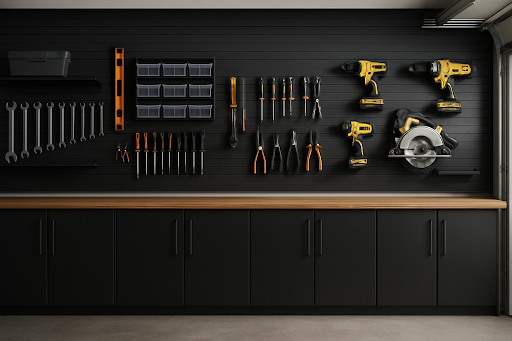
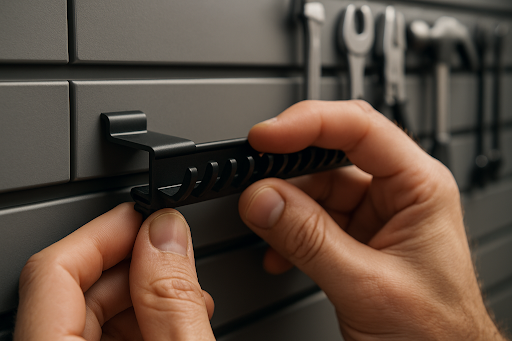
Random pegboards, mismatched brackets, and tools balanced on the edge of a workbench share one critical flaw. They are completely static and unforgiving to changes in your workflow. Your automotive projects evolve, your tool inventory grows, and a rigid wall setup becomes obsolete faster than you might expect. The goal is to build a wall system that can adapt as your shop capabilities grow over time.
Modular Organization Beats Fixed Layouts Every Time
Slatwall panels form the foundation of a highly flexible wall system for any mechanic. Unlike standard pegboard, slatwall accepts a wide range of heavy-duty, interchangeable hooks and tool holders that lock in without hand tools. You can rearrange an entire layout in an afternoon to swap accessories as your daily workflow changes. Interestingly, the U.S. garage organization and storage market is expected to experience a strong compound annual growth rate, reaching $6.71 billion by 2025 (compositepanel.org).
Layering in professional-grade steel cabinet systems turns a utility wall into a cohesive workspace. Lockable doors, coordinated finishes, and durable construction protect precision tools from dust and damage. When paired with a rolling tool chest for active workflow, your wall system efficiently handles the deep storage.
The Slow Incremental Build Strategy Works Best
This approach resonates deeply with the weekend builder mindset because it highly rewards patience. Many shop owners start with a single slatwall panel and two base cabinets on one wall. Over several months, they can scale from a dozen hand tools on an aging board to a fully organized 40-tool wall setup. Because the system is modular, every addition builds upon the last without making previous pieces obsolete.
| Pro Tip:
Start small with a single slatwall panel and two base cabinets. Modular systems allow you to scale your tool organization gradually over time without making past purchases obsolete. |
3. Keep Floor Spaces Flexible And Rolling
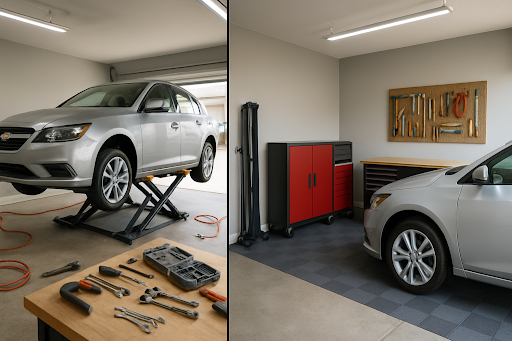

Fixed workbenches and static floor layouts share an expensive problem in small residential shops. They eat square footage whether you are actively fabricating or simply parking a vehicle. Set up a large central workbench, and you have committed a permanent chunk of your floor to one single function. Start a tear-down project, and suddenly a one-car garage becomes a zero-car garage for the duration of the build.
The most flexible hack is to take everything mobile and avoid bolt-down furniture entirely. Rolling workstations, portable service equipment, and interlocking floor tiles define functional zones perfectly. This modular approach gives you a dynamic floor plan that can be reconfigured in minutes for any specific task.
The Portable Lift Makes A Massive Difference
For automotive enthusiasts, the biggest fixed-footprint offender is often the permanent two-post service lift. A traditional lift requires concrete anchors, dedicated power lines, and a massive spatial commitment. For most residential garages, it simply restricts too much valuable space and limits daily parking options. Portable lift systems offer a practical, space-smart alternative that deploys to full working height in minutes.
These mobile lifts handle serious suspension or exhaust work with incredible stability. They can easily store flat against a wall or slide beneath a parked car when the job is completely done. Your work surface actively follows the project instead of forcing the project to navigate around permanent infrastructure.
Define Work Zones Without Permanent Construction Headaches
Interlocking floor tiles add a finishing layer that performs double duty in the shop. Laid directly over bare concrete, they define a dedicated work zone visually and functionally. High-quality tiles are durable enough to handle jack stands and vehicle weight while remaining chemical-resistant for oil spills. If you ever move or redesign the shop, the tiles come up without adhesive damage or concrete scarring.
| Warning/Important:
Avoid bolting down massive workbenches in the center of your shop. Permanently committing central floor space severely limits your ability to adapt to larger vehicle teardowns and dynamic project needs. |
Now, It’s Your Turn
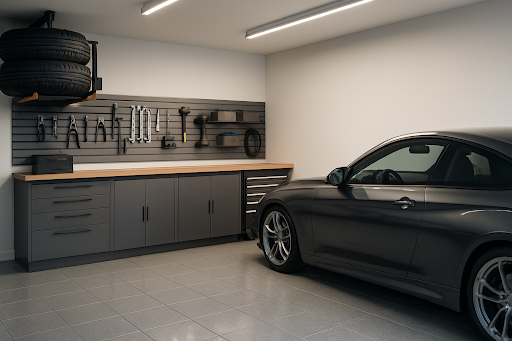
Implementing these three methods creates a cohesive and adaptable ecosystem in your shop. The ceiling handles the deep storage by moving seasonal gear overhead to open up the floor. Meanwhile, the walls manage the tools with modular slatwalls and steel cabinets that adapt over time. Finally, the floor stays dynamic with mobile equipment that reconfigures for any unexpected build.
None of these strategies require tearing the room down to the bare studs or pouring new concrete. You can start with whichever hack solves your most immediate frustration and slowly build from there. Before buying hardware, mapping out a layout using digital planning tools provides a clear picture of what is structurally possible. The ultimate goal is to build an environment that stops slowing you down and starts working seamlessly alongside you.
Quick Hit Frequently Asked Questions
How much weight can a motorized lift handle?
Weight capacity varies by manufacturer, but most motorized lift systems are engineered for substantial residential loads. They easily handle multiple heavy storage bins, holiday decor, or a set of wheels without straining. They utilize built-in safety stops to prevent overloading and keep operation smooth and secure. Always verify the specific weight rating against your ceiling joist structure before loading heavy items.
Do I need a professional to install modular cabinets?
Not necessarily, as most modular steel cabinet lines are designed specifically for DIY installation. They typically only require standard hand tools and a simple level to get properly aligned. However, utilizing a professional installation service ensures the cabinets are perfectly plumb for much larger setups. This is especially helpful for installations involving severely uneven concrete floors.
What is the best garage flooring for an active mechanic?
Interlocking polymer tiles are highly practical for active shop use and rolling vehicle loads. They offer excellent chemical resistance to automotive oils and feature easy-clean surfaces that allow fluids to wipe away effortlessly. Roll-out vinyl mats are a lower-profile alternative for defining specific work zones quickly. Both options protect the underlying concrete and significantly reduce standing fatigue during long projects.