Think about the last time a bay sat empty because a lift wouldn’t move, or a diagnostic tool went down. The image of the old-school automotive workshop with its dim lighting, greasy manual jacks, and simple socket wrenches is quickly disappearing.
Today’s garages depend on electricity for almost every critical workflow, powering everything from complex wheel alignment systems to heavy-duty electric vehicle charging stations. Technicians now rely just as heavily on stable voltages as they do on their traditional mechanical skills.
Yet, when shop owners invest in upgrades, they often buy flashy tools for the floor while completely overlooking the invisible electrical system that feeds them. An inadequate layout is a quiet, constant risk to your daily revenue.
The moment a power anomaly occurs, expensive computers miscalibrate, machinery components fail, and your billable hours grind to a halt.
Shop owners looking to improve efficiency may also enjoy our guide on building the ultimate home garage, which covers planning, organization, and infrastructure upgrades that support long-term success.
Powering the Tools of the Future
The energy demand of a standard automotive workshop has grown sharply over the past decade. In the past, heavy electrical draws were intermittent and predictable, usually limited to an air compressor cycling on or a welding rig sparking to life for a few minutes.
Modern shops maintain a massive, continuous baseline demand. Hydraulic lifts run constantly throughout the day, heavy ventilation networks manage air quality across multiple bays, and specialized climate-controlled paint booths pull immense levels of power to cure finishes uniformly.
This increased demand becomes even more complex with the arrival of electric vehicle servicing. To remain competitive, many modern workshops are adding Level 2 charging capacity, while larger EV service centers, fleet depots, and dealerships may also invest in DC fast charging equipment for testing and high-throughput service needs. These vehicle charging networks introduce massive, sudden electrical loads that can easily overwhelm an unoptimized building. Without careful infrastructure planning and balanced distribution panels, firing up an EV charger while multiple lifts are rising can cause sudden voltage sags across the entire building, tripping main breakers and interrupting ongoing repairs.
Protecting Delicate Diagnostic Electronics
While heavy machinery demands raw volume, modern diagnostic equipment depends on consistent power quality. Today’s vehicles are essentially rolling computers, and troubleshooting them requires sensitive onboard diagnostic interfaces, oscilloscope stations, and advanced driver-assistance systems calibration rigs.
These sophisticated micro-electronics are incredibly vulnerable to electrical noise, harmonic distortions, and transient power surges. If your facility’s internal electrical grid suffers from harmonic feedback, which is frequently generated by heavy electric motors or older welding units running on the same loop, it can interfere with signal accuracy and produce unreliable readings from digital diagnostic tools.
At best, this results in frustrating phantom error codes and miscalibrations that lead to incorrect vehicle diagnoses. At worst, a sudden voltage spike can fry the internal circuit boards of a five-figure diagnostic scanner or damage the sensitive electronic control unit of a customer’s vehicle currently plugged into the bay. Protecting these high-value assets requires dedicated power conditioning, localized surge suppression devices, and isolated clean-power circuits specifically reserved for data-heavy workshop electronics.
The Occupational Safety and Health Administration (OSHA) provides guidance on electrical safety practices that help businesses protect employees, equipment, and facilities from electrical hazards.
Controlling Hazards Through System Grounding
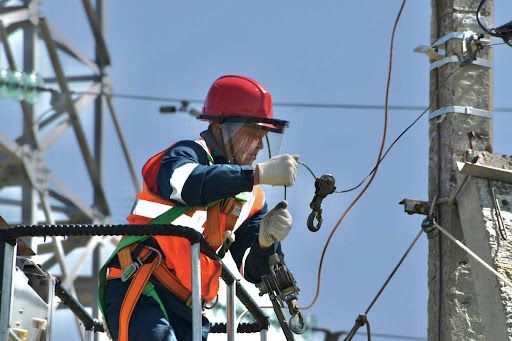
In an environment where technicians handle high-voltage vehicle systems, work beneath metallic lifts, and operate heavy electrical tools, grounding cannot be treated as an afterthought. A short circuit or insulation failure inside a major piece of equipment can create dangerous fault conditions, damage machinery, and put technicians at risk.
For most workshops, electrical safety starts with the fundamentals: properly rated panels, correctly bonded equipment, ground-fault protection, surge protection, and regular inspection of wiring, lifts, chargers, and welding circuits. In larger automotive facilities, fleet depots, EV service centers, or commercial workshop complexes, grounding design can become more sophisticated. In certain power distribution systems, components such as industrial neutral grounding resistors help limit fault current and support controlled fault detection.
In those higher-load environments, specialized manufacturers like MegaResistors fit into the broader planning conversation. Their components are used in industrial environments where fault-current control, thermal durability, and reliable grounding performance matter. For an automotive facility with heavy electrical loads, the goal is not to overbuild every garage like a steel mill. It is to match the grounding strategy to the scale and risk profile of the operation.
As workshops add EV chargers, computerized alignment systems, ADAS calibration equipment, and more high-draw machinery, electrical planning needs to evolve with the tools on the floor. A grounding system that worked for yesterday’s repair bay may not be enough for tomorrow’s high-voltage, software-driven service environment.
Managing Visual Evidence for Operational Quality
Reliability is not only about keeping the lifts, chargers, and diagnostic tools powered. It is also about keeping the repair workflow moving once the vehicle is in the bay. Modern auto repairs often involve insurance approvals, warranty disputes, pre-existing damage records, and highly specific calibration steps. That makes clear visual documentation a practical part of operational quality.
Shops now generate a steady stream of visual proof: photos of damaged wiring harnesses, undercarriage videos, alignment screenshots, paint defects, replacement parts, and completed repairs. If that documentation is scattered across service writers’ phones, email threads, and compressed messaging apps, the process slows down fast.
Using a centralized workspace to share photos with clients and insurance providers helps keep repair evidence organized by job, vehicle, or claim. It also gives customers a clearer view of what the technician is seeing, which can speed up approvals and reduce the classic “are they just upselling me?” suspicion that haunts auto repair like a ghost in coveralls.
Just as vehicle maintenance requires attention to detail, facility infrastructure benefits from regular inspection and upgrades. Explore our tips on keeping your car running smoothly year-round for another perspective on preventative maintenance.
Future-Proofing for Sustainable Growth
Electrical infrastructure is not an area where a workshop owner can afford to cut corners. While patchworking an existing electrical layout or bypassing advanced grounding upgrades might save on immediate facility renovation costs, it sets an operational trap that will inevitably lead to expensive equipment failures and lost revenue down the line.
By investing in balanced load distribution, dedicated power conditioning loops, and robust ground-fault safety, garage owners build a protective framework around daily operations. When paired with cleaner documentation workflows, that infrastructure helps modern workshops stay safer, faster, and easier to trust. In the modern automotive service landscape, a reliable electrical infrastructure is the literal engine that keeps a workshop efficient and positioned to scale alongside the next generation of vehicle technology.