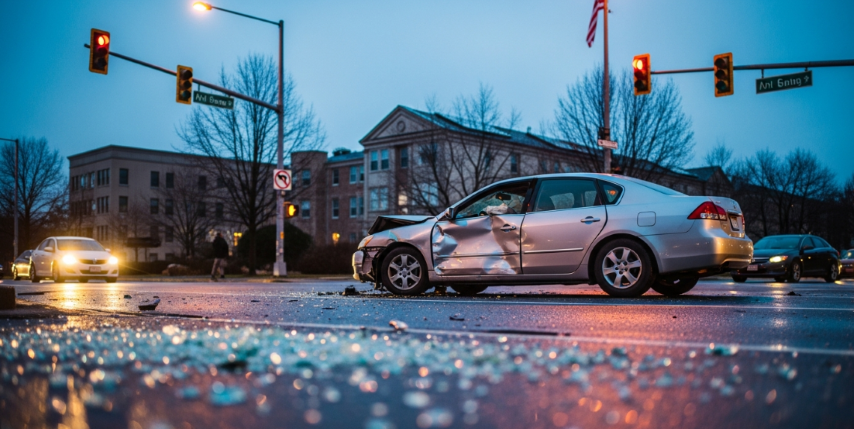
 The intersection represents one of the most perilous zones on modern roadways, where a momentary lapse in judgment often results in a catastrophic side-impact collision. Unlike front or rear crashes, T-bone impacts offer minimal structural protection, exposing occupants directly to extreme kinetic forces. Statistical data underscores this severity; side-impact (T-bone) collisions accounted for 22% of passenger vehicle occupant deaths in 2022. Right-of-way disputes render these specific incidents uniquely complex from a legal and financial liability standpoint in 2026.
Determining who entered the intersection legally requires immediate, methodical action before physical indicators vanish from the asphalt. Federal data reveals the vast scope of the problem, noting that in 2023, there were 11,843 fatalities in intersection-related crashes. This guide will walk you through a methodical, five-step framework for securing the scene, preserving transient physical evidence, and protecting your legal right to compensation following a severe side-impact collision.
Step 1: Secure the Scene and Prioritize Medical Evaluation
The immediate aftermath of a motor vehicle crash dictates the trajectory of both physical recovery and future legal proceedings. Given that roughly a third of all traffic injuries in the U.S. are attributed to intersections, drivers must act decisively to protect themselves from secondary impacts. If physically capable and the vehicle remains operational, drivers should move to the shoulder to prevent further blockages, immediately activating hazard lights to warn oncoming traffic of the obstruction.
Beyond physical safety, seeking immediate medical evaluation stands as a critical legal priority for all occupants involved. Medical professionals routinely document trauma that victims fail to feel initially due to high adrenaline levels flooding the nervous system. Securing an official medical record immediately prevents insurance adjusters from dismissing delayed injuries like whiplash or internal trauma, which frequently manifest days after the initial impact.
Mitigating Further Highway Risk
Before the arrival of emergency responders, drivers must establish a secure perimeter around the wreckage. This process involves utilizing reflective triangles or road flares if available, which minimizes the risk of chain-reaction crashes in high-traffic zones. For a comprehensive understanding of securing a disabled vehicle safely, drivers should review established emergency protocols and prioritize personal safety. While waiting for police to arrive, remain in your vehicle with your seatbelt fastened to reduce the risk of further injury.
Step 2: Methodically Document Transient Physical Evidence in a Side-Impact Collision
Acting as a preliminary accident investigator before tow trucks clear the roadway is highly advantageous for long-term legal protection. Because state legislatures continue to implement strict electronic device regulations, physical scene documentation can later justify subpoenas for digital records. For instance, the new Hands-Free and Distracted Driving Act changes liability determinations in car accident cases, making it critical to preserve the scene to establish whether the opposing driver was unlawfully distracted by a mobile device.
The Forensic Value of the Wreckage
A vehicle’s final resting position and the surrounding debris field tell an objective, scientifically measurable story about the sequence of events leading up to the crash. Crash reconstruction experts utilize this physical footprint to calculate the angle of impact, vehicle speeds, and the exact point of collision. Securing high-quality vehicle safety features also plays a role in survivability; drivers of vehicles with a ‘good’ side crash test rating from the IIHS are 70% less likely to die in a left-side crash.
- Wide-angle photographs of the entire intersection showing traffic signals and blind spots.
- Close-up images of the point of impact on both vehicles to help determine angle and speed.
- Documentation of skid marks (or lack thereof), which indicate braking attempts.
- Contact information for third-party eyewitnesses before they leave the scene.
- Identification of nearby municipal traffic cameras or commercial security cameras.
Step 3: Interface Objectively with Law Enforcement
When communicating with responding police officers, drivers must speak strictly to the facts of the incident without emotional embellishment. Provide precise details regarding vehicle speed, direction of travel, and the color of the traffic signal at the moment of entry, avoiding any guesswork. Law enforcement acts as the initial authority on the scene; the police will investigate if traffic laws were violated and if charges should be filed against the negligent party.
The Limitations of the Police Report
While an official police report serves as the foundational document of any subsequent insurance claim, it frequently contains inherent limitations regarding final civil liability. The responding officer did not witness the crash; their report represents a summary of post-crash observations and gathered statements, making it hearsay in civil court proceedings. When individuals face complex legal battles, such as challenging traffic citations, external evidence frequently supersedes the preliminary police narrative, underscoring the importance of thoroughly documenting all aspects of the accident, including medical treatments, expenses, and communications with insurance companies.
Step 4: Navigate Liability Assessments in a Side-Impact Collision
Following a severe intersection crash, corporate insurance adjusters rapidly mobilize to mitigate their financial exposure and protect their profit margins. They deploy investigative teams to analyze traffic signal timing, left-turn yielding rules, and four-way stop procedures to establish right-of-way and shift blame onto victims. This process becomes exponentially more complicated if commercial operators are involved; rideshare accidents often involve complicated insurance structures, which can make determining liability significantly more complex.
Unraveling Right-of-Way Disputes
When two vehicles collide in an intersection, the aftermath frequently dissolves into a contradictory “he said, she said” scenario regarding who controlled the intersection. Each driver typically maintains that they possessed the right-of-way, and without an independent eyewitness, the facts become distorted by opposing insurance adjusters. The stakes in these right-of-way disputes are exceptionally high, considering that in 2023, 1,086 people were killed in crashes that involved a driver running a red light.
For victims in Arkansas, establishing whose at fault for a T-bone accident requires significant investigative resources and specialized legal knowledge. True fault determination extends far beyond the initial police report, demanding the retrieval of digital data from Event Data Recorders (EDRs) and a thorough analysis of vehicle crush damage to determine true speed. The complexity of this investigation is justified, as national data indicates failure to yield the right-of-way was a contributing factor in 7.2% of all fatal crashes.
The legal team at Caddell Reynolds Law Firm specializes in preserving this critical physical and digital evidence for accident victims. By reconstructing the precise mechanics of the crash, their attorneys assist victims in navigating the severe complexities of state comparative fault laws to protect financial recovery. Expert representation ensures access to vital litigation resources, such as relationships with accident reconstruction specialists and medical expert networks for documenting injuries sustained in crashes.
Step 5: Safeguard Your Claim Against Comparative Fault Allegations in a Side-Impact Collision
A driver’s behavior in the days immediately following an accident directly impacts their financial recovery, especially in jurisdictions utilizing “modified comparative fault” systems. For instance, under Arkansas’s 50% bar rule, if a driver is found to be 50% or more responsible for the collision, they are legally barred from recovering any compensation. Adjusters will aggressively seek recorded statements to assign partial blame, forcing victims to prepare for litigation if settlement offers are insufficient.
| Common Adjuster Tactic | Harmful Reaction | Prudent Legal Strategy |
|---|---|---|
| Requesting a recorded statement immediately post-crash. | Agreeing to be recorded without a lawyer present. | Declining the recording until consulting a lawyer. |
| Offering an immediate, rapid cash settlement. | Accepting the first offer before reaching maximum medical improvement. | Waiting for a full medical prognosis and calculating total long-term costs. |
| Casually asking “How are you feeling today?” | Replying “I’m fine, just a little sore.” | Replying “I am currently receiving medical treatment for my injuries.” |
Proactive Legal Strategy for 2026 and Beyond
The framework for protecting personal assets and health following a crash is methodical: secure the scene, capture transient physical evidence, speak objectively to authorities, and rely on expert legal counsel. As modern vehicle technology becomes increasingly sophisticated, forensic digital evidence will play a dominant role in auto accident litigation. Consequently, these catastrophic injury cases often involve extensive medical treatment that necessitates an ironclad liability argument.
Drivers should review their auto insurance policies to understand their current coverage limits and keep a printed evidence checklist in their glovebox. Acting methodically at the scene preserves critical data, serving as a vital countermeasure as federal agencies continue additional research and data collection about underride crashes and side-impact vulnerabilities.
Disclaimer: This article is for informational purposes only and should not be considered legal advice. The content is not intended to be a substitute for professional legal advice. Always seek the guidance of a qualified attorney with any questions you may have regarding your legal situation.