For much of the past decade, the electric bike industry—including today’s growing carbon fiber eBikes segment—has been driven by familiar benchmarks: battery range, motor power, torque output, and price. These metrics still matter, but a new priority is beginning to reshape product design and consumer expectations—weight.
In particular, the rise of the carbon fiber eBike signals a broader shift in how electric bicycles are being used in real-world environments. Instead of focusing solely on performance or long-distance capability, manufacturers are increasingly designing for something far more practical: everyday usability in dense urban spaces.
This evolution is not happening in isolation. It reflects deeper changes in how people live, commute, and interact with mobility tools in modern cities.
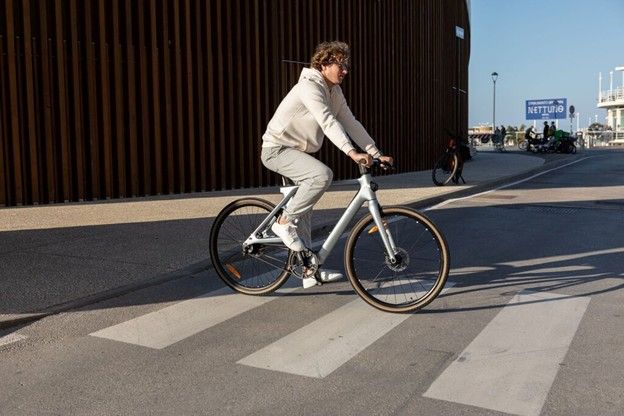
The Shift From Performance-First to Lifestyle-First eBikes
Traditional electric bikes were originally positioned as cycling enhancers—machines designed to extend range, flatten hills, and make cycling accessible to more people. As the market matured, however, usage patterns began to change.
Today, in major urban areas across the U.S., e-bikes are increasingly used not for recreation or long-distance touring, but for:
- Short daily commutes
- First- and last-mile transport
- Multi-modal travel (bike + subway + car)
- Local errands and utility trips
In this context, performance alone is no longer the dominant value driver. Instead, convenience factors such as portability, storage, and ease of handling are becoming just as important.
And that is where weight becomes critical.
A heavy e-bike might perform well on paper, but if it is difficult to carry upstairs, store in a small apartment, or lift onto a train platform, its real-world usability drops significantly.
Why Weight Is Becoming the New Performance Metric
Urban riders are increasingly evaluating e-bikes based on a simple question: How easy is it to live with this bike every day?
This shift is driven by several real-world constraints:
- Urban housing limitationsMany city riders live in apartments without garages, bike rooms, or elevators. Carrying a 60–70 lb e-bike up stairs is not just inconvenient—it can be a dealbreaker.
- Multi-modal commutingAs public transportation networks integrate more deeply with cycling infrastructure, riders increasingly combine biking with trains, buses, or rideshare services. A lighter bike is significantly easier to lift, carry, or store.
- Security concernsIn many urban areas, leaving an expensive e-bike outdoors is risky. Riders often prefer bringing bikes indoors—into offices, apartments, or shared spaces—where weight becomes a daily factor.
- Frequency of useUnlike recreational bikes, commuter e-bikes are used frequently, sometimes multiple times per day. Small inconveniences compound quickly over time.
In short, weight is no longer a secondary specification. It is becoming a core usability metric.
What Makes Carbon Fiber Different?
Carbon fiber is not new in transportation. It has long been used in aerospace, Formula 1 racing, and high-performance cycling due to its exceptional strength-to-weight ratio.
When applied to e-bikes, carbon fiber offers several key advantages:
Lightweight Structure
Carbon fiber frames can significantly reduce total bike weight compared to aluminum or steel equivalents. This directly improves portability and handling.
High Rigidity
Despite being lightweight, carbon fiber maintains excellent structural stiffness, which contributes to efficient power transfer and stable riding dynamics.
Vibration Damping
Carbon fiber naturally absorbs road vibrations better than metal frames, improving comfort on rough urban streets.
Design Flexibility
The material allows for more integrated and aerodynamic frame designs, enabling cleaner aesthetics and improved component integration.
However, carbon fiber is also more expensive to manufacture and requires more precise engineering, which positions carbon fiber eBikes in a more premium category.
Carbon Fiber eBikes in Real Urban Use
The real value of carbon fiber eBikes becomes most apparent in daily urban scenarios rather than technical specifications.
Consider a typical commuter in a dense city environment:
- They leave a small apartment in the morning
- Carry or roll the bike down a narrow stairwell
- Ride a short distance to a transit station
- Store or carry the bike on a train
- Continue to an office environment where space is limited
In each step of this journey, weight and portability matter as much as riding performance.
A lighter carbon fiber eBike reduces friction at every stage of this process. It becomes easier to lift, easier to maneuver, and less physically demanding to integrate into daily routines.
Trade-Offs: Why Carbon Fiber Is Not a Universal Solution
Despite its advantages, carbon fiber is not a perfect solution for every rider.
- Higher costCarbon fiber manufacturing is significantly more expensive than aluminum production. This places carbon fiber eBikes in a higher price bracket.
- Repair complexityUnlike metal frames, carbon fiber structures require specialized repair processes. Damage can be more complex and costly to fix.
- Use-case specificityCarbon fiber eBikes are optimized for urban environments. Riders seeking heavy cargo capacity, extreme durability, or off-road performance may still prefer traditional frame materials.
In other words, carbon fiber eBikes are not replacing conventional models—they are expanding the category.
Why Lightweight eBike Design Is Accelerating
The rise of carbon fiber eBikes reflects a broader industry trend: the shift from “specification competition” to “lifestyle optimization.”
Battery and motor technologies are becoming increasingly standardized. As a result, manufacturers are looking for new ways to differentiate their products.
Weight reduction has emerged as one of the most effective ways to improve perceived and practical usability.
At the same time, cities are changing:
- Urban density is increasing
- Parking and storage space is shrinking
- Public transport integration is expanding
- Car ownership is becoming less practical in some regions
These factors collectively push demand toward compact, lightweight mobility solutions.
In this environment, carbon fiber becomes more than a premium material—it becomes a strategic design choice.
Industry Example: Fiido’s Carbon Fiber Approach
Several manufacturers are now exploring carbon fiber integration in urban e-bike design. One example is Fiido, which has introduced a range of carbon fiber electric bikes aimed at lightweight urban mobility.
Among these, the Fiido Air represents one of the most explicit interpretations of the ultra-light urban eBike concept.
Built around a carbon fiber frame and minimalist design philosophy, it focuses on reducing physical friction in everyday use. The inclusion of a torque sensor and simplified drivetrain system further supports a smooth, natural riding experience, while keeping maintenance requirements relatively low.
Rather than positioning itself as a long-range touring bike, the Fiido Air is clearly designed for dense urban environments where portability and handling are essential.
This reflects a broader trend: the e-bike is no longer just a vehicle—it is becoming a personal mobility device integrated into daily life logistics.
The Future of Carbon Fiber eBikes
Looking ahead, carbon fiber eBikes are unlikely to replace mainstream aluminum models. Instead, they will likely define a distinct segment within the broader market.
Three key developments are likely:
- Expansion of ultra-light commuter bikesAs urban commuting continues to grow, demand for lightweight daily-use e-bikes will increase.
- Integration with folding and compact designsCarbon fiber may increasingly be combined with folding mechanisms to maximize portability.
- Premium urban mobility positioningCarbon fiber eBikes will likely remain positioned as premium solutions focused on design, comfort, and convenience.
Ultimately, the market is moving toward segmentation rather than replacement.
Conclusion: Carbon Fiber eBikes and Urban Mobility
The emergence of carbon fiber eBikes represents a significant shift in how electric bicycles are being designed and used.
While early e-bikes focused on power and range, the next phase of development is increasingly defined by something simpler: ease of living.
Weight reduction, portability, and daily usability are becoming central to product design—especially in urban environments where space and time are limited.
Carbon fiber, with its unique combination of strength and lightness, fits naturally into this evolution.
As cities continue to grow and mobility patterns become more complex, the success of future e-bikes may depend less on how far they can go—and more on how easily they fit into everyday life.