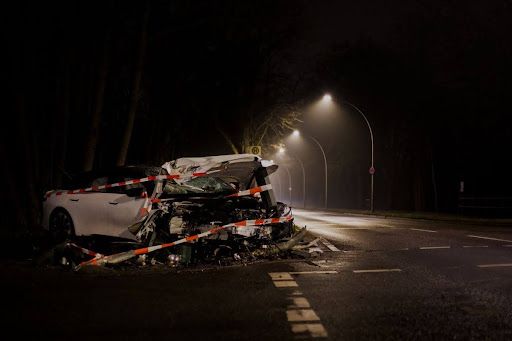
According to NHTSA’s 2023 crash data, Georgia consistently ranks among the states with the highest rates of traffic fatalities per capita—and the Atlanta metro corridor, which includes Roswell, sees a disproportionate share of those incidents. Yet the outcome of a car accident claim in Roswell rarely comes down to the crash itself. It comes down to what you can prove afterward.
That distinction matters more now than it did even five years ago. Insurance companies have become increasingly sophisticated at challenging the validity of claims, disputing liability, and minimizing payouts. In a market where adjusters review thousands of cases annually, claimants without solid documentation often find their injuries minimized or their fault percentage inflated—both of which directly reduce compensation.
For Roswell residents specifically, the local driving environment adds complexity. High-traffic corridors like Holcomb Bridge Road, GA-400, and Alpharetta Highway generate consistent accident patterns involving rear-end collisions, distracted driving incidents, and intersection failures. What makes or breaks a claim in these situations isn’t whether the accident happened—it’s whether the evidence tells a coherent, compelling story.
This article walks through the specific types of evidence that strengthen car accident claims, how Georgia’s fault framework shapes the way that evidence gets used, and what practical steps victims can take to protect their position before that evidence disappears.
Why Strong Evidence Matters for a Car Accident Claim in Roswell
The moment a collision occurs in Roswell, two parallel processes begin: your physical recovery and the legal determination of what happened. These processes run on very different timelines. Physical recovery might take months. The window to preserve the most valuable evidence often closes within days.
Consider a scenario that plays out regularly on GA-400: a driver merges aggressively, clips another vehicle, and both cars pull over. The at-fault driver apologizes at the scene. But by the time an insurance adjuster gets involved, that same driver has told a different story—one where the lane change was completed safely and the other driver overcorrected. Without a dashcam, a police report capturing the initial admission, or a witness who stayed at the scene, it becomes one account against another.
Georgia operates under a modified comparative negligence system, which adds another layer of complexity. Under this framework, a claimant can recover damages only if they’re found to be less than 50% at fault for the accident. Every percentage point of fault assigned to the injured party reduces their compensation proportionally. That means insurance companies have a direct financial incentive to argue that you share responsibility—and they’ll use any gap in your documentation to make that case.
Roswell’s specific accident landscape amplifies this dynamic. Heavy commuter traffic along GA-400 and Canton Street creates frequent merging disputes and rear-end collisions where fault isn’t always obvious. Distracted driving incidents—a persistent problem on surface roads near Roswell’s commercial districts—can be nearly impossible to prove without the right evidence. A car accident claim in Roswell backed by strong accident-scene documentation is better positioned to withstand these disputes. Strong documentation doesn’t just support your claim; in many cases, it’s the only thing standing between fair compensation and a disputed settlement that drags on for months.
What Types of Evidence Strengthen Car Accident Claims?
Evidence that strengthens a car accident claim in Roswell does not always carry equal weight. Some documentation establishes the basic facts of an accident. Other types of evidence directly influence how liability gets assigned and how damages get calculated. Understanding the difference helps claimants prioritize what to collect—and what to protect.
The most effective claims tend to weave together multiple categories of evidence rather than relying on any single source. A police report establishes the official record. Medical documentation connects the accident to specific injuries. Physical evidence and photographs preserve scene conditions that change quickly. Expert analysis translates technical facts into terms that matter during settlement negotiations or litigation. Each layer reinforces the others, making the overall claim harder to challenge.
How Police Reports and Witness Statements Help
A police report is often the first official document created after an accident, and its contents carry significant weight with insurance adjusters and courts alike. In Roswell, Georgia State Patrol or Roswell PD officers responding to the scene document vehicle positions, observed damage, road conditions, and—critically—any field sobriety assessments, citations issued, or contributing factors they identify. If an officer notes that one driver appeared distracted or that a traffic signal was malfunctioning, that observation becomes part of the permanent record.
Witness statements add a layer that police reports can’t fully capture. An independent third-party account—from another driver, a pedestrian, or a nearby business employee—carries credibility precisely because that person has no stake in the outcome. Gathering contact information from witnesses immediately at the scene is essential; memories fade quickly, and witnesses who aren’t contacted within days may become unreachable. In Roswell’s suburban commercial areas, nearby businesses with exterior surveillance cameras can sometimes supplement witness accounts with actual footage of the collision.
The Role of Medical Records and Expert Opinions
Medical records do two things simultaneously: they document the injuries you sustained, and they establish the causal link between those injuries and the accident. That second function is where many claims run into trouble. Gaps in treatment—even a few days between the accident and the first medical visit—give insurance companies an opening to argue that the injuries were pre-existing or unrelated to the collision.
Expert opinions become critical when claims involve disputed causation, complex injuries, or significant property damage. Accident reconstruction specialists can analyze vehicle damage, skid marks, and road geometry to establish how a collision occurred mechanically. Medical experts can testify to the long-term prognosis for injuries like traumatic brain injury or spinal damage. Economic experts can quantify lost earning capacity for injuries that affect a claimant’s ability to work. These analyses turn abstract injury claims into documented, defensible numbers—which changes the dynamic in settlement negotiations considerably.
How Fault and Negligence Are Determined in Roswell Car Accident Cases
Georgia’s legal framework for car accidents is built on the concept of negligence—the failure to exercise reasonable care that a prudent person would use under similar circumstances. Proving negligence requires establishing four elements: duty (the other driver owed you a duty of care), breach (they violated that duty), causation (that breach caused your injuries), and damages (you suffered actual harm as a result).
In practice, the comparative negligence rule discussed earlier means that fault determination is rarely binary. Georgia courts and insurance adjusters typically assign percentage shares of fault to each party involved. A driver found 20% at fault for failing to signal before braking, for example, would see their total recovery reduced by that same 20%. This is why the framing of the evidence—not just its existence—matters so much.
Physical evidence like dashcam footage or event data recorder (EDR) information from a vehicle’s onboard computer can establish vehicle speed, braking patterns, and steering inputs in the seconds before impact. Georgia courts have increasingly accepted EDR data as credible evidence, and in cases where human testimony conflicts, that data often becomes the deciding factor. Attorneys and accident reconstruction experts familiar with Roswell’s local court environment understand which types of evidence carry the most persuasive weight in local proceedings.
Georgia also imposes a two-year statute of limitations for personal injury claims arising from car accidents, under O.C.G.A. § 9-3-33. While two years may sound generous, the window to preserve physical evidence, secure witness availability, and obtain surveillance footage is far narrower—often measured in days, not months.
Practical Steps to Collect and Present Strong Evidence After an Accident
For a car accident claim in Roswell, the actions taken in the first hour after a collision often determine whether the claim succeeds or stalls. While immediate safety and medical attention take priority, preserving evidence should begin as soon as conditions allow.
At the scene, photograph everything: vehicle positions before they’re moved, damage to all vehicles involved, road conditions, traffic signals, skid marks, and any visible injuries. Photographs with timestamps create an objective record that’s difficult to dispute later. If weather or lighting contributed to the accident—common during Roswell’s afternoon thunderstorms—capturing those conditions before they change matters.
Exchange information beyond the standard insurance cards. Note the other driver’s license plate, vehicle make and model, and insurance policy number. If there are passengers in either vehicle, document their presence. Identifying witnesses and collecting their names and phone numbers at the scene is something that cannot be replicated afterward.
Seeking medical evaluation promptly—ideally on the day of the accident—creates the documentation trail that connects your injuries to the incident. Even if symptoms seem minor initially, certain injuries like soft tissue damage and concussions often present more significantly in the days following a collision. Early evaluation ensures that any developing symptoms are properly attributed to the accident.
When navigating the insurance process, consulting legal help after a car accident early tends to change the dynamic significantly—particularly in cases where initial liability is disputed or where serious injuries are involved. Attorneys familiar with Roswell’s accident landscape can identify evidence sources that claimants often overlook, including traffic camera footage managed by the City of Roswell and surveillance systems operated by businesses along high-traffic corridors.
Common Challenges in Proving Roswell Car Accident Claims and How Evidence Helps
Even a well-documented car accident claim in Roswell can face predictable challenges. Insurance companies regularly dispute the severity of injuries, argue that pre-existing conditions account for a claimant’s symptoms, or assign inflated fault percentages to reduce their exposure. In Roswell specifically, multi-vehicle accidents on GA-400 and contested intersection collisions create scenarios where liability genuinely isn’t clear-cut—and adjusters exploit that ambiguity.
The most effective counter to these tactics is a layered evidence base where no single piece of documentation carries the entire weight of the claim. When medical records, expert testimony, police reports, and physical evidence all tell the same story, the narrative becomes significantly harder to unravel. An insurance company arguing that your injuries predated the accident faces a much steeper climb if your medical records show no prior treatment for those injuries, an independent physician confirms the mechanism of injury, and an accident reconstruction report establishes the force of impact.
Delayed injury presentation—one of the most common insurance defenses after an injury—is addressed most effectively by consistent medical treatment that creates a documented timeline from the accident date forward. The claimants who tend to fare best aren’t necessarily those with the most severe injuries; they’re the ones whose evidence leaves the fewest unanswered questions.