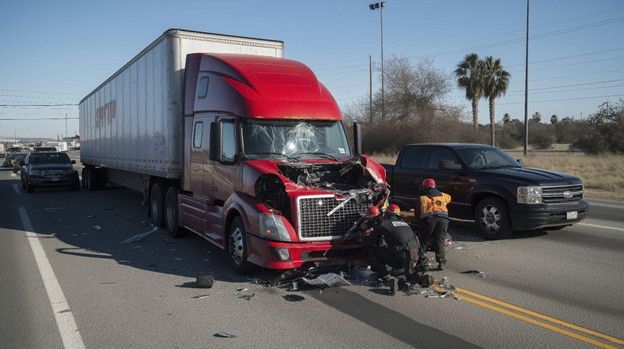
Crashes involving large commercial trucks tend to be more serious than ordinary car accidents, both in the harm they cause and in the legal questions they raise. A fully loaded semi can weigh many times more than a passenger vehicle, and the rules that govern trucking companies add layers most drivers never encounter. If you were hurt in a truck crash in Chicago, understanding how liability, insurance, evidence, and recovery fit together can help you make sense of what lies ahead. This guide explains how Chicago truck accident claims bring each of those pieces together in plain terms.
Figuring Out Responsibility in Chicago Truck Accident Claims
Truck accident cases often involve more than one party who may share the blame. A Chicago truck accident lawyer will typically look past the driver to examine the trucking company, the vehicle owner, the cargo loader, and sometimes a parts manufacturer, since any of them can contribute to a crash. This spread of potential responsibility is one of the main features that sets truck cases apart from standard collisions.
Trucking companies can be held liable for the actions of their drivers under the legal doctrine of respondeat superior, which makes an employer answerable for what an employee does on the job. They may also face direct blame for poor hiring, weak training, or pushing drivers past safe limits. These overlapping parties help explain why commercial truck accidents are often difficult to resolve and why Chicago truck accident claims require a broader investigation.
How Federal and State Rules Apply
Commercial trucks fall under federal safety standards set by the Federal Motor Carrier Safety Administration, found in 49 CFR Parts 350 through 399. These rules cover driver hours, vehicle upkeep, drug testing, and how cargo must be secured.
Illinois adds its own requirements through the state vehicle code and adopts many federal standards for carriers operating within its borders. A violation of regulations, such as exceeding hours-of-service limits, can serve as strong proof of negligence in your case. These regulations can therefore play an important role in Chicago truck accident claims.
Understanding the Insurance Picture
Trucking insurance works on a larger scale than personal auto coverage. Federal law requires many interstate carriers to hold minimum liability coverage of at least $750,000, and figures can climb higher depending on the cargo they haul. The applicable federal financial responsibility requirements establish different minimum levels based on the type of carriage and commodity transported.
Larger policies often mean the insurer will defend the claim aggressively to limit what it pays. Multiple insurance companies may be involved when several parties share fault, which can complicate how a settlement comes together.
Evidence That Can Make or Break Chicago Truck Accident Claims
Chicago truck accident claims generate types of proof that ordinary accidents do not. Acting quickly matters because some of this material can be erased or overwritten within weeks. Understanding the importance of preserving evidence after a truck collision can help explain why early action is so important.
Key evidence in a truck case often includes:
- The electronic logging device records driver hours
- The truck’s black box, or event data recorder
- Driver qualification files and inspection reports
- Cargo loading and weight documents
- Dashcam or nearby surveillance footage
Sending a Legal Hold Letter
Once a crash happens, a written request called a spoliation or preservation letter can be sent to the trucking company. This notice tells them to keep records and physical evidence that could otherwise be routinely destroyed.
Illinois recognizes claims for the wrongful destruction of evidence in certain situations, which gives the demand real weight. Preserving this material early can protect your ability to prove what actually occurred and strengthen Chicago truck accident claims.
The Role of Fault in Your Recovery
Illinois uses a modified comparative negligence standard under 735 ILCS 5/2-1116. You can still recover money as long as you are not found more than 50 percent responsible for the crash.
Your compensation is reduced by whatever percentage of fault is assigned to you. If a jury decides you were 20 percent at fault, an award of $100,000 would drop to $80,000.
Damages and Time Limits
Compensation in a truck accident claim can cover medical bills, lost wages, reduced earning ability, property damage, and pain and suffering. In cases involving especially reckless conduct, a court may allow punitive damages, though Illinois sets specific conditions for when those apply.
Illinois generally gives you two years from the date of injury to file a truck accident lawsuit under 735 ILCS 5/13-202. Claims involving a government vehicle or public entity often carry shorter notice requirements, so the timing in those matters deserves close attention.
Moving Chicago Truck Accident Claims Toward a Fair Outcome
Chicago truck accident claims pull together several moving parts, from sorting out who is at fault to preserving specialized evidence and working through sizable insurance policies. Understanding how federal trucking rules, Illinois fault standards, and filing deadlines shape your case gives you a clearer view of the path to recovery. From documenting the crash to acting within the legal time limits, these actions play a part in protecting the value of your claim and helping you pursue the compensation the law allows.