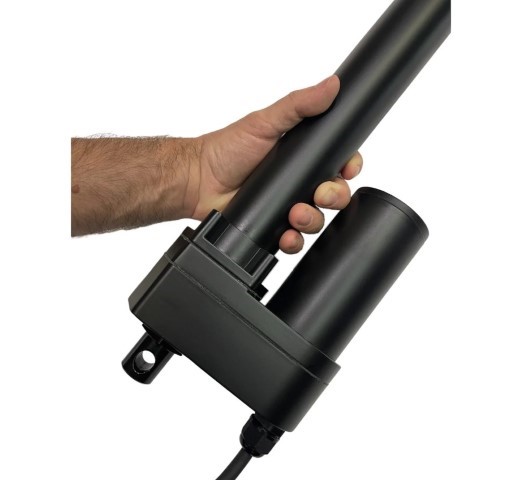
 Race cars tend to be flashy, with their unique designs and decorative elements. However, what truly makes them race cars is their performance — they can travel extremely fast. Without a doubt, many components go into helping these vehicles travel at such speeds, but electric actuators are easily overlooked. Let’s see just how they work and their applications in this detailed guide.
Understanding Electric Actuators
Simply put, electric actuators are motion devices that work by converting electrical energy into mechanical motion. When the actuator receives an electrical signal, it creates movement, which allows it to perform tasks.
Diving deeper into its core functionality, electric actuators are typically designed to control mechanisms and systems. The device can push, pull, or rotate, depending on its design. Many applications demand such motion — for instance when opening a valve or auto-adjusting positions of different machine parts.
But what makes up an electric actuator? Well, these are the key components you should know:
- Electric motor: basically, it’s the heart of the actuator, as it provides the necessary power to create motion. When the motor receives current, it starts turning, and this movement drives the entire mechanism.
- Gear Train: Attached to the motor, the gear train amplifies the torque. It’s similar to the gears on a bicycle – they help increase power or speed depending on the task.
- Screw: the screw works with the gear train, and its main job is converting rotational motion into linear motion.
- Nut: As the screw rotates, the nut moves along its threads. The result is the linear motion that does the work.
Note that electric actuators are available in different types and sizes. Each is made for specific tasks. Nevertheless, irrespective of their design, the main job is to convert electrical motion into mechanical motion in an efficient and precise manner.
Applications of Electric Actuators in Race Cars
When you see them on the tracks, it’s easy to grasp why some call race cars marvels of engineering. These vehicles are all about performance and more performance. To achieve such optimal operation, manufacturers rely on different mechanisms, including electric actuators.
Here are some applications of these motion devices in race cars:
Aerodynamic Adjustments
To viewers, races are just about speed. But to the driver, they’re also about control. Electric actuators play a vital role in adjusting a car’s aerodynamics on the go. For instance, when altering the angle of a rear wing or adjusting vents, actuators ensure that the vehicle maintains optimum downforce and drag coefficients. With this, there are faster straight-line speeds and more grip in corners.
Suspension Controls
The suspension is what connects the car to the track. With an electric actuator installed, drivers can actively modify suspension settings during a race. This can mean adjusting the ride height for different track parts or changing damping settings to match varying conditions.
Gear Shifting Mechanisms
Smooth and swift gear shifts can make the difference between winning and losing, and electric actuators facilitate such quick and precise gear changes. They can engage or disengage clutches in record time. Consequently, the motion devices ensure uninterrupted power delivery so the engine remains in peak operation.
Brake Force Modulation
When talking about braking, it appears to be just stopping the car — but it’s more than that. It’s also about controlling the vehicle’s speed. Having actuators in race car braking systems can ensure the right force goes to each wheel once applied. With this, there’s more efficiency, and drivers can avoid problems like tire wire and lock-ups.
Benefits of Electric Actuators in Racing
Every second counts on the racing tracks. As a result, performance goes beyond the car’s speed but also involves the adjustments made while driving. If you’re wondering where actuators fall in, find out below:
Speed and Precision
Not many motion devices can compete with electric actuators regarding speed. This makes them highly beneficial in race cars. Drivers can make relatively quick adjustments, and the motion devices will respond almost instantly.
Besides speed, precision is equally vital. Consider when the driver wants to adjust the car’s wing. If they go off by a few degrees, it may cost them the race. Fortunately, electric actuators can handle such adjustments accurately.
Weight and Efficiency
Weight is a major concern in racing, and the reason is simple — every extra pound can affect the car’s performance. The advantage actuators bring in here is their lightweight. Without question, these motion devices are not as heavy as their hydraulic or pneumatic counterparts.
With less weight, the race car can accelerate a lot faster. Furthermore, electric actuators simply rely on a motor — not hoses or fluids. So manufacturers don’t have to deal with many parts while designing.
Reliability
Equipment failure isn’t something any racer wants to experience. Thankfully, electric actuators have a good reputation for consistency and reliability. As mentioned earlier, they don’t need fluids like hydraulic systems. Therefore, there’s less maintenance and fewer parts that can diminish with time. The effect is performance for a longer period.
Challenges in Implementation
While their advantages are applaudable, there are some challenges with integrating linear actuators in race cars. Check them out below:
Space Constraints
One look at a race car, and you immediately get the picture of a small vehicle. Indeed, they’re a lot less large than average cars, and to manufacturers, every space counts. Therefore, some manufacturers may find it difficult to find room for actuators when introducing new features.
Electrical Integration
Despite their small structure, modern race cars feature many electronics. Such systems are important to help the driver communicate on the tracks. If a manufacturer introduces an actuator, they must ensure it can communicate seamlessly with the existing systems. That’ll typically mean creating custom software or adapting current ones — which can be demanding.
Durability in Racing Conditions
On the tracks, race cars typically experience intense forces. Examples include high-speed vibrations and impacts from rough track surfaces. Even minor collisions can be disruptive. There’s no doubt that electric actuators are robust and durable. Still, manufacturers often need to particularly optimise them to accommodate racing conditions.
Conclusion
Electric actuators offer the speed, precision, and reliability that race drivers need to stay competitive. Hence, the applications of electric actuators, as explained in this post, are crucial. Notably, manufacturers may find more future uses for these motion devices.