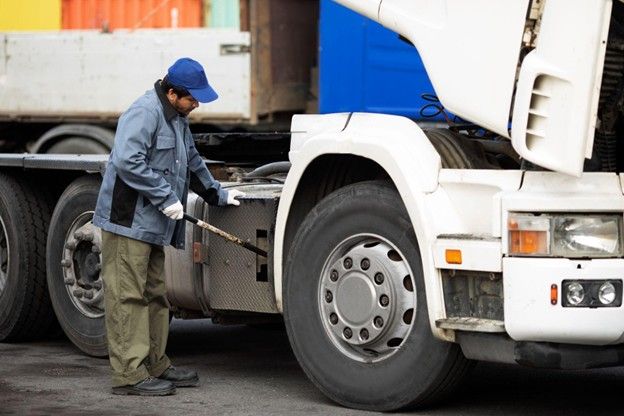
Big trucks share the road with you every day on I-5, I-84, and I-205. When a trucking company keeps its rigs in good condition, those trucks are better prepared to operate safely. But when a company skips repairs to save time or money, poorly maintained trucks can become dangerous at highway speeds. A loaded semi can weigh as much as 80,000 pounds under normal interstate limits, so a failed brake, blown tire, or steering problem can change your life in seconds. If a defective truck hurt you, a Portland truck accident attorney can investigate the maintenance records and determine whether the company ignored a known safety problem.
Why Worn Brakes Make Poorly Maintained Trucks Dangerous
Brakes take some of the hardest punishment on any commercial truck. A rig hauling heavy freight needs considerably more room to stop than a passenger car. On poorly maintained trucks, worn brake components or neglected air-brake problems can prevent the vehicle from slowing in time. That kind of failure may contribute to a rear-end collision or multi-vehicle pileup on a busy Portland highway.
Oregon law treats defective brakes as an equipment violation. Under ORS 815.125 and ORS 815.130, vehicles must have brakes that satisfy specific operating requirements, and driving or knowingly allowing a vehicle to be driven with improper brakes is a traffic offense. Evidence of a violation may become important when investigators are determining whether defective brakes contributed to a crash.
Bald Tires and Portland Weather Do Not Mix
Portland roads remain wet throughout much of the year, while sections of I-84 and nearby mountain routes can become icy during winter. Tires create another serious risk on poorly maintained trucks because insufficient tread, damaged sidewalls, or uneven wear can reduce traction. A tire blowout at highway speed can cause a driver to lose control or send a trailer sliding across several lanes.
Oregon vehicle equipment laws address several of these dangers. ORS 815.020 prohibits driving or knowingly allowing the operation of a vehicle in an unsafe condition that endangers another person. ORS 815.140 also addresses the use of required traction tires or chains when a highway is posted for specific winter conditions.
Common tire problems investigators may examine after a crash include:
- Shallow or insufficient tread
- Cracked or damaged sidewalls
- Missing required chains or traction devices
- Uneven wear or mismatched tires
Skipped Inspections Can Hide Dangerous Problems
Federal regulations require motor carriers to systematically inspect, repair, and maintain the commercial vehicles under their control. Safety-related parts must remain in proper operating condition, and qualifying commercial vehicles generally must pass a periodic inspection at least once every 12 months. The Federal Motor Carrier Safety Administration provides an overview of these obligations in its Part 396 inspection and maintenance guidance.
Companies may still delay repairs or return a truck to service before a safety issue is properly addressed. After a collision involving poorly maintained trucks, investigators may compare maintenance logs, driver reports, annual inspection records, parts orders, and repair invoices. That paper trail can reveal recurring defects, delayed service, or inconsistencies between reported problems and completed repairs.
Broken Lights and Steering Problems Create Highway Chaos
Not every truck failure comes from brakes or tires. Dim, damaged, or inoperative lights can make a large trailer difficult to see at night or during Oregon’s heavy rain. A driver approaching from behind may not recognize that the truck is slowing until there is too little room to react.
Steering and suspension problems can be equally dangerous. Worn steering components may cause a truck to wander from its lane, while suspension failures can affect stability and weight distribution. These mechanical problems may play a quiet role in crashes that initially appear to result from a simple driving mistake.
ORS 815.020 addresses unsafe vehicles generally, while other portions of Oregon’s vehicle code establish standards for lighting and required equipment. A violation does not resolve every question of legal responsibility by itself, but equipment condition, maintenance history, and the cause of the failure may all become important evidence.
Proving the Trucking Company Knew About the Problem
Building a truck accident case usually requires more than identifying a broken component. The evidence must help connect the mechanical failure to the collision and show which person or company may have been responsible for inspection, repair, or maintenance. That is why inspection and repair files are important truck accident evidence. These documents may reveal repeated service warnings, postponed repairs, or earlier driver complaints involving the same component.
Timing can also affect the investigation. ORS 12.110 generally requires many Oregon personal injury actions to be commenced within two years, although exceptions, different deadlines, or shorter notice requirements may apply in some cases. Important trucking records may be discarded or overwritten under routine retention schedules long before that filing period expires. Acting promptly can help preserve maintenance files, electronic data, damaged components, photographs, and other evidence before they become unavailable.
Get Help Before Important Evidence Disappears
Poorly maintained trucks can cause crashes that affect a person’s health, income, vehicle, and ability to work. Oregon laws such as ORS 815.020 and ORS 815.130, together with federal maintenance requirements, may help investigators determine whether unsafe equipment contributed to a Portland highway collision. An attorney can request maintenance records, preserve relevant evidence, consult qualified safety specialists, and investigate what went wrong. If a defective truck injured you, consider obtaining legal advice before important records or physical evidence disappear.