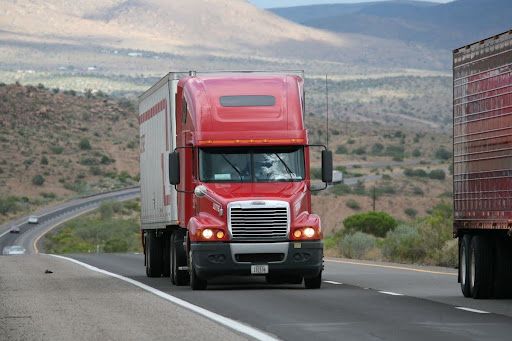
According to NHTSA’s 2023 crash data, an estimated 114,552 large trucks were involved in injury crashes across the United States that year, and approximately 153,452 people were injured in crashes involving large trucks. For residents concerned about truck accidents in Hackensack, these are not abstract figures. Route 17, the I-80 interchange, and the dense surface streets serving Bergen County’s commercial districts experience steady heavy-truck traffic throughout the day and night. When something goes wrong, the consequences are rarely minor.
What makes truck accidents in Hackensack meaningfully different from typical passenger-vehicle crashes is not just the size disparity—it is also the legal complexity that follows. Multiple parties may share responsibility. Federal regulations create additional safety requirements that do not apply to ordinary drivers. Evidence that determines fault can disappear quickly if no one moves to preserve it. For victims trying to recover physically and financially, the early days after a collision often shape everything that comes afterward.
This article explains the factors most likely to cause truck accidents in the Hackensack area, how liability is determined, which regulations govern commercial carriers, how to evaluate legal representation, and what the compensation process looks like in practice. Anyone navigating this situation should have a clearer picture of the legal and practical issues involved.
What Are the Most Frequent Causes of Truck Accidents in Hackensack?
Hackensack sits at a convergence point for commercial freight. Bergen County’s warehouse corridors, proximity to Port Newark-Elizabeth, and suburban retail density all generate consistent heavy-truck activity. Gauge Magazine’s guide to the common causes of truck accidents and their legal implications provides additional information about how driver behavior, cargo problems, and vehicle maintenance can contribute to crashes. That geography shapes the accident patterns local drivers experience, and understanding them matters for both safety and legal reasons.
Driver fatigue remains a major contributor to serious commercial-truck crashes, and it is especially relevant on routes like Route 17, where truckers may encounter stop-and-go traffic after long overnight hauls. A fatigued driver’s reaction time and judgment can deteriorate significantly. Losing even a fraction of a second at highway speeds can mean the difference between a close call and a severe collision.
Distracted driving behind the wheel of a commercial truck can carry consequences that exceed those associated with the same behavior in a passenger car. A truck traveling at 55 mph covers approximately the length of a football field in four seconds—enough distance to close a traffic gap before a driver who glanced at a phone looks back at the road. In urban environments like Hackensack, where pedestrians, cyclists, and turning vehicles create constant visual demands, the risk can increase quickly.
Vehicle-maintenance failures represent another persistent cause. Commercial carriers are responsible for keeping brakes, tires, steering systems, lights, and other critical equipment in safe operating condition. Consider a loaded flatbed descending toward a Hackensack intersection with brake fade that was not identified during an inspection. The driver may attempt to stop correctly and still be unable to prevent a collision. Depending on the facts, responsibility may extend to the carrier, maintenance provider, or another party responsible for the vehicle’s condition.
Hazardous cargo presents a distinct category of risk. Bergen County roads regularly carry chemical, construction, and industrial materials, and improper loading or inadequate placarding can create dangers extending beyond the initial impact. Road conditions—particularly during winter months when black ice forms on bridges, ramps, and elevated road sections—may also contribute to loss-of-control incidents that affect heavy vehicles differently from passenger cars.
How Is Liability Determined After Truck Accidents in Hackensack?
Understanding what caused a crash is the beginning, not the end, of the legal analysis. As Gauge Magazine’s overview of truck accident causes and potentially liable parties explains, determining responsibility may require examining several companies and contractual relationships that have no equivalent in a routine passenger-vehicle claim.
The truck driver may carry direct liability for negligent conduct behind the wheel, including speeding, impaired driving, hours-of-service violations, distracted driving, or failure to adapt to weather and road conditions. The trucking company may face vicarious liability under the doctrine of respondeat superior, which can make an employer responsible for an employee’s negligence committed within the scope of employment. A company may also face direct negligence claims involving inadequate driver screening, insufficient training, poor vehicle maintenance, or pressure to meet delivery schedules through unsafe practices.
This is where truck accident cases genuinely diverge from other personal injury claims. A cargo shipper or loading contractor may face liability if improper loading caused a weight imbalance that contributed to a rollover. The truck’s manufacturer or a parts supplier may be responsible if defective brakes, a faulty steering component, or another product failure contributed to the collision. Maintenance contractors that inspected or serviced the vehicle before the crash may also become part of the case.
Evidence preservation therefore becomes urgent and consequential. Event data recorder information, electronic logging device records, maintenance logs, driver qualification files, dashcam recordings, and communications between dispatchers and drivers may all prove decisive. New Jersey follows a modified comparative negligence framework. A claimant may generally recover when the claimant’s negligence is not greater than the combined negligence of the parties against whom recovery is sought. The claimant’s damages are reduced by the percentage of fault assigned to the claimant.
When several defendants are involved, the jury may allocate a percentage of responsibility to each party. That allocation can affect the judgment and the amount recoverable from individual defendants under New Jersey law. The presence of multiple potentially responsible parties may provide additional sources of recovery, but it also makes the investigation and litigation more complicated. The right evidence must be secured, and the proper parties must be identified before filing deadlines expire.
What Regulations Affect Truck Accidents in Hackensack?
The regulatory framework governing commercial trucking is more detailed than most people realize, and it can directly affect how liability is evaluated in New Jersey truck accident cases.
At the federal level, the Federal Motor Carrier Safety Administration establishes baseline rules for commercial-vehicle operation. Among the most relevant are the hours-of-service regulations in 49 CFR Part 395, which limit how long covered drivers may operate without required rest periods. Subject to other applicable limits and exceptions, a property-carrying driver may generally drive a maximum of 11 hours after 10 consecutive hours off duty. When an hours-of-service violation is connected to a fatigue-related crash, the violation may become important evidence in the negligence analysis.
FMCSA rules also address vehicle inspection and maintenance, minimum insurance requirements for covered commercial carriers, driver qualifications, medical certifications, drug and alcohol testing, and cargo securement. These are legally enforceable requirements rather than voluntary recommendations. Whether a violation proves liability depends on the rule involved, the surrounding facts, and whether the violation contributed to the collision.
New Jersey adds another layer through the New Jersey Motor Vehicle Commission and state commercial-vehicle enforcement programs. The state applies safety requirements to intrastate carriers as well as enforcing applicable federal standards for interstate carriers. This matters in Hackensack because some local truck traffic involves short-haul deliveries operating entirely within New Jersey rather than long-haul interstate freight.
Knowing whether federal rules, state requirements, or both apply determines which records an attorney may request, which experts may be needed, and how alleged violations can be presented. A regulatory violation does not automatically establish negligence per se in every New Jersey case. Depending on the purpose of the rule and the circumstances of the crash, it may instead serve as evidence of negligence that must still be connected to causation and the injuries being claimed.
How Do You Choose the Right Truck Accident Lawyer in Hackensack?
Given the multi-party complexity outlined above, the attorney handling a truck accident claim needs a specific skill set—not just general personal injury experience. Evaluating that experience honestly before committing to representation is worth the time.
Experience with commercial-vehicle litigation matters because the discovery process in these cases is fundamentally different. An attorney should be familiar with FMCSA records, spoliation letters or preservation notices, accident reconstruction involving electronic logging data, and depositions of trucking-company representatives. Ask directly about the attorney’s caseload: how many truck accident cases has the attorney handled, and how many involved commercial carriers with multiple potentially liable parties?
Local familiarity adds practical value. An attorney who regularly handles cases in the Bergen County Superior Court is more likely to understand local filing procedures, scheduling practices, and the insurance carriers that commonly defend trucking companies in the region. That knowledge can shape strategy in ways that general civil-litigation experience may not.
For those evaluating their options after an accident in the area, resources concerning Hackensack truck accident representation can provide context about the services local legal counsel may offer.
Fee-structure transparency is also worth examining. Most truck accident attorneys work on a contingency basis, meaning the attorney does not collect a fee upfront and instead receives an agreed percentage of any recovery. However, the percentage, responsibility for litigation expenses, and treatment of case costs can vary. Understanding the complete arrangement before signing an agreement is an important due-diligence step.
During an initial consultation, ask how the attorney would begin investigating the case, which parties might be involved, and what evidence should be preserved immediately. Although a complete liability theory may require additional investigation, the quality and specificity of the initial answer can reveal more about the attorney’s experience than a review, advertisement, or award.
What Is the Compensation Process After a Truck Accident in Hackensack?
Building on the liability framework and regulatory context discussed above, the claims process follows a sequence that rewards preparation and early action.
New Jersey’s statute of limitations for most personal injury claims is two years from the date the claim accrues under N.J.S.A. 2A:14-2. The practical urgency may begin much sooner, however, because accident evidence can be altered, lost, or overwritten. Vehicle data may be affected if the truck returns to service or experiences another event. Video, telematics, and communications may also be deleted under ordinary retention policies. Although federal law requires certain trucking records to be retained for specified periods, a formal preservation demand can help protect relevant information from routine destruction.
The investigation phase involves gathering medical records, police reports, witness statements, photographs, vehicle data, company documents, and expert analysis. Accident reconstruction specialists may examine the crash sequence, while medical professionals may document the long-term effects of the injuries. That evidence helps establish compensable damages, which may include current and future medical expenses, lost income, diminished earning capacity, pain and suffering, and, when New Jersey’s demanding legal standard is satisfied, punitive damages.
Insurance negotiations typically follow the investigation. Commercial trucking policies frequently carry higher limits than personal auto policies, although available coverage does not determine what a claim is worth. Commercial insurers may investigate and defend these cases aggressively because the potential exposure can be substantial. Recorded statements, incomplete medical information, or unsupported assumptions about the collision can affect negotiations and the eventual value of the claim.
If negotiations do not produce a reasonable outcome, litigation may become necessary. Discovery can be extensive because of the number of potential defendants, experts, and business records involved. The time required to reach trial varies according to the court’s schedule, the complexity of the evidence, the number of parties, and pretrial motions. Many cases resolve during discovery, mediation, or other pretrial proceedings once the strengths and weaknesses of the evidence become clearer.
The most consequential variable throughout the process is how quickly truck accidents in Hackensack are treated as serious legal and evidentiary matters—not as problems to address months later, but as cases requiring organized action from the beginning.