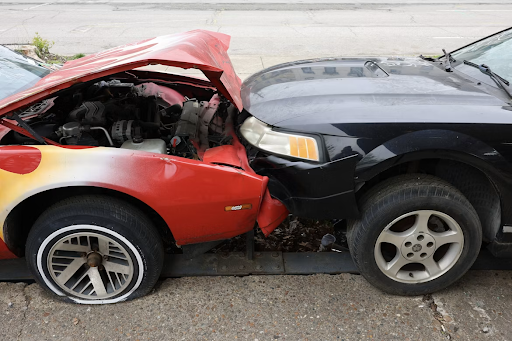
 You spent years bringing that ’69 Camaro back to life.
Weekends spent in a garage, thousands of dollars in repro panels and months searching for date-coded parts. One bad afternoon, and its all headed to the junk yard on a flatbed with crumpled fender and bent frame.
Here’s the ugly truth:
Retromods aren’t daily drivers. When something gets smashed on your ride, it doesn’t just affect appearance. It digs… deeper. Into your pocketbook, your paperwork, and maybe even the courts. That is why understanding restored muscle car collision damage matters long before a wreck ever happens.
Ok. Now let’s see what ACTUALLY happens after that dreaded phone call.
In this guide:
- Why Restored Muscle Cars Suffer More From Collisions
- The Financial Toll of a Wrecked Classic
- When a Collision Turns Into a Criminal Case
- Insurance Headaches Nobody Warns You About
- Protecting Your Investment Going Forward
Why Restored Muscle Car Collision Damage Hits Harder
Modern cars are built to crumple. Classic muscle cars? Not so much.
Vintage chassis were not designed with crumple zones and controlled crash energy management in mind. As a result, when a classic Chevelle or Charger is in a collision, the impact can warp the entire frame, cause alignment issues, and weaken overall structure. The National Highway Traffic Safety Administration explains how modern crash protection depends heavily on vehicle structure and crash energy management, something many vintage platforms were never engineered to provide.
And here’s the kicker…
Fixing that damage is nothing like fixing a Honda Civic. You need:
- Frame-straightening equipment for older builds
- Period-correct Sheetmetal (which is getting harder to find)
- Body shops that actually understand classic construction
- Specialists who can match original single-stage paint
Very few collision centers will work on an extensive damage classic. Most of the ones that do have waiting lists for a year or more.
The Financial Toll of a Wrecked Classic
The numbers here get scary fast.
Hagerty reports that muscle cars averaged $78K per sale at auction in 2024. That’s well above the $61,000 average across all collector cars. When a vehicle has that kind of price tag, even a “minor” impact can result in serious value loss.
Here’s why it hurts so much:
A minor front end collision could cost you $8,000 in parts and labor on a restored Mustang. That’s just the tip of the iceberg. You also lose:
- Original date-coded parts you spent years finding
- The “matching numbers” premium collectors pay for
- The concours-level paint you shelled out five figures for
- Countless hours of your own labor
Plus it still has an accident history after repair. That fact alone can decrease resale value by 20-30%.
The classic car market is changing as well. Recent reports show muscle car values dropped 10% from last year. Buyers are gravitating towards newer collectibles, leaving behind those who bought older classics. A totaled car in a declining market is a double gut punch.
When a Collision Turns Into a Criminal Case
Crashes aren’t always about insurance claims. Sometimes they get a lot more complicated than that.
If the driver who damaged your restored muscle car was speeding, drunk or reckless, he could be facing criminal charges. But if you were driving your classic car when things went sour, YOU could be facing the music.
That’s when having a skilled criminal defense lawyer is your best friend on speed dial. It doesn’t matter if you are charged with reckless driving, DUI, leaving the scene, vehicular assault or anything in between. Representing yourself is a really bad idea. So if you find yourself in the Chicago area facing something like that, contact Rubin Law Office to speak to a criminal defense attorney who knows how to defend against crimes related to traffic violations.
Why does this matter for muscle car owners?
They stand out because they are loud, fast and eye-catching. Police pay attention. Prosecutors pay attention. Any driving offence you commit in a high performance classic will be taken more seriously than the same offense committed in a sedan.
The stats back this up:
According to the NHTSA, alcohol-impaired drivers were involved in 30 percent of all traffic deaths in 2024. Speeding was another 29 percent of fatalities. Both of these are common allegations following crashes involving muscle cars at car shows, cruise nights or spirited weekend drives.
Insurance Headaches Nobody Warns You About
Now let’s talk about the paperwork nightmare.
Regular auto policies weren’t designed with restored classics in mind. They reimburse you for “actual cash value,” typically the book value of a 55-year-old Camaro. Books don’t come close to valuing what you’ve invested.
That’s what agreed-value policies are for. However, even with proper coverage in place, you will still experience:
- Long back-and-forth with adjusters
- Requests for restoration receipts (hope you kept them)
- Disputes over which parts count as “original”
- Delayed settlements while they source comparable sales
Owners sometimes wait months for a cheque to arrive. In the meantime the car deteriorates, parts become scarce, and the shop invoice increases. The more complete your records are, the easier it becomes to prove the real cost of restored muscle car collision damage and the value lost after the wreck.
Tip: Keep records BEFORE something happens! Photos, receipts, appraisals, videos of engine running etc… If you ever have a problem down the road, that will be your best evidence.
Protecting Your Investment Going Forward
You can’t prevent every accident. But you can stack the odds in your favor.
Here’s what smart classic owners do:
- Get an agreed-value policy through a specialist insurer like Hagerty or Grundy
- Store the car properly and limit exposure to bad weather and heavy traffic
- Skip the busy roads when possible, especially during peak impaired-driving hours
- Install a hidden GPS tracker in case of theft or hit-and-run
- Keep a full binder of receipts, photos, and appraisals in a safe spot
And most importantly: Treat it like a one. Don’t do burnouts at cars and coffee. Don’t pose for the gram. Don’t pull away from gas stations on the highway if the line looks dubious. If you enjoy preserving older vehicles, Gauge Magazine’s look at why classic cars still capture our hearts explains why these builds mean so much to owners beyond their dollar value.
Bringing It Home
A collision hurts on so many levels when the vehicle involved is a restored classic. You’re not only destroying metal, you’re destroying hours of labor, lots of money, and sometimes peace of mind.
To quickly recap what matters most:
- Older muscle cars take collision damage harder than modern vehicles
- Repair costs and diminished value can hit five or six figures
- Some crashes end up in criminal court, not just at the body shop
- Standard insurance rarely covers what your car is really worth
- Prevention and documentation are your best defenses
Protecting your restored muscle car is about more than just a nice garage and car cover. It requires adequate insurance, legal resources and a sense of security every time you start your engine. The same attention to detail that goes into restoration also matters after an accident, especially when restored muscle car collision damage threatens the value, history, and emotional investment behind the build.
Just remember why you want to prep. When the day comes that you need any of it… you’re going to be really glad you were ready.