A pickup fire skid build becomes a serious consideration for many rural truck owners when response times stretch beyond 20 minutes The rural pickup owner has a recognizable moment. The closest fire-department station is 22 minutes away on a good day. The neighbor’s burn pile got out of hand last August and the volunteer responders did not arrive until the back acre was already gone. The property has 40 acres of dry grass and a tree line that has not seen rain in three weeks. The truck is parked in the barn with bumper-to-tailgate utility but no water on board. The decision the owner is now staring at is whether the next bed-mount accessory is another tool box or a slide-in fire-suppression skid that turns the truck into the first 5 minutes of response time.
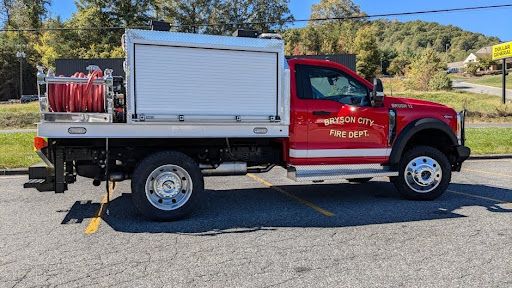
Photo by R9 Media Photo Collective on Pexels
Alt text: A pickup truck bed with a fire suppression skid unit on a rural property
Rural pickup fire-skid builds are one of the more practical utility upgrades a remote-property owner makes. Operators like BLZ Fire Skids and the wider modular-skid market produce slide-in units sized for half-ton, three-quarter-ton, and one-ton pickup beds, with electric pumps, water tanks, and modular plumbing that turn the truck into a defensible-space asset before the volunteer department arrives. The owner who runs a real use-case assessment before the build usually lands at the right unit on the first try rather than discovering mid-fire that the pump output cannot reach the back fence line.
Why Does the Fire-Skid Build Matter More Than Most Pickup Utility Picks?
The first thing to understand is that a fire-skid is not a fire-engine substitute. It is a defensible-space tool, useful in the first 5 to 15 minutes of a small ignition or in the long aftermath of mop-up after the main response has cleared. The build matters because the difference between a truck with 40 gallons of water and a truck without is sometimes the difference between a barn that survives and a barn that does not.
The factors that shape the decision:
- Response-time gap on rural land. A property 15-plus minutes from the nearest fire station has a meaningful ignition-to-response window where the owner is the only resource on scene. A 40-to-100-gallon skid covers that window on small ignitions.
- Defensible space maintenance. The Ready.gov wildfire guidance sets out the defensible-space principles every rural property owner should match. A truck-mounted skid is the active layer that complements vegetation management, ember-resistant siding, and a cleared driveway.
- Mop-up and post-response duty. Volunteer departments often clear the scene before the soak phase is complete. A skid-equipped pickup handles the multi-hour soak that prevents reignition.
- Modular utility for the rest of the year. The skid uninstalls in 30 to 60 minutes when the truck is needed for other work.
A fire-suppression skid is a self-contained pump-and-tank unit designed to fit a standard pickup bed, with electric or gas-driven pump output rated in gallons per minute, a water tank rated in gallons, hose reels, nozzles, and the plumbing to deliver water at usable pressure. The wider standards framework is maintained by the National Fire Protection Association, which publishes the consensus codes that municipal departments and serious rural owners follow.
What Should Rural Pickup Owners Look For in a Fire-Skid Manufacturer?
A short checklist for owners evaluating manufacturers before the first order:
- Bed-fitment specifications matched to the truck. A skid sized for a half-ton bed will not fit a one-ton bed cleanly, and a one-ton skid will overload a half-ton suspension. The manufacturer should publish exact bed-fitment specifications for every unit.
- Pump output and pressure ratings. Owners should match the pump output (gallons per minute) and pressure rating (PSI) to the use case. A 5-gpm pump suits hand-line work; a 20-gpm pump suits longer hose reaches at higher pressure for property-perimeter defence.
- Tank capacity matched to defensible-space needs. A 50-gallon tank handles hand-line work; a 100-to-300-gallon tank handles perimeter defense and mop-up on larger properties.
- Electric versus gas-driven pumps. Electric pumps run quiet, require no separate fuel source, and demand reliable battery and alternator capacity on the truck. Gas-driven pumps deliver higher flow rates but add a separate fuel source and noise floor.
- Modular construction and uninstall time. A modular skid that uninstalls in 30 minutes is usable for the rest of the year. A welded-in build commits the truck to fire duty year-round.
- Reasonable warranty and parts availability. A 2-to-5-year warranty on the pump and structural elements is the standard floor. Parts availability through the manufacturer’s network matters when a pump impeller fails on a Saturday afternoon.
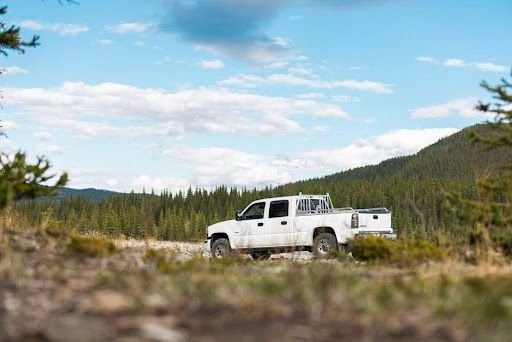 Photo by JBC Media Company on Pexels
Alt text: A 4×4 pickup truck on a dirt road through forest scenery
What Common Mistakes Do Rural Pickup Owners Make Around Fire-Skid Builds?
A short list of recurring mistakes that surface in post-incident reviews:
- Choosing a skid that overloads the truck. A 300-gallon water tank on a half-ton truck exceeds the bed payload by a meaningful margin. Owners should match the skid weight (water + tank + pump + ancillary) to the truck’s published payload capacity.
- Skipping the electrical capacity check. Electric-pump skids draw heavy current and need a properly-sized alternator and battery. Owners building on stock electrical systems sometimes drain the battery during a serious mop-up shift.
- Forgetting the suspension upgrade. A loaded skid changes the truck’s centre of gravity and ride dynamics. Owners running serious skids usually pair the build with the suspension and tyre work covered in the building your dream truck custom modifications guide to keep the truck stable on rough terrain.
- Underestimating the water-source plan. A 100-gallon tank empties faster than most owners expect. The build only works if there is a refill source nearby (pond, hydrant, water tender). Owners on properties without a refill plan run dry mid-event.
- Choosing on price alone. The cheapest skid rarely produces the cleanest service life. The pumps, the plumbing, and the structural fasteners all benefit from quality at the spec stage. The same off-road-capability discipline covered in the top off-road pickup trucks post applies to fire-skid manufacturer selection: pick on engineering, not on price.
- Not training the household on the equipment. A skid the owner cannot operate efficiently in a stress moment is less useful than a skid that everyone in the household has run through a dry-run drill.
How Should Rural Pickup Owners Plan the Fire-Skid Build?
A standard fire-skid build for a rural pickup runs on a 30-to-90-day planning cycle.
The planning sequence:
- Day 60 to 90: use-case assessment. Document the property size, the response-time gap to the nearest fire station, the existing defensible-space measures, and the truck’s payload and electrical capacity. Map the water sources on or near the property.
- Day 30 to 60: manufacturer evaluation. Three skid-manufacturer proposals with bed-fitment specs, pump output, tank capacity, modular versus welded construction, warranty terms, and parts availability. Compare against equivalent units in the same payload class.
- Day 14 to 30: install preparation. Confirm the suspension and electrical capacity, schedule any upgrades, plan the water-source refill points on the property, brief the household on the equipment.
- Day 0 to 14: install and dry-run training. The skid installs and the household runs through a dry-run drill. Verify pump output, hose reach, and refill timing in a non-emergency context before the equipment becomes load-bearing.
The discipline that runs across all four stages is the use-case-honest assessment. The owner who matches the skid to the actual property size, response-time gap, and water-source availability lands at a build that delivers when the household needs it rather than a build that looks good in the barn but cannot reach the back fence line under load.
Frequently Asked Questions From Rural Pickup Owners About Fire-Skid Builds
How much does a pickup fire-skid unit typically cost?
Entry-tier slide-in fire-skid units start around 2,500 to 4,000 dollars for compact 50-to-75-gallon electric-pump configurations. Mid-tier 100-to-150-gallon units run 4,500 to 9,000 dollars. Larger 200-to-300-gallon units with high-output pumps and dual-reel plumbing run 9,000 to 18,000 dollars depending on configuration and material spec.
Does a fire-skid build affect the truck’s insurance or warranty?
Most manufacturer warranties are unaffected by a slide-in modular skid because the equipment does not modify the truck’s drivetrain, frame, or electrical systems beyond an auxiliary battery or trailer-style power tap. Owners should notify the auto insurer about the equipment, and many household policies include rural fire-protection equipment in the property line rather than the auto line.
What truck size matches what skid capacity?
A half-ton truck (Ford F-150, Ram 1500, Chevy Silverado 1500) typically handles a 50-to-75-gallon skid within payload. A three-quarter-ton truck handles 100-to-150 gallons. A one-ton truck handles 200-to-300 gallons. Owners running heavier skids on lighter trucks should verify the payload math before the build.
Can a fire-skid be used for non-fire purposes?
Yes. Many rural owners use the same skid for dust suppression on driveways, watering livestock paddocks, washing equipment, filling stock tanks, or rinsing the truck and trailer after a mud run. The dual-use value tends to make the build feel less single-purpose across the year.
A Final Note for Rural Pickup Owners Considering a Fire-Skid Build
The rural pickup fire-skid build is one of the more practical utility upgrades a remote-property owner makes, and the project rewards the owner who matches the skid to the truck’s payload, the property’s actual response-time gap, and the household’s capacity to operate the equipment under stress. The owners who pick the cheapest skid, ignore the payload math, or skip the dry-run drill usually find out at exactly the wrong moment that the pump cannot reach the back fence or the household is unsure how to start the unit. The marginal effort of careful build planning is small. The marginal benefit shows up at the moment a small ignition starts on the back forty, the volunteer department is still 18 minutes out, and the truck has the water on board to keep the situation a small ignition rather than a property-wide incident the household spends the next year recovering from.