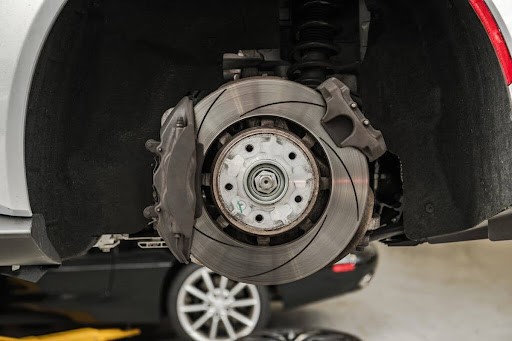
 If your car has trouble coming to a stop, swerves left or right or you hear weird noises each time you press the brake pedal, time to visit your local mechanic. Brakes are undoubtedly the single most important safety system on your car. They’re tasked to stop the car at a reasonable distance, deliver consistent braking power regardless of weather or road conditions, and even serve a performance role by letting you keep more speed in straights before applying the pedal.
The quality and condition of the different parts that go into your vehicle’s braking system will determine stopping power, pedal feel, and how long your brakes last as a whole. Most parts intended for street cars and carrying the ‘performance’ moniker have been derived from tried and tested racing applications. This is where they’re taken to extremes before scaled-down and more affordable options reach the shelves and the wider public. Different components wear out at different times, but it’s the pads that you’ll be changing out more often.
The Basics of These Parts
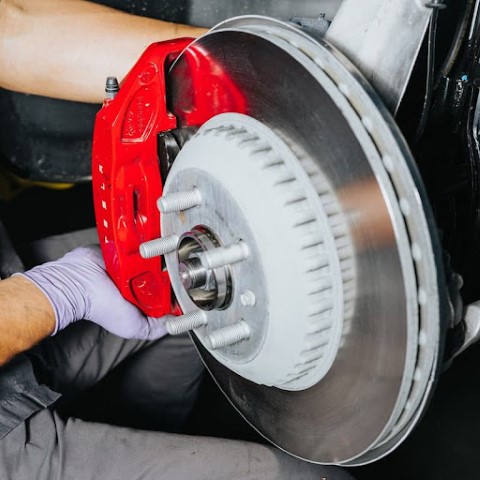
Disc brakes are found in all but the cheapest cars, and consist of discs, calipers, and pads working in unison to bring the car to a safe stop. When pressing on the pedal, brake fluid from a master cylinder creates pressure to dislodge pistons in the calipers and push the pads inside against the discs. Braking, then, relies on the friction created between the disc and the pads, and both parts need to supply the right brake force for the vehicle.
While OEM parts do an adequate job in most driving scenarios, going with performance brake pads and uprated discs nets you much-improved braking power, more feel through the pedal, better body control in hard braking, and the ability to come to a halt faster and in shorter distances at higher speeds. All this equates to faster times around the track and increased safety on the road.
Which Pads Work Best
Pads come in different flavors. They differ as to how they cope with varying weather conditions, their temperature limits (before brake fade causes safety issues) and how fast they warm up to bring optimal stopping power. Pads also need to be chosen for the brake force they generate with the discs and how easy they are on the rotors. Moreover, noise levels, the feedback you get through the pedal, as well as the dust the friction material generates, can impact your choice.
Compounds are the main thing that differentiates pads and how they perform in varying conditions. There can be a dozen different materials in pads. OEM replacements tend to last longer and work across more varied scenarios but lack the brake force in harder braking. Performance pads take the opposite approach and work better at higher speeds and have more bite so can bring the car to a stop faster. But they need to warm up first, so aren’t what you want for everyday driving on the street.
Of course, some compromises bring the best of both worlds. These are a set-and-forget option that can net you the best braking performance on the street and can generally keep up with true racing pads for track use.
Organic or NAO Pads
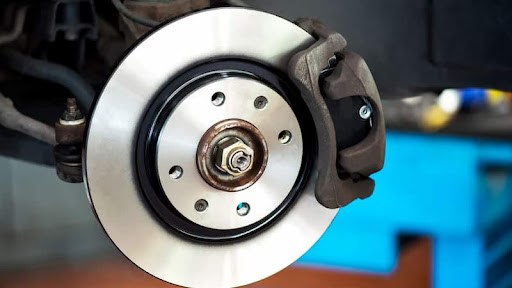
The first iteration of these types of pads contained asbestos, a hard but toxic substance infamous for causing serious respiratory diseases. This was banned in the 1990s and brake parts makers soon turned to composite organic materials and mixtures of carbon compounds, glass, silica, rubber, fibers and even Kevlar.
Organic pads are probably what your car came with when new. The material is inherently softer than other options and creates just enough friction with the rotors without getting overly hot. This also means they’re meant for everyday driving but will suffer under tougher conditions and higher speeds on a track. The softer compound wears faster and produces a fair bit of dust, but won’t eat into the rotors. It’s not all gloom though. Organic pads provide decent brake actuation even when cold, aren’t noisy, and are the cheapest you can buy.
Semi-Metallic
Semi-metallic pads contain between a 30 and 70 per cent mixture of different metals, mainly copper, iron, steel, and composite alloys and graphite or resin fillers acting as an adhesive. The metal content determines whether they are meant for everyday street use, or more extreme track days. Pads with a higher metal content naturally have better braking performance.
Due to the harder material, semi-metallic pads have higher friction rates with the rotors and can endure higher temperatures, meaning increased brake force with more bite, consistent performance when hot or cold, and less wear. This comes at a price though. They can get noisy and aren’t exactly gentle with discs.
Ceramic Pads
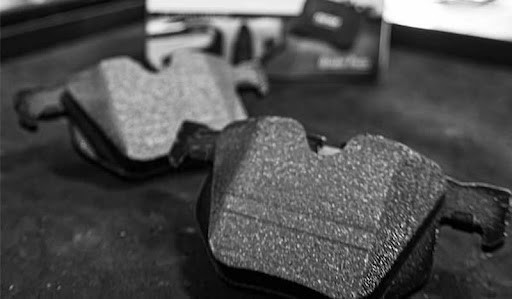 Ceramic brake pads are a mixture of glass ceramic fibers, fillers, and copper filaments. They can endure extremely high temperatures, have the highest friction with the discs, and provide the best braking feel. In short, they deliver more consistent braking across different roads and weather conditions. Moreover, they’re quieter than semi-metallic variants, cause less wear to other parts, and generate virtually no dust.
The only major downside is that they need more time to get to optimal working temperatures. The higher price of ceramic pads is offset by the fact that they can last twice as long as semi-metallic performance brake pads and general-purpose organic variants.
How Long Do Brake Pads Last?
Automotive brake pads can last anywhere between 20 and 60 thousand miles. This depends on where and how you drive, vehicle type, weight and power output, the materials and build, and how they interact with discs and other components. Expect to change pads sooner and more often the harder you are on both the throttle and pedals. A good idea is to periodically check the condition of the pads and discs, and replace them within recommended manufacturer intervals.
If you notice that the car takes longer to come to a stop, hear grinding or screeching noises when slowing down, or the car pulls to either side, then time for an inspection. Most issues are with worn friction material to the point that the discs are scraping against the pad metal backplate. There can also be uneven wear on different wheels, a soft or spongy pedal feel, wheels vibrating when braking, and an illuminated brake light in the dash.
Pads are sold in front and rear pairs, with front pads being bigger and slightly costlier. For even braking, you’ll be looking to replace both the left and right pads at the same time. Brands often have tiered lines meant for different uses. And they can sell them with pairing discs with the same performance characteristics.
If you’re considering upgrading, then this is a simple way to save some cash. Organic pads won’t be much of an improvement over OEM varieties but will suffice for most uses. High-end semi-metallic and ceramic pads bring better overall performance, more responsive braking, improved safety, and best of all, let you have a bit of fun. On the other hand, you could always choose to sell your car. A lot of people shop for used cars for sale, so the chances of selling it are fairly high. At the end of the day, it’s up to you and how you expect your car to perform.