 The automobile industry has changed quite over the period starting from early 1900’s to today while transport is responsible for 20% of ghg emissions. They include the changes that are as a result of technology improvement, change in customer preference and the development of consciousness in the effects of the environment on human life. This article explores the evolution of automotive design from the early 1900s to the present day, focusing on three distinct periods: The period in which automobile design began and the middle of the century design, and the present epoch of sustainable automobile design.
The Beginning: 1900 to Mid-Century
The era of automobiles can be considered as the beginning of the automotive age when vehicles were becoming more affordable to the masses at around the early 1900s. The industrial approach to manufacturing, thanks to the assembly line technique adopted by Henry Ford in 1913 had tremendous impacts. This innovation contributed to cutting down costs hence making it possible to produce cars such as Model T at an affordable price The design of the early cars centered on the practicality of the vehicle rather than its looks.
The first car had simple designs with a very few intimidating looks, large square body structures. Due to the improvement of the world’s industry, manufacturers started to design stylish elements in vehicles. Streamlined designs came into competition in, or around, the 1920s and 1930s with a smooth curves concept and with more concentration on aerodynamics. This particular design statement gave the car a better look and at the same time offered the vehicle’s better aerodynamics.
The middle of the century is a time when the designs of automobiles started to post a reflection of the prevailing social changes. The depression and the World War II could have slowed down car design but after the war, consumers demanded cars and so auto makers came up with daring and jazzy colors. The addition of tail fins and use of chrome plating appeared in cars, thus cars were designed to be pleasing to the eye and synonymous to optimism. This also led to diversification of vehicles where glamorous cars also came into the scene during the sixties’ muscle cars that were powerful machines.
The Transformation from Mid-century to Millennium
As the period of the 1970s approached the automotive industry was in for big changes. This can be attributed to the oil crisis that happened in 1973 which saw consumers shift attention from fuel power and size to fuel consumption. The change in the consumer behavior of economic cars affected the designing of automobiles since manufacturers evolved into making compact and cheap automobiles. This change was well illustrated by the arrival of car models such as the Honda Civic and the Toyota Corolla.
Due to getting more sensitive safety and emission control standards, manufacturers introduced new ideas in fields including crash safety and emissions. cars began to have features such as the crumple zones and better braking system that improved on the safety aspect for the users of the vehicles. Also, the introduction of catalytic converters and the use of Electronic fuel injection systems played a part to reduce the emission of hazardous substances.
During the last few decades of the Twentieth Century, a new technology, known as digital technology, became widely used in automotive design. With the new introduction of using computer-aided designs CAD, engineers were in a position to bring in more elaborate and refined styles of vehicles. This technological advancement came along with inventions of other features to enhance both the performance as well as safety such as anti lock braking systems –ABS, and the electronic stability control –ESC.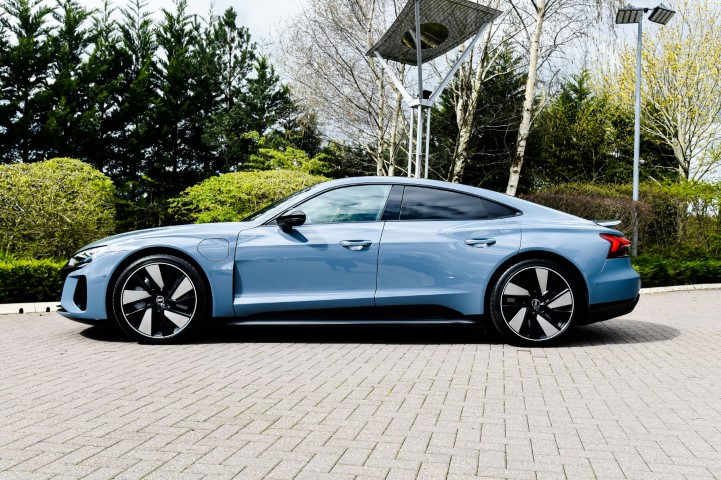
The Modern Era: Sustainable Design and New Trend Shift Towards Electric Automobiles
As it entered the new millennium, the automotive industry has come under pressure concerning the environment. Given that the transport sector accounts for about 20% of global emission of greenhouse gasses, manufacturers are now adopting sustainable transportation systems and electric vehicles (EVs). It is part of a new trend in and of itself that proves the desire of the industry to curb its impacts on the environment.
As it has been discussed, contemporary automotive design is eco-sensitive in multiple contexts. Auto makers are seeking means to cut overall vehicle weight and are turning to lighter materials including recycled plastics and structural composites. This approach goes a long way in saving fuel and at the same time reducing the amount of resources used during manufacturing.
Battery electric vehicles are quite revolutionary in the automotive design footprint. One of the most apparent aspects of the concept of efficiency is the shaping of an EV model that has a slim and sleek form most of the time for improved aerodynamics. Elimination of the conventional internal combustion engine makes it possible to adopt virtually any configurations, and therefore large interiors and other unique elements. Apparently, firms such as Tesla have taken the lead in this industry, showing that electric cars are not only effective and powerful, but also can be elegant.
Also, the developments in battery technology have enhanced the electric vehicles range and efficiency. Companies are dedicating a lot of money in the research and development of these various batteries to last longer, and to charge faster. This commitment has led to the changes in the design of automobiles especially with the adoption of EVs as a feasible mode of transport.
One of the exciting elements of current automotive descriptors is that of the application of technology. Cars have become more intelligent with Connected Car features like ADAS, Infotainment, and connectivity features. These technologies improve the experience in driving thus making cars more attractive and reducing risks associated with being on the road.
Conclusion
Looking at the evolution of automotive design, one can learn about alterations in the industry due to the consumers’ demand, new technologies, and challenges related to climate changes. From the functional designing of automobiles in the beginning of the twentieth century to the modern designed cars of today, the automobile industry has developed. With more and more manufacturers focusing on sustainability and emergence of various new technologies the future of automotive design seems to be bright and full of possibilities in making the automotive industry greener.