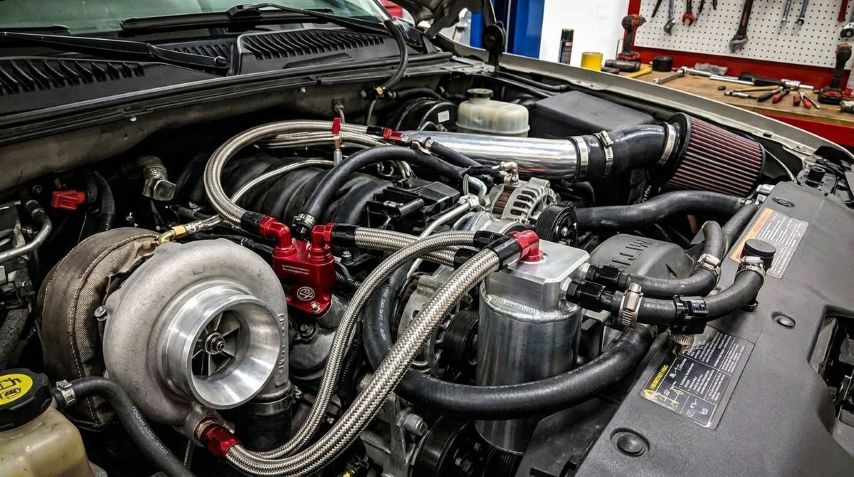
LLY Upgrade solutions remain one of the most discussed topics among Duramax owners because the 2004.5–2005 LLY Duramax is a bit of a paradox. The engine under the hood is a 6.6-litre turbo-diesel V8 that produces impressive power and durability. However, the LLY became a less-than-desirable choice for those who owned trucks because of one thing: overheating.
The LLY is not as well-known for being hot as the LB7 or the improved LBZ, but it’s very notorious for running hot, particularly if towing heavy loads up long grades or driving at high ambient temperatures. The happy news is that the overheating issue is not a fault in the engine block, but rather one of the block’s components.
Instead, it is due to a few restrictions in airflow and cooling systems.
By simply following the proper LLY Upgrade strategy, you will not only be able to fix the temperature gauge, but you will also be able to restore lost power and create a much more reliable truck.
For diesel enthusiasts looking to maximize reliability and performance, an effective LLY Upgrade plan can transform one of the Duramax platform’s most criticized weaknesses into one of its greatest strengths.
Gauge Magazine has also covered performance-focused topics such as OBD2 performance tuning and other strategies enthusiasts use to improve vehicle performance and drivability.
Why the LLY Duramax Is Known for Overheating
The first step to solving LLY thermal problems is to know what causes them. There are three main reasons why temperatures are climbing towards the red zone.
Restricted Factory Intake Design
The intake mouthpiece was designed very restrictively by General Motors. Because of this small opening, the engine can only take in so much air, especially at high RPMs and heavy loads. If the engine does not have enough air, the air-fuel ratio is too high, which causes incomplete combustion.
The incomplete combustion produces excessive heat in the exhaust stream. To sum up, Increased exhaust gas temperatures (EGTs) are directly caused by a choked intake that causes the cooling system to be overwhelmed.
Cooling Stack Airflow Problems
The air conditioning condenser, intercooler, and radiator are closely coupled to each other to form the LLY’s cooling “stack.” With the passage of time, dirt, insects, road debris, and even small stones get trapped between these parts. This accumulation has the effect of a blanket and prevents airflow crucial to heat exchange.
Until many LLY owners disassemble the front end, they are not aware that there is an inch of debris between their radiator and intercooler. This hidden dirt is the root cause of overheating when under stress.
Heavy Towing and High Ambient Temperatures
The LLY’s cooling system is sufficient for driving on flat ground without any loads. Throw a heavy rig and a steep grade on a 90-degree day, though, and the system is revealed as its limitations. The high engine load, low vehicle speed, and lack of airflow through the radiator make for a perfect storm. Many LLY owners end up idling the engine to cool it down before their engine can reach 230°F due to a lack of upgrades.
Best Airflow Upgrades for the LLY Duramax
The best way to cool and restore power to the engine is to improve the airflow into and out of the engine.
Upgraded Intake Components
Use a high-flow aftermarket intake mouthpiece instead of the factory one. This is a very inexpensive exchange that can improve airflow by 15 to 20% at high RPM. Combine a cleanable, high-surface-area air filter and a smooth intake tube. Your engine will be able to breathe deeper, which will help combustion and also reduce EGTs.
High-Flow Turbo Mouthpieces
Another restriction is the LLY’s turbo inlet. A superior turbo mouthpiece reduces the turbulence between the intake tube and the compressor wheel, thereby helping the turbo to “spool up” more efficiently. This gives a faster boost response and decreased drive pressure, which in turn decreases the amount of heat generated.
Exhaust Improvements
Backpressure will result from a restrictive exhaust system, which will increase EGTs. Use a turbo-back exhaust system that has a 4 or 5-inch diameter to run a straight-through muffler.
Reduced backpressure means the turbo doesn’t have to work as hard, and exhaust temps don’t get too high on extended drives. If you’re looking for a complete package, take a closer look at LLY Duramsax performance upgrades designed to tackle all these air-flow chokepoints.
Cooling and PCV Upgrades That Improve Reliability
A successful LLY Upgrade strategy isn’t just a matter of airflow upgrades. You’ll need to also consider the condition of the cooling system, as well as its long-term cleanliness.
Cleaning the Cooling Stack
Schedule a cleaning of the cooling stack components between 50,000 and 75,000 miles to disassemble the front of the truck. If you have packed debris, use a pressure washer and degreaser. A lot of owners are surprised at the amount of material that comes out and the drop in coolant temps afterwards.
Upgrading the Fan Clutch
The factory fan clutch on the LLY is late and only pulls about half as much air at low speeds. Fit a robust thermal fan clutch, which will clutch up earlier and circulate a greater volume of air across the radiator. This is one of the best individual improvements for towing during the summer months.
Reducing Oil Vapor Contamination
The LLY’s crankcase ventilation oil reintroduces crankcase vapor into the intake, which combines with soot to create sludge. This sludge can build up on the intercooler, turbo compressor, and intake manifold, which will eventually cause air to be blocked, reducing airflow. A CCV reroute helps to divert these vapors away from the intake, which helps to keep your air path clean.
Keeping Intercooler Piping Cleaner
After the oil vapour is removed, there is no sticky residue from the intercooler and piping. By keeping piping clean, there is no build-up of residue that causes airflow to diminish and turbo efficiency to drop, as many high-mileage LLYs do over time. A 2004-2010 LLY PCV reroute kit is a simple, cost-effective, and long-term solution for maintaining a clean engine bay and consistent performance.
Common Mistakes That Hurt LLY Reliability
Some bad habits can compromise your LLY’s dependability, even with the best parts.
Running Aggressive Tunes Without Supporting Mods
It’s a bad idea to add a powerful tune without improving the airflow and cooling system. If you fuel aggressively, the cylinder pressure and heat will be greater than your stock cooling system can manage. Always tune conservatively until mods are installed.
Ignoring EGT Monitoring
All modified and towing LLY engines should have an EGT gauge. Turbine wheels will melt, and exhaust manifolds will crack at pyrometer readings above 1300°F if the high temperature is maintained for too long. Keep an eye on EGTs; ease the throttle back as EGTs rise.
Delaying Cooling System Maintenance
Coolant degrades as time goes on. Hoses become brittle. The water pump is subject to wear. Never wait until it is too late to service the cooling system because it may heat up during an event. Change coolant every two years, change the thermostat, and check belts and hoses every two years.
The U.S. Department of Energy notes that proper airflow, cooling efficiency, and engine maintenance remain critical factors in diesel engine performance and longevity.
Owners focused on maximizing truck performance may also enjoy Gauge Magazine’s article on improving reliability through proper maintenance and upgrades.
Conclusion
The LLY Duramax need not be the “hot-headed” of the Duramax family. A strategic approach to the LLY Upgrade of airflow, cooling, and rerouting the PCV makes this engine into a cool-running, power/high-performance, and reliable workhorse. Improve intake and exhaust to reduce EGTs. Afterwards, clean the cooling stack and replace the fan clutch for increased cooling capacity in the radiator.
Lastly, direct the CCV system in a direction that will prevent oil sludge build-up in your intercooler and pipework. Don’t get aggressive with tuning without mods, always keep an eye on your EGTs, and keep current on cooler maintenance.
The LLY is a terrific engine with some redeeming value. Repair them, and your Duramax will be capable of withstanding heavy towing and hot weather.
When implemented correctly, an LLY Upgrade package delivers cooler operating temperatures, stronger performance, improved reliability, and greater confidence whether you’re towing, daily driving, or building a truck that can handle anything the road throws at it.