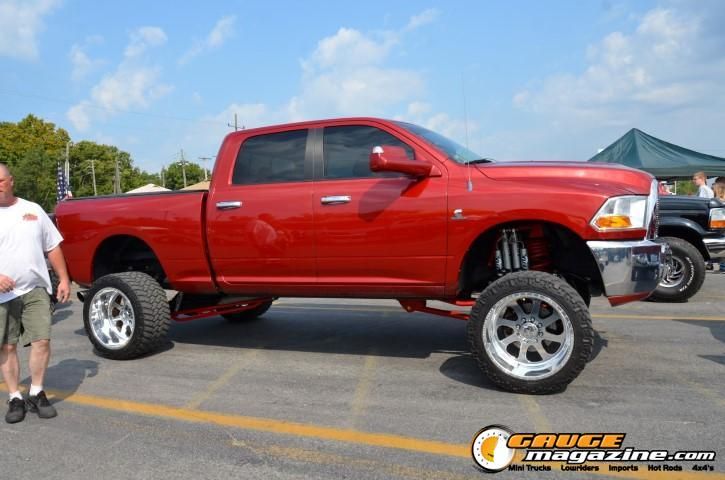
 You’ve seen them at every truck meet and SEMA booth — six-inch lifts riding on 37s, LED light bars bright enough to land aircraft, and bumpers built from quarter-inch plate steel. The lifted truck scene has exploded over the last decade, and the builds keep getting more aggressive. But here’s the conversation nobody wants to have between the frame chop and the alignment shop: most builders have no idea where their state draws the line between a legal vehicle and a rolling code violation. And that gray area can cost you a lot more than a fix-it ticket if something goes wrong on the road.
The Patchwork of Federal and State Regulations
There is no single federal law that says how high you can lift your truck. The Federal Motor Vehicle Safety Standards (FMVSS) set baseline requirements for things like headlight height, brake performance, and bumper impact zones, but they apply to manufacturers at the point of sale — not to what you do in your garage afterward. The National Highway Traffic Safety Administration (NHTSA) regulates factory vehicles, not aftermarket builds.
That means lift kit legality falls almost entirely on state law, and the rules vary wildly. California caps frame height at 23 inches for half-ton trucks under SB 2078 and requires mud flaps that reach within 10 inches of the pavement. Georgia limits lifts to four inches above factory spec for body lifts and six inches for suspension lifts. Pennsylvania has no specific lift height restriction but enforces bumper height maximums during state inspection. Louisiana requires lifted trucks over a certain height to carry additional insurance coverage.
Tire protrusion is another area that catches builders off guard. States like Florida require that tires cannot extend beyond the fender well without mud flaps or fender flares. Running 12-wide tires on a stock-width bed without flares is not just an aesthetic choice — it is a citable offense in many jurisdictions and a factor adjusters look at after a collision.
What Happens to Your Insurance When You Modify
Most standard auto policies cover the vehicle as described at the time the policy was written. Drop a $4,000 lift kit, $3,500 in wheels and tires, and a $1,200 bumper on your truck without notifying your carrier, and you’ve created two problems. First, that added value is not covered if the truck is totaled. Second, and more critically, undisclosed modifications can give the insurer grounds to deny a claim entirely.
Insurers assess risk based on the vehicle’s factory specifications. A truck with a six-inch lift, 35-inch tires, and a raised center of gravity handles differently than what rolled off the assembly line. The Insurance Institute for Highway Safety (IIHS) has documented how vehicle height and mass differentials affect crash outcomes, particularly in collisions between lifted trucks and standard-height passenger cars. If your insurer determines that an undisclosed modification contributed to the severity of a crash, you may find yourself holding the bill.
The fix is straightforward but often skipped: call your agent, declare every modification, and get the policy adjusted. Some carriers offer specific coverage riders for modified vehicles. It costs more per month, but it costs infinitely less than a denied claim after a serious accident.
Comparative Fault and Modified Vehicle Liability
This is where the build sheet stops being a conversation piece and starts becoming evidence. In states that use comparative fault — which is most of them — both parties in an accident can share responsibility. If you rear-end someone and your stock bumper would have hit their trunk lid, but your lifted truck’s aftermarket bumper instead hit the rear window, the other driver’s attorney will argue that your modification increased the severity of their client’s injuries. And they will probably be right.
Bull bars and brush guards present similar issues. They protect your grille from trail debris, but in a pedestrian impact or a collision with a smaller vehicle, they concentrate force in ways the factory crumple zones were never designed for. A modification that is perfectly legal to install can still create liability exposure if it worsens crash outcomes.
Navigating these liability questions after a modified truck accident requires attorneys who understand both vehicle mechanics and personal injury law. The Bruning Law Firm handles truck accident cases where vehicle modifications factor into fault determinations — it is a niche area where generic legal advice falls short, because the technical details of the build directly influence how fault gets allocated.
Five Modifications That Create the Most Legal Exposure
1. Lift Kits Beyond State Maximums
Exceeding your state’s height limit makes the vehicle illegal to operate on public roads. Period. If you are involved in an accident while driving an illegally lifted truck, you have handed the opposing counsel their opening argument. Check your state’s Department of Transportation guidelines — many states publish them online, including the Texas DOT, which maintains accessible vehicle equipment standards.
2. Aftermarket Bumpers Without DOT Compliance
Factory bumpers are designed to meet FMVSS 581, which dictates impact absorption at specific heights. A custom plate-steel bumper welded in a home shop looks great but absorbs almost no energy in a collision. It transfers that force directly to whatever it hits.
3. LED Light Bars Used On-Road
Virtually every state prohibits the use of forward-facing auxiliary light bars on public roads. They are designed for off-road use only. Running them on the highway is not just illegal — if you blind an oncoming driver and cause an accident, the light bar becomes exhibit A.
4. Oversized Tires Without Re-Gearing or Brake Upgrades
Jumping from 33s to 37s without re-gearing the axle or upgrading the braking system changes the truck’s stopping distance and speedometer accuracy. Your speedometer may read 60 when you are actually doing 67. That matters in a speed-related accident investigation.
5. Exhaust Modifications That Exceed Noise Ordinances
Straight-piped trucks are a staple at meets, but many municipalities enforce decibel limits. Getting pulled over for exhaust noise is one thing. Getting into an accident while operating a vehicle with multiple code violations on the books gives an insurer every reason to scrutinize your claim.
How to Build and Stay Legal
None of this means you should leave your truck stock. It means you should build smart.
Know your state’s laws before you buy parts. A quick search for your state’s vehicle code on lift height, bumper height, tire coverage, and lighting will save you from buying components you cannot legally run on the street.
Use certified shops and keep every receipt. If a modification ever comes into question — in an insurance claim, an inspection, or a courtroom — documentation from a reputable shop carries weight. A handwritten receipt from a buddy’s garage does not.
Get your truck inspected after major modifications. Even in states where annual inspection is not required, a voluntary inspection creates a paper trail showing the vehicle met standards at a specific date. Some shops will provide a post-modification safety inspection letter.
Notify your insurance carrier. Declare every modification. Ask about agreed-value policies or modification riders. If your carrier will not cover your build, find one that will — specialty insurers like Hagerty and Grundy exist for exactly this reason.
Separate your show build from your daily driver. If you want to run an eight-inch lift on 40s with a light bar and straight pipes, build it for the trailer and the track. Keep your street truck within the bounds of what your state allows.
Build Smart, Drive Informed
The custom truck community is full of skilled fabricators and passionate builders who pour real money and real hours into their rigs. The last thing anyone wants is for a build to become a liability after an accident. Know the regulations in your state, document your modifications, keep your insurance current, and understand that what you bolt onto your truck can follow you into a courtroom. The best builds are the ones that look incredible, perform on the trail, and keep you covered on the street.