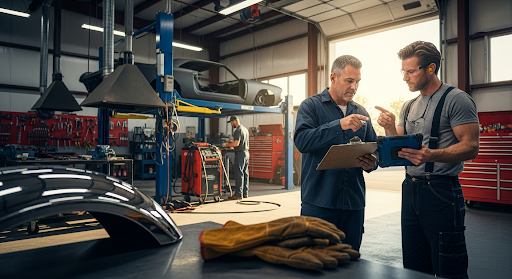
A well-organized custom shop with proper lighting, PPE, and clear walkways can reduce many common workplace injury risks.
Custom Auto Shop Injuries can affect mechanics, fabricators, painters, and auto body technicians who work around heavy equipment, chemicals, welding tools, and vehicles every day. In a custom auto shop, the same skills that turn raw metal and damaged panels into finished builds also put technicians around real hazards every single day. Welding arcs, grinders, paint chemicals, lifts, and heavy parts all carry risk; when something goes wrong, the injury can affect far more than just your shift.
The numbers back that up. In Missouri alone, private employers reported 52,000 nonfatal workplace injuries and illnesses in 2023. Out of those incidents, 28,300 were severe cases involving missed work, job transfers, or restrictions. If you’ve spent any time around a frame machine or a paint booth, none of that will surprise you.
For professional mechanics, fabricators, and auto body technicians, understanding these hazards is a basic part of the job. You’ve got to protect both your physical health and your financial stability when accidents happen. This guide breaks down what you need to know about workplace injuries in the custom auto industry, from the immediate steps you should take after an accident to the compensation benefits you might be entitled to and how to handle a disputed claim.
Because Custom Auto Shop Injuries can happen suddenly or develop slowly over time, workers should understand both immediate accident response and long-term documentation. Gauge Magazine has also covered related shop and vehicle topics such as working safely in tight engine bay spaces.
Why Custom Auto Shop Injuries Are So Common
Custom auto work combines several high-risk factors that push injury rates higher than most other trades. Technicians routinely move heavy parts, work under suspended loads, and handle hazardous materials. Operating grinders, cutting tools, and frame machines requires intense physical focus and leaves almost no room for error. And when you add awkward body positions (think reaching under a dashboard at an odd angle or leaning deep into an engine bay for the third hour straight), the physical toll becomes pretty obvious.
These hazards get worse when technicians rush to meet deadlines or skip basic safety protocols. If you’ve read the guide to buying a diesel truck here on Gauge, you know heavy-duty machinery demands respect. A small mistake around commercial vehicles or heavy custom builds can instantly result in a serious incident; there’s no rewind button on a dropped transmission or a snapped frame rail.
The Shop Hazards That Matter Most
Mechanic workplace injuries frequently stem from crush accidents involving vehicles slipping off lifts, frame machine snap-backs, or dropped parts. Ask any fabricator who’s been in the trade for a decade, and they’ll tell you they’ve seen at least one close call with a lift. Welding shop injuries are also common, with technicians suffering severe burns from torches or eye injuries from stray sparks and metal fragments. Respiratory issues pose another major danger, since painters and body techs regularly inhale sanding dust, paint fumes, and chemical vapors that can build up quickly in a poorly ventilated space.
Slip-and-fall hazards remain a constant threat due to scattered air hoses, extension cords, and spilled automotive fluids. Sound familiar? Hazardous chemicals used in auto body repair can also cause severe skin irritation and vision damage if proper personal protective equipment is ignored. Even the most experienced custom fabricator can sustain an injury when basic shop housekeeping falls behind.
Short-Term Injuries and Long-Term Wear
Shop accidents generally fall into two categories: sudden trauma and gradual wear. Sudden trauma includes clear, immediate incidents like a crushed hand, a severe burn, or a head injury from a falling tool. Gradual wear includes the repetitive strain injuries mechanics face daily, things like carpal tunnel syndrome, back strain, and chronic shoulder damage from years of sanding, wrenching, and polishing. The tricky part with gradual wear is that it sneaks up on you; by the time you notice something’s really wrong, the damage has been compounding for months or even years.
Serious work injuries in any physical profession can happen in a flash and instantly affect income. For instance, a lawncare worker was critically injured while working in Fairway, showing how fast an on-the-job accident can alter your life. Reporting these injuries can also be stressful. A recent case involving a KC railroad worker highlighted how employees sometimes face wrongful suspension or pushback after raising safety concerns. That’s exactly why knowing your rights matters so much.
What to Do Right After a Garage or Fabrication Shop Injury
Taking the correct steps immediately after an injury protects your health and ability to file a valid workers’ compensation claim. Plenty of workers try to brush off an injury, only to realize days later that they need expensive medical treatment, and now the clock is working against them. Having a plan in place removes the guesswork when an accident happens.
The First Moves That Protect Your Health and Your Claim
If you suffer an injury in the shop, here are the immediate garage injury steps to follow:
- Stop work and get to a safe area.
- Report the injury to a supervisor immediately.
- Ask for medical attention right away, especially for head, back, crush, burn, or chemical exposure injuries.
- Write down the details while they are fresh (your phone’s notes app works fine for this).
- Take photos of the scene, tools, equipment, PPE, and injuries if you can do so safely.
- Request a copy of any incident report and keep your own records separate.
What to Document Before the Scene Changes
Memory fades quickly after a traumatic event, and shop environments change fast. Somebody mops up a fluid spill, a tool gets moved, and suddenly the scene looks nothing like it did when the accident happened. You need to document the date, time, and exact location of the incident in the garage. Make a specific note of the tool, vehicle, or piece of equipment involved, as well as the task you were performing when the injury occurred.
Note the names of any coworkers who saw the accident. Note the personal protective equipment you were wearing at the time. Also, document any visible hazards that contributed to the incident, such as fluid spills, damaged equipment, poor ventilation, or missing machine guards. All of this will serve as your evidence if the claim gets complicated later.
When It Makes Sense to Get Outside Guidance
So you’ve reported the injury, gotten medical care, and documented the scene. Now what? The next challenge is often the claims process itself. If your employer or the insurance company starts questioning what happened, delays treatment, or pushes back on wage-loss benefits, it helps to have a reliable Kansas City resource for injured workers that lays out what Missouri workers’ compensation covers and what deadlines you can’t afford to miss. That kind of professional guidance from a firm like Northland Injury Law can address questions about authorized medical care, temporary disability payments, and what to do when a valid claim is denied or underpaid. It can also reduce stress and help make sure you meet strict filing deadlines.
Medical Care, Lost Wages, and Missouri Workers’ Compensation Basics
Understanding how workers’ compensation operates in Missouri helps you know what benefits you may actually receive. The system is designed to provide medical care and wage replacement for workers injured in the course of their work. But the rules governing authorized doctors and benefit limits are strict, and they trip up many people who assume the process is straightforward.
What Workers’ Compensation Usually Covers
A standard workers’ compensation claim covers authorized medical treatment, temporary wage-loss benefits, disability benefits, and death benefits for surviving dependents. The stakes for severe accidents are high: Missouri recorded 114 fatal work injuries in 2023. While that total is heavily driven by commercial transit and highway transportation incidents (which account for 38% of the fatalities), fixed-location auto and fabrication shops pose their own severe operational risks.
For nonfatal injuries causing missed work, temporary total disability (TTD) in Missouri is generally 66 2/3% of average wages, subject to a legal cap. Effective July 1, 2025, the maximum weekly benefit rate for TTD, PTD, and death benefits increased to $1,280.84, according to Missouri benefit updates. If injuries result in a settlement, the average settlement amount based on 2015 to 2023 wage statistics is about $22,500. Not exactly life-changing money if you’re looking at a long recovery, which is why understanding your full range of benefits matters.
The Occupational Safety and Health Administration provides safety information for autobody repair and refinishing work, including hazards related to chemicals, ventilation, and protective equipment.
Common Injury Consequences and Potential Benefit Issues
| Injury Type | Common Shop Example | Immediate Concern | Possible Work Impact | Workers’ Comp Issue to Watch |
|---|---|---|---|---|
| Crush injury | Vehicle slips or heavy part falls | Fractures, nerve damage | Weeks or months off work | Disputes over severity or long-term impairment |
| Burn injury | Welding or torch accident | Infection, tissue damage | Restricted duty or missed work | Need for specialist care approval |
| Chemical exposure | Paint booth or solvent contact | Breathing trouble, skin or eye injury | Temporary restrictions | Causation disputes if symptoms develop later |
| Repetitive strain | Sanding, wrenching, polishing | Chronic pain, numbness | Reduced productivity or time off | Employer may argue it isn’t work-related |
| Back or shoulder injury | Lifting panels, engines, or wheels | Mobility limits | Modified duty or lost income | Pressure to return before full recovery |
Why Fast Reporting Matters in Missouri
Workers must notify their employers promptly after an injury. Missouri generally requires notice within 30 days of the accident, and that notice needs to be in writing. Missing this deadline can mean a denied claim, full stop.
Employers have their own reporting obligations too, including filing a First Report of Injury with the Division of Workers’ Compensation. Prompt action encourages the employer to open the claim and authorize medical treatment quickly, helping you get the care you need without unnecessary delays. Don’t wait and hope things get better on their own; start the paper trail immediately.
Common Problems Injured Shop Workers Run Into
Filing a claim doesn’t guarantee immediate, stress-free benefits. Not even close. Injured custom fabrication shop workers routinely encounter administrative roadblocks, and insurance companies often look for reasons to reduce payouts or deny claims entirely.
When the Employer or Insurer Questions the Injury
Insurance adjusters often argue that an injury is a pre-existing condition, especially with back pain or joint issues. They might claim you didn’t report the accident fast enough or argue that your repetitive strain problem came from hobbies outside the shop (ever been told your shoulder problems are from weekend softball rather than ten years of block sanding?). Adjusters also frequently push back against doctors, claiming you’re ready to return to work sooner than your physician recommends.
These disputes highlight the importance of documentation. As the Kansas City rail yard investigation showed, workers can face unfair discipline for reporting safety issues. Detailed written records protect your credibility when an insurer tries to cast doubt on your account.
The Mistakes That Can Hurt a Valid Claim
Many injured workers accidentally harm their own claims without realizing it. Waiting too long to report an injury is the most common error, as it allows the insurer to argue the injury happened off the clock. Minimizing your symptoms to a doctor or skipping medical appointments also signals to the insurance company that you aren’t seriously hurt.
Failing to follow your doctor’s treatment instructions can lead to suspended benefits. You should also keep copies of all medical records, work restrictions, and communications with your employer. And here’s the one that catches people off guard: giving inconsistent descriptions of how the accident happened will almost certainly trigger a claim denial. Tell the same story every time, because it should be the truth.
Safe Shops Protect Builds and the People Doing the Work
Building high-quality vehicles requires a professional, controlled environment. Shop safety directly affects both the quality of the work and the health of the crew. Think of it this way: a clean, well-maintained shop produces better builds and fewer injury claims. A safe custom auto shop treats injury prevention as a daily priority, not an afterthought.
What a Safer Custom Shop Looks Like
A professional fabrication shop features clear walkways and excellent lighting. Air hoses, extension cords, and welding leads are organized rather than tangled across the floor (you’d be amazed how many slip-and-fall injuries trace back to a single cord nobody bothered to route properly). Paint and welding areas should have industrial-grade ventilation systems to reduce respiratory hazards.
Vehicle lifts, floor jacks, and frame machines should undergo regular maintenance and inspection. The shop should also maintain dedicated PPE stations, functioning eyewash stations, and accessible spill kits. As noted in the guide to buying new car parts, a professional environment supports safe installations and helps protect the integrity of quality parts.
Why Shop Culture Matters as Much as Equipment
Even the best tools can’t replace a strong safety culture. A safe shop relies on continuous training, clean workflows, and open communication between technicians and management. Workers need to feel comfortable reporting hazards without fear of being ignored or reprimanded.
When management takes close calls and minor injuries seriously, it can help prevent major accidents down the line. A positive safety culture helps make sure equipment guards stay in place, lockout procedures are followed, and nobody rushes a heavy lift just to beat the clock. If the shop owner treats a near-miss like a warning rather than a non-event, everyone benefits.
For builders and technicians, safety also supports better craftsmanship. Gauge Magazine’s coverage of automotive spot welding quality control shows how precision, process control, and safety-minded workflows all matter inside professional automotive environments.
Protecting Your Recovery and Your Livelihood
For the people who build, repair, and finish vehicles for a living, getting hurt on the job is more than a temporary setback. Custom auto work is highly skilled but also physically demanding. Injuries can come from a sudden dropped engine block or from the cumulative toll of long hours spent block-sanding panels, and either one can put you on the sidelines.
The right steps in the first few hours and days can protect your health, your income, and your ability to return to the shop safely. Immediate reporting, seeking proper medical care, and thorough documentation create a strong foundation for recovery. Never assume that a delayed or disputed claim means you’re out of options; wage-loss and medical benefits exist to help protect professional mechanics when the unexpected happens.
Custom Auto Shop Injuries can change a technician’s life quickly, but strong documentation, fast reporting, proper medical care, and a safer shop culture can help protect both the worker and the work they are known for.