 What lowriders and hot rods are – and why they’re different
Lowriders and hot rods both belong to the rich tradition of American custom car culture, but they have very different philosophies under the hood and under the body.
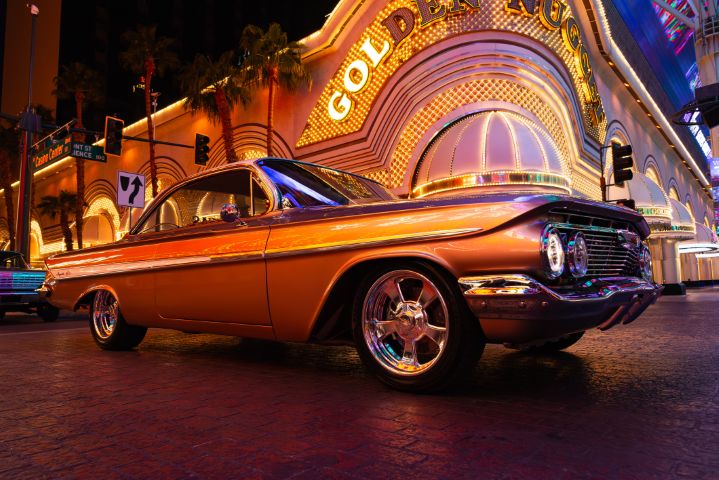
Lowriders are cars (often classic models) modified to ride very low to the ground, typically using hydraulic or air-ride suspension systems that allow the driver to raise or lower the chassis at will. Their aesthetics usually emphasize intricate paint jobs – candy colors, flakes, murals, pinstriping – and detailed chrome or wire-spoke wheels.
Hot rods, by contrast, are built for performance. A hot rod is often an older car whose engine and drivetrain are heavily modified – bigger engines, custom exhausts, weight reduction, upgraded suspensions – all to maximize speed and acceleration.
The cultures overlap in their passion for customization, but while lowriders celebrate the art of stillness – cruising slow, showing off style – hot rods lean into raw power and speed. As one commentary puts it, lowrider style is deeply rooted in visual flair, while hot rodders have historically “taken ideas from us … but we have been reluctant to do the same.”
Why you might need to transport a lowrider or hot rod
Moving these kinds of cars isn’t just about getting from point A to point B – there are several real-world reasons why someone would pay to ship one:
- Car shows and events: If your ride is show-quality, you may need to haul it to major car meets, exhibitions, or swap meets.
- Restoration or build projects: You might be sending a partially restored lowrider or hot rod to a specialist shop in another state.
- Purchase or sale: Many collectors buy or sell cars across the U.S., meaning long-distance transport is needed.
- Relocation: If you’re moving cross-country, you might want your prized custom car to come with you – but driving it could risk damage or wear.
- Preservation: For lowriders, especially, you may want to avoid road hazards, speed bumps, or other obstacles that can damage lowered suspension or custom paint.
Should you drive it or have it transported across the country?
Here’s where things get a little tricky – and where many owners honestly stop and think hard.
Driving it gives you the raw experience: feeling the engine hum, navigating open roads, hearing the hydraulics or exhaust at work. But it’s not always practical. Long-distance driving can stress custom drivetrains, low-ride suspensions, or fragile undercarriages. Plus, you risk road damage, bugs, chips, or worse.
Shipping a car to another state protects your investment. You reduce the risk of mechanical wear, avoid putting miles on your show car, and maintain its condition. For many, especially for lowriders that sit very low or hot rods with custom-built engines, transport makes more sense.
In many cases, the safer, smarter choice is to ship.
Types of transportation – pros and cons for lowriders and hot rods
Large transport trucks – open vs. enclosed
Enclosed transport trucks are often the go-to for high-value custom cars – especially lowriders with delicate hydraulics or hot rods with rare finishes.
- Pros:
- Maximum protection from weather, flying debris, and road grime.
- Better security: enclosed trailers limit visibility and reduce theft or vandalism risk.
- Specialized handling: many enclosed carriers use soft tie-downs, air-ride suspension, or climate control to protect sensitive vehicles.
- Cons:
- Higher cost – enclosed transport can be 30% to even 100% more expensive than open haulers.
- Longer wait times or limited availability because fewer enclosed rigs operate.
- Less capacity: enclosed trailers carry fewer cars than open haulers, which can drive up the cost.
Open transport trucks (i.e., open car haulers) are more common and cheaper, but they come with more exposure and risk.
- Pros:
- Lower cost, more widely available.
- Good for less fragile builds: if your hot rod doesn’t have custom paint or if your lowrider’s suspension is fairly robust, open might suffice.
- Cons:
- Exposure to weather, road debris, and UV damage.
- Higher risk of scratches, chips, or undercarriage damage for lowriders that ride extremely low.
- Less security – open trailers are more visible, which can attract unwanted attention.
Smaller transport options – tow dolly vs. flatbed trailer
For some moves, especially over shorter distances, smaller transport options make sense. But they have their own trade-offs when used for custom or lowered cars.
Tow dolly A tow dolly lifts only the front (or rear) wheels of the car off the ground.
- Pros:
- Cheaper and lighter than a full trailer.
- Easier to maneuver and park when hitching/unhitching.
- Cons:
- The non-lifted wheels remain on the road, risking damage from rocks, road debris, or rough pavement – not ideal for a lowrider’s custom suspension or fragile chassis.
- May place extra load on the drivetrain or transmission if towing for long distances.
- Less secure: fewer tie-down points, and a dolly can be less stable than a full trailer.
Flatbed trailer A flatbed trailer lets you load the entire car, all four wheels, onto a platform.
- Pros:
- Better support for low-clearance vehicles. You can often drive on via ramp (if well designed), or use removable ramps.
- More stability and better tie-down options than a dolly, which is good for custom builds with altered suspensions.
- Cons:
- Still more exposed than enclosed transport: flatbeds don’t offer a roof, so your car is exposed to the elements.
- Loading can be trickier, especially for very low cars or those with slammed suspension.
- The cost can be relatively high for long hauls, especially if you need a specialty flatbed.
What’s the recommended way to transport a lowrider or hot rod long distance?
So – after all that, what’s the “best” way? There’s no one-size-fits-all answer, but for most lowriders and hot rods, here’s a smart strategy:
- Use enclosed transport for long distance: If you’re moving a lowrider that’s been hydraulically lowered, or a hot rod with custom paint and a high-performance engine, enclosed is almost always worth it. The cost is higher, but the protection – both from physical damage and climate – justifies it.
- Avoid open transport for ultra-lowered or delicate builds: The risk of rocks, road grime, and height clearance problems is too high.
- Consider a flatbed for shorter hauls: If you’re relocating within a region and you can find a flatbed with ramps or a low-deck design, that may strike a balance between cost and safety.
- Secure tie-downs carefully: Whatever method you pick, make sure the car is properly strapped – soft straps, correct anchor points, and attention to suspension geometry matter.
- Prepare the car: Lower the fuel to a safe level, disconnect or secure loose parts (mirrors, antennas), and check that ride height or hydraulics are stable.
- Work with experienced transporters: Look for carriers who specialize in classic or custom cars. Ask about their insurance, how many similar builds they transport, and whether they personally operate the trucks (rather than subcontracting).
Why it matters – more than just metal
Transporting these cars isn’t just a logistical exercise. For many lowrider owners, their car is family, identity, and expression. As one cultural commentary noted, lowriding isn’t just about rides – it’s about community, legacy, and heritage.
On the other side, hot rod culture is deeply tied to the thrill of performance, craftsmanship, and sometimes reconstruction after decades of wear.
When you ship these cars, you’re not just moving a machine – you’re preserving a statement, an artwork, a piece of history.