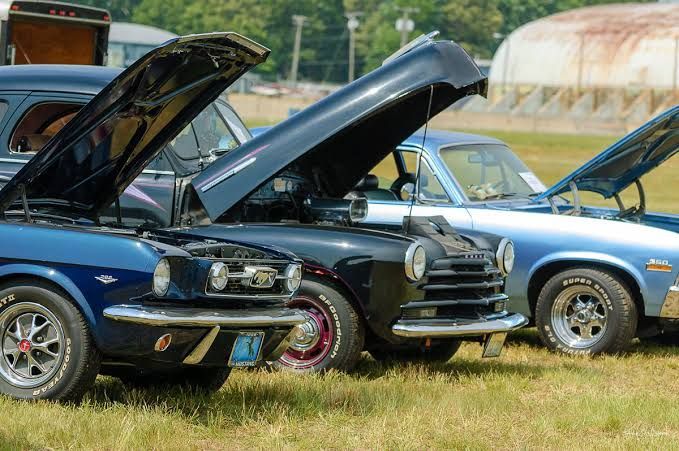
Every muscle car owner has run the nightmare in their head at least once. You’re cruising your restored ’70 Chevelle or your numbers-matching Mustang down the interstate, a loaded semi drifts out of its lane, and in about two seconds a decade of weekends in the garage is folded into a guardrail. The crash is bad enough. For a lot of enthusiasts, though, the second hit lands weeks later—when the insurance company mails a check based on what a computer thinks a “1970 Chevrolet” is worth. That is when restored muscle car diminished value becomes painfully real.
Here’s the part nobody warns you about: standard auto insurance and the valuation software most adjusters lean on have no real concept of a restored muscle car. They see a five-decade-old midsize sedan, apply a pile of depreciation, and spit out a number that might not cover your rebuilt 454, let alone the paint, the interior, and the years of work. If a big rig is what did the damage, the fight over that number gets bigger—and so do your options for pushing back.
Restored Muscle Car Diminished Value Starts With the Wrong Book Value
The core problem is a mismatch. A daily driver loses value every year it ages, and insurance math is built around that curve. A properly restored or preserved muscle car does the opposite—it holds value, and the good ones climb. A base valuation tool doesn’t know your car has a documented, receipts-in-a-binder rotisserie restoration. It doesn’t know the difference between a clapped-out project and a show-ready survivor. It just knows the year, make, and model.
That’s how owners end up staring at a “totaled” determination that’s thousands—sometimes tens of thousands—under what the car would bring at a Mecum or Barrett-Jackson auction. Collector-market pricing from sources like Hagerty’s valuation tools routinely runs well above the generic “actual cash value” a standard policy pays out, and that gap is exactly where owners get burned.
A qualified appraisal can help establish a vehicle’s condition, restoration quality, documentation, originality, and current collector-market value. Gauge Magazine’s guide to how certified automobile appraisers assess custom and classic cars explains why a professional valuation can be so important before a loss occurs.
The Three Words That Decide Everything: How Your Car Is Insured
Before you ever get near a crash, the type of policy you carry decides how this story ends.
Actual cash value (ACV) is the standard-policy default. The insurer pays what they say the car is worth today, minus depreciation, and they get to define “worth.” This is the setup that shortchanges classics.
Stated value sounds protective but often isn’t—many stated-value policies still pay the lesser of the stated figure or ACV, which quietly puts you back at square one.
Agreed value is the one enthusiasts actually want. You and a specialty collector-car insurer agree on the car’s value up front, in writing, backed by photos and an appraisal. If the car is totaled, that’s the number—no depreciation argument, no software surprise. If your muscle car is on a standard auto policy right now, that’s the single most important thing to fix before your next drive.
Even a Perfect Repair Costs You: Diminished Value
Say the car isn’t totaled. It gets repaired, and the bodywork is flawless. You’re still out money, and here’s why: a car with a documented accident history is worth less than an identical car without one. That drop is called diminished value, and for collector cars it’s brutal, because originality and clean history are a huge part of what buyers pay for. “Accident-free” is a selling point; “hit by a semi in 2026” is a price cut, no matter how good the panel gaps look afterward.
Many states let you pursue a diminished-value claim against the at-fault party’s insurer. For a valuable classic, that claim can be significant—but it usually takes a qualified appraisal and someone willing to argue collector-market reality to an adjuster who prices Corollas all day. Proving restored muscle car diminished value requires more than repair invoices because the claim must account for the permanent loss of market appeal after the accident becomes part of the car’s history.
For a closer look at the repair, insurance, and emotional consequences of damaging a classic build, read The Hidden Toll a Collision Takes on a Restored Muscle Car.
Why a Truck Crash Is a Different Animal

When the other vehicle is a commercial 18-wheeler, three things change at once.
First, the stakes are physically higher. A loaded tractor-trailer can run 20 to 30 times the weight of your car, and the Insurance Institute for Highway Safety notes that most people killed in large-truck crashes are occupants of the other vehicle—a grim reminder that these wrecks total cars and hurt people far more often than a fender-bender does.
Second, there’s more insurance on the table. Interstate trucking companies are regulated by the Federal Motor Carrier Safety Administration, which requires far higher liability minimums than a private driver carries—commonly $750,000 and up, often $1 million or more. That means the money to make a specialty-car owner whole usually exists. It also means a professional insurer and its defense team are on the other side, and they do not volunteer to pay collector-car prices.
Third, the evidence is different—and it disappears. Commercial trucks generate electronic logging device (ELD) data, hours-of-service records, and maintenance and inspection files, and many carry event-data recorders or dashcams. Those records can establish fault, but they get overwritten or “lost” on a schedule, and a company has little incentive to preserve them for you. Getting a formal preservation demand out early can be the difference between proving the truck was at fault and taking the driver’s word for it.
Anyone injured in the collision should also understand the importance of early medical documentation. Gauge Magazine’s guide to what to expect during a truck accident injury consultation explains how medical evaluations can support both recovery and a potential claim.
Documenting What Your Car Is Actually Worth
Whether you’re chasing a total-loss payout or a diminished-value claim, you win or lose on documentation. Build the file before you ever need it:
- Keep every receipt—engine, trans, paint, interior, chrome, tires, the works. A stack of invoices is your value story in hard numbers.
- Get a professional appraisal and refresh it every couple of years as the market moves.
- Photograph everything—the whole car, the engine bay, the undercarriage, badges, and any documentation like build sheets or window stickers.
- Save the paper trail—title history, prior sale records, restoration logs, awards, and magazine or show features if the car has them.
After a crash, resist the urge to accept the first offer, and don’t let the car be scrapped or “salvaged” until its value has been independently established. Once it’s gone, so is your best evidence. A complete record is often the strongest tool for proving restored muscle car diminished value and challenging an insurer’s generic valuation.
5 Costly Mistakes That Sink Muscle Car Owners After a Truck Crash
Most of the money owners lose isn’t lost in the crash—it’s lost in the days and weeks after, in decisions that feel reasonable at the time. Here are the five that hurt the most.
- Taking the first offer. Insurers open low on purpose, and the opening number on a classic is almost never the real number. Treat it as a starting point, not a settlement.
- Letting the car be scrapped or salvaged too soon. The moment the car is gone, so is your strongest evidence of what it was worth. Get an independent valuation before anything is hauled off or signed over.
- Carrying a classic on a standard auto policy. Actual-cash-value depreciation is built to gut a collector-car payout. An agreed-value collector policy fixes this—but only if you set it up before the wreck.
- Skipping the diminished-value claim. Even a flawless repair leaves your car worth less with a truck crash on its history. Plenty of owners never file for that loss simply because no one told them it existed.
- Waiting to act. The truck’s electronic logs, maintenance files, and dashcam footage get overwritten on a schedule, and state filing deadlines are shorter than most people expect. Every week you wait, evidence and leverage quietly drain away.
When to Bring in a Truck Accident Attorney
For a straightforward repair on a modest car, you can often handle the insurer yourself. When a commercial carrier has totaled or seriously damaged a genuinely valuable muscle car—and especially if anyone was injured—the math changes. You’re negotiating against a company that fights valuation for a living, over evidence you can’t access on your own, under state deadlines that are shorter than most people assume.
This is where experienced commercial-truck counsel earns its keep, particularly in freight-heavy states like Texas, where interstate trucking runs around the clock. Firms that focus on these cases—such as Patino Law Firm, a McAllen, Texas practice that handles commercial truck collisions—can move fast to preserve the carrier’s records, bring in the right appraisers to establish true collector value, and push back when an insurer treats a numbers-matching classic like a used economy car. The goal is simple: make sure the settlement reflects what the car and the injuries are actually worth, not what a depreciation table wishes they were.
If you’re driving those miles in South Texas’s freight corridor—where the Pharr-Reynosa crossing feeds constant truck traffic onto I-2, I-69C, and US-83—knowing the region’s commercial-truck firms ahead of time is worth doing. Here’s how several stack up.
| Firm | Rating | Reviews | Offices | Founded |
| Patino Law Firm | 5.0 | 463 | McAllen + San Antonio & Odessa | — |
| Tijerina Legal Group, P.C. | 4.9 | 1,622 | McAllen (serves RGV) | 2008 |
| Herrman & Herrman, P.L.L.C. | 4.9 | 683 | McAllen + 8 TX | 1992 |
| J. Gonzalez Injury Attorneys | 4.5 | 377 | 6 RGV offices | — |
| Omar Ochoa Law Firm | 4.8 | 343 | McAllen | — |
| The Julian C. Gomez Law Firm | 4.9 | 54 | McAllen | 2002 |
| Ryan Solis Law Group | 4.9 | 92 | McAllen | — |
| The Lopez Law Group | 4.9 | 122 | Weslaco (serves RGV) | — |
| The Law Office of Aaron Fonseca | 4.9 | 29 | McAllen / Edinburg | 2016 |
| Law Firm of Ricardo A. Garcia | 4.7 | 31 | McAllen area | — |
Protect the Value Before You Need To
You can’t stop every semi from drifting into your lane, but you can control what happens after. Put your muscle car on an agreed-value collector policy, keep your documentation current, and know that a truck crash is a bigger fight with bigger money—and bigger leverage—than an ordinary wreck. The owners who come out of these situations whole are almost always the ones who did the boring paperwork years earlier, and who knew not to sign away their car’s real worth on the insurer’s first offer.
Protecting against restored muscle car diminished value begins before the collision with a current appraisal, complete restoration records, detailed photographs, and insurance written specifically for a collector vehicle.
Your build deserves that much. So does the person driving it.
This article is for general information and isn’t legal advice. Insurance rules, diminished-value claims, and filing deadlines vary by state—talk to a qualified attorney about your specific situation.