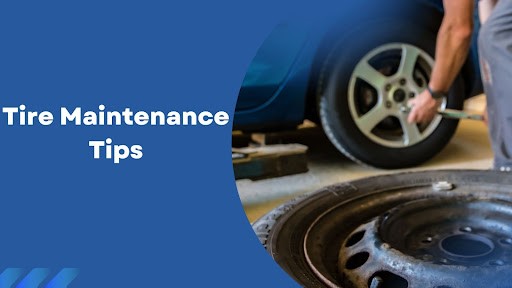
Your car’s tires are an essential component. The only thing separating you from the road is them. To stay safe and save money, ensure you stay up on tire maintenance. Longer-lasting, more fuel-efficient, better driving performance, and most importantly, increased overall road safety are all benefits of properly maintained tires.
The Tire Maintenance Tips You Need
Maintain proper tire inflation:
Under or over-inflated tires may not steer, brake, or accelerate properly. When the tires are cold, just before you go for a drive, check your tire pressure at least once a month. Most likely, you’ll discover that you need to adjust.
- At least one tire on 70% of vehicles has an inflation issue.
- A tire under-inflated by more than 20% is present in 23% of vehicles, which increases fuel consumption and shortens tire life.
- At least one tire on 17% of vehicles is overinflated by more than 20%, which leads to excessive tire wear and poorer vehicle handling.
The proper tire pressure must be checked and maintained as it is the most crucial component of tire maintenance. Your owner’s manual will contain the recommended tire pressure. Continuous driving causes tires to lose air pressure, which needs to be replaced roughly every month. Every two weeks, check the pressure in all four tires. The cold morning air is the ideal time to perform this task. Furthermore, you must check the PSI of your spare tire once per month. Additionally, you might choose to fill your tires with nitrogen, which only needs a yearly inspection.
Tips: Need to figure out the recommended tire pressure? The recommended tire pressure for your front and rear tires is listed on a small sticker called the vehicle information placard. It frequently hangs from the front or back door on the driver’s side. If you need assistance locating it, consult your owner’s manual. The number on the side of your tires is not the recommended tire pressure; rather, it represents the maximum tire pressure.
Regularly rotate your tires:
Rotating your tires will increase performance and extend tire life. Tire rotation is advised every 10,000–12,000 km or every six months.
Tire rotation can help prevent uneven tire wear. Routine tire rotation can help you save money because it increases the life of your tires and gives you a safer, smoother ride. The front tires of front-wheel drive cars are subject to more significant wear and tear than the rear tires. Your car’s manual will tell you how often to rotate your tires. Remember to check whether the tires are directional or not. Both turn while employing various methods. If you have a full-size spare tire, you could rotate it with the other tires and use the most worn-out one as a backup.
Have your wheels aligned:
Get your wheels aligned once a year, or every 25,000 kilometers, to prevent uneven tread wear. Over time, frequent impacts like potholes and railroad crossings can easily throw your car’s tires out of alignment.
The suspension, which impacts the car’s tires, is what the wheel’s alignment has to do with. After traveling on bumpy roads, tarmac, potholes, and other obstacles for some time, a car’s alignment becomes uneven. The wheel’s components are readjusted by aligning it, allowing the tires to roll parallel to one another and maintain their perpendicularity to the ground. Wheel balancing causes the tire to lose weight and become uneven from the side, which causes uneven wear and tears. Small weight additions can, however, solve this problem and prolong the life of your tire.
Verify the balance of your tires:
Unbalanced tires can cause tires to wear out their tread quickly and prematurely. Every time you replace or rotate your tires or put on a new set of wheels, you should have your tires balanced.
Inspect your tires frequently:
In addition to checking the pressure in your tires, you should visually inspect them for cracks or bulges, foreign objects inside the tire, punctures, and uneven tread wear.
To quickly detect wear and tear when it occurs, become familiar with the tread on the tire when it is new. Look for uneven tread wear; if you find any, don’t sever your hand with the exposed wire under-frame. Most tread wear on the tire’s edges indicates underinflation, while most tread wear in the center suggests overinflation. The likelihood of blowouts, leaks, and punctures increases with tire wear. The limit mark on more recent tires is a reminder when they need to be replaced because they are completely worn out.
Other Tire Maintenance Tips Are:
By the season, change your tires:
It is advised that you have both summer and winter tires in Canada. Both tire types have different designs to accommodate various driving situations. Your tires may lose tread sooner than you anticipate if you use winter tires in the summer or vice versa.
Avoid combining different tires:
One or two tires at a time may seem more cost-effective to replace, but mismatched tires can cause mechanical problems or rapid, uneven tread wear.
Change your tires as necessary:
When deciding when to replace your tires, pay close attention to the tread on the tires. Wear bars are built into tires; when the bar is visible, it’s time to replace them. Try the Bluenose test if you need help with what to look for. In the tire tread, press a dime with the sails of the Bluenose facing downward. The tire is worn out, and it’s time to get new wheels if you can see the tops of the sails.
Make sure that tires with punctures are fixed correctly:
Depending on the foreign object’s size or the puncture’s severity, your tire can be easily repaired. But it needs to be set correctly. Could you bring it to a mechanic?
Correctly store extra tires:
Ensure that tires are spotless and devoid of anything that might harm the rubber, such as grease or gasoline. If you’re storing your tires indoors, ensure they’re in a clean, calm, and dark spot and away from heat sources and the sun. Ensure the tires are elevated off the ground if you’re storing them outside and use a waterproof covering with holes to prevent moisture buildup.
When to replace?
Even after taking these precautions, you must replace your tires when the treads become worn. Rubber hardens with time, increasing your tire’s risk of blowouts and overheating. Using worn-out tires is dangerous and fatal, especially at high speeds.
After 40,000 kilometers or a maximum of 6 years of reliable use, tires should be replaced. The less corroded tire can be used as a spare. Additionally, you can upgrade to better tires. For efficiency’s sake, if you were previously using tube tires, switch to tubeless or radials.
Conclusion
When you maintain your tires properly, you won’t need to replace them as frequently, which keeps you safer on the road and saves you money. Compare car insurance rates for a lower cost if saving money sounds good.