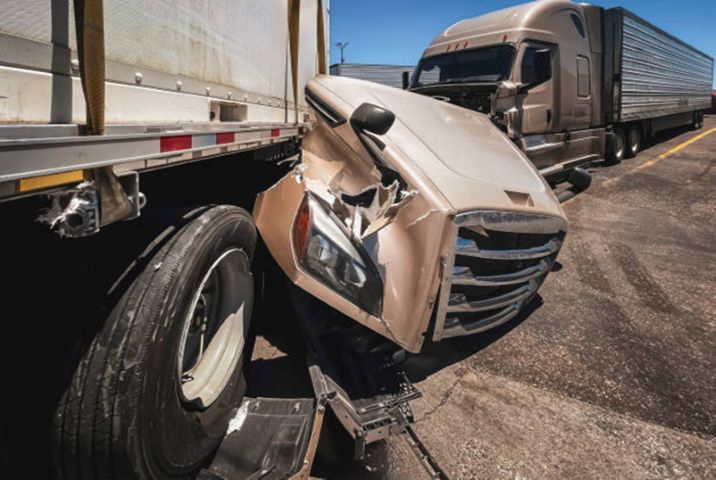
Preserving evidence after a New Mexico Truck Collision matters because it can help show what happened, who was at fault, and how badly the crash changed your life. Truck accidents often involve more than damaged vehicles. There may be driver logs, black box data, inspection records, dashcam footage, cargo details, and witness statements that can disappear fast if no one acts quickly.
New Mexico has long stretches of highway where large commercial trucks travel every day, including busy routes like I-25 and I-40. The state’s mix of open desert roads, rural areas, mountain passes, and city traffic can make truck crashes especially serious. Weather, speed, fatigue, and heavy freight traffic can all play a role in how a collision happens.
That is why working with a skilled New Mexico semi accident lawyer can make a real difference after a crash. An attorney can move fast to protect key evidence before it is repaired, deleted, lost, or quietly pushed aside. The sooner evidence is preserved, the stronger your claim may be.
Truck accident cases often involve complex investigations. Gauge Magazine has also covered truck accident lawyers for serious injury representation and the importance of securing evidence early.
Why Truck Collision Evidence Matters in a New Mexico Truck Collision
Evidence tells the story when memories fade and insurance companies start pointing fingers. After a truck crash, you may know what you saw. The truck driver may say something else. The company may blame road conditions, another driver, or even you.
New Mexico’s fault rules make proof even more important. Under NMSA § 41-3A-1, when comparative fault applies, each defendant’s liability is generally “several.” That means each party may only pay for its own share of fault. Strong evidence can help show how much blame belongs to the truck driver, trucking company, cargo loader, maintenance provider, or another party.
Key Evidence That Can Disappear Fast
Truck crash evidence is not limited to photos of the scene. Some of the most useful proof sits in company systems, vehicle devices, and driver records.
Important evidence may include:
- Electronic logging device data showing driving hours and rest breaks.
- Black box data showing speed, braking, and engine activity.
- Dashcam or nearby business video from the crash area.
- Inspection and repair records for brakes, tires, lights, and steering.
- Driver qualification files showing training and safety history.
- Cargo records showing whether the trailer was loaded safely.
- Phone records if distracted driving becomes an issue.
- Police reports, photos, and witness names collected soon after the crash.
Federal rules create some record duties. Under 49 CFR § 395.8(k)(1), motor carriers must keep driver records of duty status and supporting documents for at least six months. FMCSA guidance also says ELD backup records must be kept for six months. That may sound like plenty of time, but it passes fast when you are healing, missing work, and dealing with calls from insurers.
The Federal Motor Carrier Safety Administration (FMCSA) provides safety regulations and trucking industry requirements that often become important during commercial truck accident investigations.
Recent Truck Crash Data Shows the Risk
Large truck crashes remain a serious problem across the country. NHTSA reported that 5,472 people died in crashes involving large trucks in 2023. That was lower than 2022, but still a high number of deaths on U.S. roads.
FMCSA also tracks large truck and bus crash data by state, including New Mexico. The agency uses this data to study crash trends and safety factors. For injured people, those numbers are not just data points. They show why truck accident claims need careful evidence review from the start.
Understanding how commercial vehicle accidents differ from standard crashes is critical. Gauge Magazine has also examined what evidence is used in serious truck accident cases and why trucking claims require deeper investigation.
What You Should Preserve After a Semi-Truck Crash
You can protect your claim by saving simple records right away.
Keep:
- Photos of vehicle damage, skid marks, road signs, and injuries
- Medical records, bills, and discharge papers
- Names and phone numbers of witnesses
- Repair estimates and towing records
- Insurance letters and claim numbers
- A short journal about pain, missed school, work, or daily limits
Do not repair or sell your vehicle until key photos and inspections are done. Do not throw away damaged clothing, broken glasses, or child seats. Small items can support your story.
Evidence gives your claim structure. Without it, the case may turn into a blame contest. With it, the facts are harder to ignore.
Key Takeaways
- Preserving evidence after a New Mexico truck collision helps prove what happened, who caused the crash, and how the wreck affected your life.
- Key truck accident evidence can include black box data, ELD records, dashcam video, inspection files, cargo records, photos, and witness details.
- Some trucking records may only need to be kept for a limited time, so delays can make strong proof harder to get.
- New Mexico’s comparative fault rules make evidence important because each party may be responsible for only its share of fault.
- You should save photos, medical records, repair estimates, insurance letters, damaged items, and notes about your recovery.
- Do not repair, sell, or discard important items until the crash evidence has been documented.
- Strong evidence can keep your truck accident claim focused on facts instead of blame.
Conclusion
After a New Mexico Truck Collision, preserving evidence may be one of the most important steps you take. Trucking companies, insurers, and investigators often begin building their cases immediately, which means critical records and digital data can disappear if no action is taken.
A strong evidence file can help establish fault, document damages, identify responsible parties, and support fair compensation. The sooner photographs, records, witness information, vehicle data, and trucking documents are preserved, the better positioned an injured person may be when pursuing a truck accident claim.