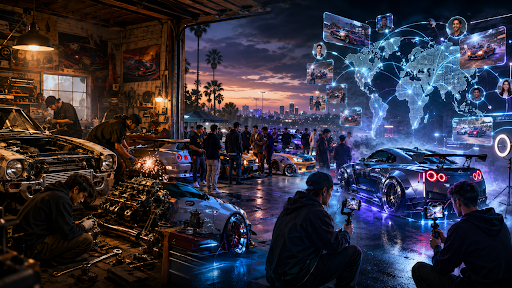
Car culture has always been rooted in passion, creativity, and identity. Long before algorithms shaped what enthusiasts see online or influencers set global trends, automotive culture was built in small garages, local workshops, and weekend meet-ups. It was deeply regional, often shaped by geography, availability of parts, and word-of-mouth knowledge.
Today, that same culture has expanded into a global, always-connected ecosystem where ideas, builds, and communities move instantly across borders.
The transformation has not replaced traditional car culture—it has amplified it. But the way enthusiasts engage with cars has changed more in the last 15 years than in the previous half-century.
Automotive enthusiasts can also explore more event coverage from across the country to see how modern car culture continues to evolve through shows, meets, and enthusiast gatherings.
The Garage Era: Where Car Culture Began
Before social media and online forums, car culture was local by necessity.
Enthusiasts learned through hands-on experience, often modifying vehicles in home garages or small workshops. Knowledge was passed between friends, club members, and mechanics rather than through online tutorials or digital communities.
Car meets were physical events with a strong sense of identity. Regional styles emerged naturally. Certain cities or areas became known for specific types of builds—whether performance-focused tuning, off-road modifications, or aesthetic customization.
This era of car culture was slower, more personal, and often more experimental. Builds could take months or years, shaped by budget constraints, part availability, and mechanical skill rather than instant inspiration.
The Rise of Online Forums and Shared Knowledge
The first major shift came with online forums.
Platforms dedicated to specific brands, models, and modification styles allowed enthusiasts to share information on a scale previously impossible. Suddenly, a driver in one country could troubleshoot an engine issue with help from someone thousands of miles away.
This era marked the beginning of standardized modification knowledge. DIY guides, step-by-step build threads, and parts recommendations became widely accessible.
It also changed expectations. Builds that once felt unique within a local scene could now be compared against global standards.
Car culture was no longer just local—it was becoming distributed.
Social Media Changes Everything
The arrival of social media platforms accelerated this transformation dramatically.
Instead of structured forums or static build threads, car culture became visual, fast-moving, and highly curated. Instagram, YouTube, TikTok, and similar platforms turned automotive builds into content.
Cars were no longer just built to be driven or displayed locally—they were built to be seen globally.
This shift introduced new dynamics:
- Aesthetic appeal became as important as performance in many communities
- Builds evolved faster due to constant exposure to new ideas
- Trends spread globally within days rather than years
- Engagement and visibility became part of the culture itself
While this created new opportunities for enthusiasts, it also introduced pressure. Cars increasingly became part of a visual economy, where presentation and online reception mattered as much as mechanical substance.
The Rise of Influencer-Driven Builds
One of the most significant developments in modern car culture is the emergence of influencer-driven automotive content.
Content creators now play a major role in shaping trends, showcasing builds, and influencing purchasing decisions. A single viral video can shift demand for specific modifications or styling choices almost overnight.
This has created a new category of automotive identity: the content-first build.
Some vehicles are now designed with storytelling in mind, optimized for camera angles, cinematic edits, and social engagement. This does not diminish traditional builds, but it does represent a parallel evolution within car culture.
For many enthusiasts, inspiration no longer comes from local meets—it comes from global digital personalities.
Readers interested in seeing how custom vehicles continue to influence automotive culture can browse our collection of featured vehicles showcasing unique builds from around the country.
Global Communities Replace Local Boundaries
Perhaps the most profound change is the disappearance of geographical limitations.
Today, a car enthusiast is no longer defined by their location. A single online community can include members from dozens of countries, each contributing ideas, parts knowledge, and cultural perspectives.
This globalization has led to hybrid styles that blend influences from different regions. JDM styling, European tuning culture, American muscle aesthetics, and off-road overlanding trends often intersect in ways that were previously uncommon.
The result is a more diverse and interconnected car culture than ever before.
The Role of Digital Identity in Modern Builds
As car culture has moved online, identity has become increasingly important.
A vehicle is no longer just a physical object—it is part of a broader digital presence. Owners often consider how their car will appear in photos, videos, and online profiles before making modification decisions.
This has expanded the idea of personalization beyond mechanical changes. Visual branding, subtle styling cues, and distinctive details all contribute to how a build is recognised in digital spaces.
Even small personal touches can become part of a vehicle’s identity within online communities. Businesses such as Plates Express exist within this wider culture of automotive expression, where enthusiasts look for ways to make their vehicles feel distinctive both on the road and online.
Local Meets Still Matter
Despite the dominance of digital platforms, local car culture has not disappeared.
Physical meets, track days, and club gatherings remain essential parts of the enthusiast experience. In fact, many people who discover cars online eventually seek out local communities to experience builds in person.
The key difference is that local meets are now part of a larger ecosystem rather than the entirety of it. A car might be built with global inspiration but still celebrated locally.
This blending of digital and physical culture has created a more layered enthusiast experience.
The Speed of Trends and the Pressure to Adapt
One challenge of modern car culture is the speed at which trends evolve.
What once took years to develop within regional scenes can now rise and fade within months. This rapid cycle influences everything from modification choices to content creation strategies.
For some enthusiasts, this is exciting—it creates constant innovation and fresh ideas. For others, it can feel overwhelming, particularly when builds are judged against rapidly shifting online standards.
Car culture has always involved evolution, but the pace of change has never been faster.
The Specialty Equipment Market Association (SEMA) continues to support and promote automotive enthusiasts, builders, manufacturers, and events that help drive car culture forward around the world.
The Future of Car Culture
Looking ahead, car culture is likely to become even more integrated with digital platforms.
Augmented reality, virtual showrooms, and AI-driven content creation may further blur the line between physical vehicles and digital representation. At the same time, the value of real-world driving experiences and physical meets is unlikely to disappear.
Instead, the future will likely be defined by a balance between online influence and offline authenticity.
Enthusiasts will continue to build, modify, and personalize vehicles—not just for performance or aesthetics, but as part of a broader identity that exists both on the road and online.
Conclusion
Car culture has evolved from small, local garage projects into a global, interconnected network of enthusiasts. While the tools, platforms, and influences have changed dramatically, the core motivation remains the same: a passion for cars and the desire to create something personal and expressive.
What has changed is the scale. A single build can now inspire thousands across the world, and ideas travel faster than ever before.
Yet beneath the digital noise, the foundation of car culture still rests where it always has—in creativity, craftsmanship, and community.