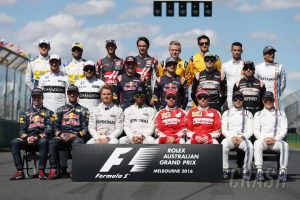
The fitness revolution in F1 began with the legendary Michael Schumacher, who before his accident in 2014 was the dominant driver of his time with 155 podiums, 91 race victories, 68 pole positions, and 7 World Championship Titles. Today’s drivers are taking his lead with fitness programs that equal those of top athletes, with Jenson Button mixing 70.3 triathlonss
Why does an F1 driver need to be fit?
During a race, F1 drivers experience lateral G-forces equal to a 25kg weight hanging from the neck. In addition to this, the helmet feels like a 7kg weight on the head.
Recent changes to F1 car specifications could mean an increase of G-force of 10-15% in 2018, requiring team coaches and sports scientists to adjust the training programs of their teams and drivers. Cars are also expected to be 48kmph faster through corners. This means that to survive an accident, the driver has to be in peak condition.
The driver’s heart rate is between 170-190 bpm on the start line, hovering around 160 bpm and spiking over 200 bpm over the next two hours, while blood pressure increases by around 50%. The cockpit of the F1 car is like a sauna, and a driver can sweat up to 3kg of their body weight.
How fit is fit to drive an F1 car?
A regular person getting into an F1 car would find that they feel sick, struggle to breathe, and have arms that feel like lead. Even experienced drivers will cramp during a race.
To withstand these extreme forces, stamina, core strength and endurance are essential to focus that lasts through the whole race. In particular, drivers need to have:
- Core strength
- Endurance
- Upper and lower body strength
The average F1 driver has a body fat percentage of around 8-10% (most people sit between 16-19%) with a VO2 max of 60-65.
What training do drivers do?
Australian Red Bull driver Daniel Ricciardo is just 28 years old, but already has 28 podiums and six F1 victories to his name.
How does he maintain the physical stamina and concentration needed to guide the Red Bull racing machine through 90-120 minutes of intense racing? His trademark celebratory champagne from a shoe makes the podium interesting, but it’s just the showman side to what’s really a lot of hard work with cardio and weights pre-season.
Daniel Ricciardo’s training includes Aussie Rules football, training peripheral vision, responsiveness and accuracy. Endurance and cardiovascular fitness are both essential, making cycling an ideal way to build and maintain form. Other drivers like Nico Hulkenberg prefer running to build cardiovascular strength.
There’s a lot of power and endurance training in the pre-season. Skipping as part of a workout or pre-race warm-up keeps the calves strong and primed to take a load of fierce braking and acceleration during a race.
Boxing adds diversity, Riccardo reports that with boxing he can push the limits, and find more energy to push through when he’s tired because its a sport he enjoys.
His teammate Max Verstappen builds core strength with weights, including deadlifts and core-focused exercises also favoured by Alonso’s teammate at Mclaren, Stoffel Vandoorne.
A strong neck is essential to withstand the enormous G-forces, as is grip-strength and arm strength and endurance.
It’s the whole team, not just the driver.
Essential to a good training program is exercise that’s fun, with variety and challenge that keeps you engaged to keep coming back. Variety also helps to keep the body dynamically strong and reduces the risk of overuse injury.
It’s not just the driver’s who have to stay in shape. Force India’s pit crew are put through training regimes to develop strength and endurance, reduce the risk of injury, and perform their role as efficiently as possible.
Article provided by Positive Lending Solutions