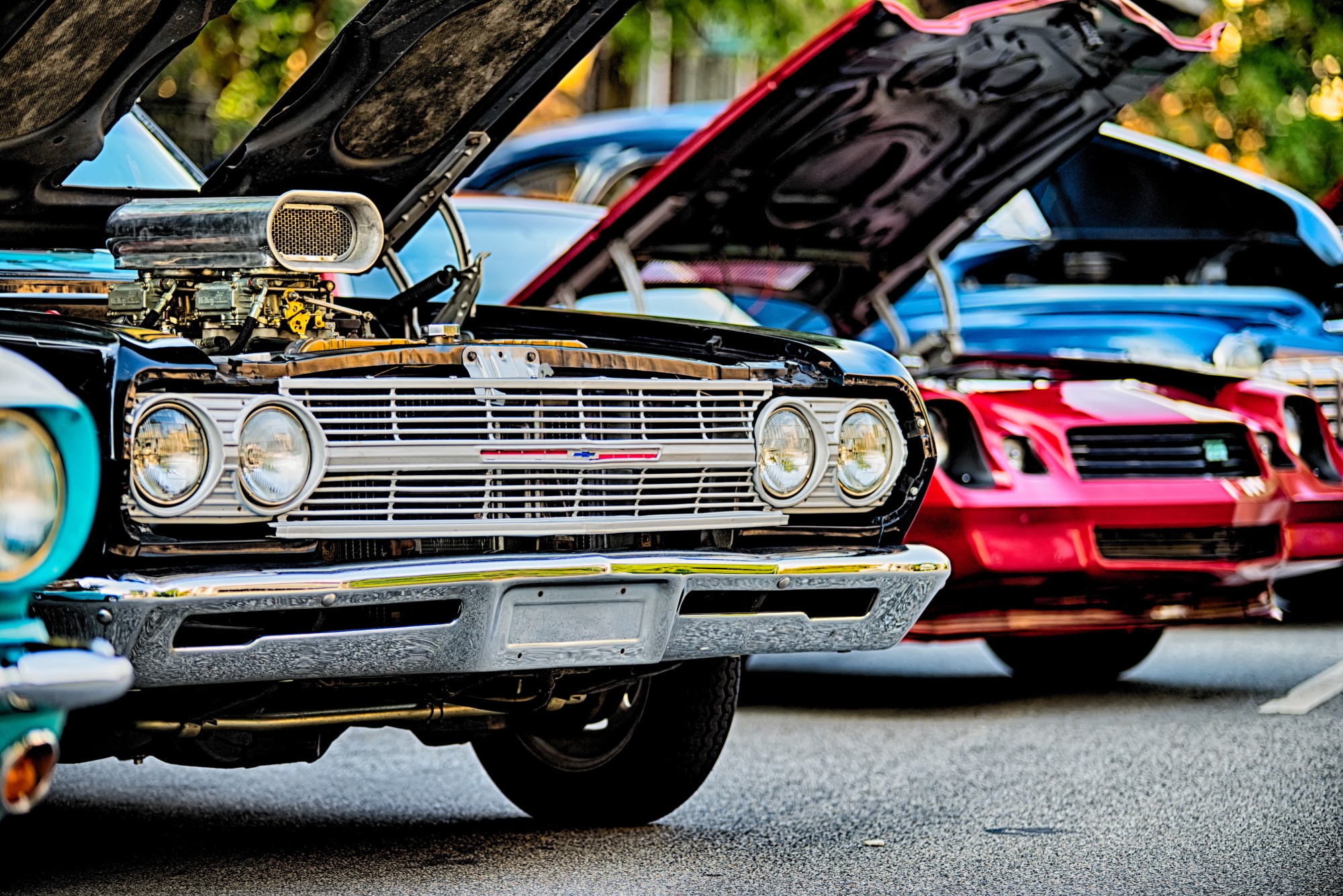
 Are you a nostalgia buff? Does the rumble of an American muscle car V8 get you all revved up? Have you thought about reconnecting with your youth and buying a classic car? There are a lot of classics out there to choose from.
How about a red GTO convertible to cruise the beach scene on a sunny afternoon? Or a black Trans Am to channel your inner “Smokey and the Bandit”? Or even a beautifully restored ’57 Chevy Bel Air? They all appeal to the senses!
You’re only limited by your imagination…and your budget. But hey, it’s all good! You want to buy the best vehicle you can afford, but you can find whatever you’re looking for if you are persistent and shop patiently.
Read on to learn how to buy a classic car without breaking the bank.
But, first…
What Defines a “Classic Car”?
It may surprise you to know that there isn’t a standardized definition that qualifies as a classic car. States differ in how they view classic cars and in their approach to registration and insurance regulations for such vehicles.
You may have heard other terms like “vintage” or “antique” when describing cars. Classic and vintage are often used interchangeably, but there is a difference.
What age defines a “classic”? Most states, for insurance and registration purposes, consider a classic car to be at least 20 but not more than 40 years old. So, for 2019, that would mean model years ranging from 1979 to 1999.
So, all three of the cars mentioned in our opening above fall outside of this generally-accepted age range. This is why the terminology is confusing. The average Joe would consider a ’57 Chevy to be in the “classic” category.
Nevertheless, if you are going to register and insure a car as a classic, it needs to have been maintained in its original design and specifications. That means keeping the car in the same style as it was originally produced at the factory.
In other words, it has to have the same factory-authorized paint scheme, the same kinds of interior materials, the same engine parts, etc. No modern conveniences (such as upgraded stereo or navigation system) can be added.
Warning: Your state may place certain restrictions on driving a car that is registered as a classic in that state. Believe it or not, the state may have a say in when, where, and how far the classic car can be driven. No kidding!
You may be prohibited from using the car as daily transportation. So, if that were your intent with whatever you buy, you need to do your homework on the rules.
How to Buy a Classic Car
OK, so you’re ready to start your quest for that dream machine, the one you have pictured in your mind’s eye. As stated earlier, you can almost certainly find the model you want if you are patient.
Even if you change your mind and settle on a different model, the hunt is fun!
Here’s what to look for when buying a classic car:
- Determine Your Budget
Knowing what you have available to spend on your classic is the first step. This could point you toward a car that is drive-ready now, rather than a fixer-upper – even if you are a capable shade-tree mechanic.
Restoration projects can become budget-busters in a hurry. So, while you may save some money up front buying a classic that needs some work, you may end up regretting not buying something cleaner to start with. Think it through!
And if you’re considering buying a classic car as an investment, looking for appreciation in value going forward – that can be a dicey proposition. The classic car market is volatile and prices fluctuate with what the market will bear.
There is no guaranteed “book value” with these types of cars. So, don’t focus on resale prices, but rather on owning a car that you’ll truly love for years to come.
- Determine Planned Usage
You need to answer the questions: Am I planning on driving this car daily or just on weekends? Do I want to show it or will it just sit in the garage?
How you answer these questions goes hand-in-glove with your available budget. A car used for daily transport may be acceptable to you with a blemish or two. Also, remember what was said earlier about possible driving restrictions.
A car you’d want for its show value could be much more expensive to buy and to maintain. It all comes down to what you expect from your purchase.
- Do Your Homework
There are excellent resources online to check average retail prices for whatever model classic car you are seeking. You need to have a baseline price in your mind. Check auto auction websites (e.g., Auctions America or Barrett-Jackson), as well.
Consider odometer mileage, just as you would when buying a traditional used car. As is normally the case, fewer miles on the speedometer means the car is probably worth more.
You can buy a classic car with high mileage, but the asking price ought to reflect that.
Pay attention to the documentation history of any classic car you’re evaluating. You should look for a paper trail that ties back to the beginning of the car’s life at the factory and ends with the current owner.
In a perfect world, this paper trail would include the original window sticker, owner’s manual, bill of sale, titles, etc. The more documentation the car has, the higher the price.
- Buy and Enjoy!
The idea here is to choose your classic car based on its emotional appeal to you and not as a profit-making venture when you resell it. You want to be proud of your classic and enjoy owning and driving it, right?
If you choose to purchase your vehicle out of state, you will need to arrange to have it moved to your location. Here is a source for the best auto transport companies.
We Are Car Enthusiasts!
In this article, we talked about how to buy a classic car. But, if you have questions or comments on anything that is car-related, we have willing ears! Give us a holler anytime!