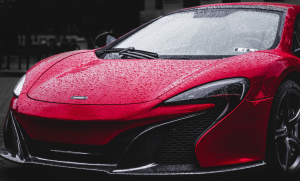
 Supercars have had a long and storied history, and as the years progressed they kept getting faster, more powerful, and more outrageously designed. They also faced many challenges, like the 70s fuel crisis and the recession, but still managed to endure. Their biggest challenge came not from global politics or social circumstances, but from a huge cultural shift, namely the social and political focus on eco friendliness.
Vehicles that swallowed oil fields whole were becoming less acceptable as the zeitgeist focused on the planet’s dwindling resources and the future of generations to come. Supercars needed to become more fuel efficient and environmentally friendly, that is why hybrid technology paved the way for the hybrid supercar future.
The History of the Supercar
Supercars first emerged in the 1970’s with a selection of classic automobiles like the Ferrari 246 GTS Dino, a vehicle iconic enough that its popularity has endured since its debut. They were exciting, aspirational vehicles that stoked the imagination of gearheads over the world with their impressive speed and even more impressive beauty.
However, they were impractical, fuel-guzzling beasts. In the ensuing decades, supercars became ever more powerful, more outrageous, more expensive, and more technologically advanced, but their fundamental impractically did not change much. They were dream machines unsuited to everyday life.
That was fine for a while, but increasing gas prices and increasing environmental awareness incited a shift in the general culture, and car culture was also affected by this change. Governments and consumers demanded vehicles with higher mileage that would save them money and help preserve the environment.
The Dawn of Hybrid Technology
Hybrid vehicles that use electricity to extend their range had been around since the early 20th century—1900, in fact. That was when the Elektromobil, a Lohner-Porsche electric-gasoline hybrid, was first exhibited to the public at the Paris Exposition. That vehicle was far ahead of its time, and it was not until nearly a century later that hybrid vehicles once again reached the mainstream.
The Toyota Prius was introduced in Japan in 1997, but the Honda Insight was the first hybrid vehicle to make it to American shores in 1999. The Prius followed the Insight here a year later and became a sensation, proving that there was a market for this type of fuel-efficient, low-emissions vehicle.
Despite their increasing popularity, hybrids were not seen as real driver’s cars. They were looked down upon by the more hardcore automotive devotees for their strange styling and dull driving experience. For those reasons, as well as the lack of a thundering engine roar, hybrid technology was seen as the potential death of exciting automobiles.
More practical motorists loved them for their mileage, efficiency, and low carbon footprint. Automotive enthusiasts and pragmatists were at odds with each other until the introduction of the 2005 Honda Accord hybrid brought both groups together. It was a fuel efficient vehicle that was fun to drive, and it helped to rehabilitate the staid image of hybrid cars.
Hybrid Supercars Make Their Debut
As hybrid cars became more powerful and more appealing to drive, 2013 saw the emergence of 3 quintessential hybrid supercars: the Porsche 918, the Ferrari LaFerrari, and the McLaren P1. They all boasted impressive horsepower and top speeds, along with lower emissions and better fuel economy than other supercars that had come before.
They were all lauded by the motoring press, and by automotive fans, for retaining the excitement and character of the gasoline-only models made by each manufacturer. Each of them proved that supercars and hybrid technology were a viable combination. They were successful enough that each manufacturer decided to make hybrid vehicles a regular part of their vehicular line-up.
Even more importantly, they inspired other supercar makers to incorporate hybrid vehicles into their fleet. This would ensure that hybrid supercars became a normal part of the automotive spectrum instead of just a small niche.
The New Wave of Hybrid Supercars
The hybrid supercar is not a fad, nearly all the major supercar automakers feature a hybrid vehicle in their present or future lineup. In fact, many auto enthusiasts have speculated that hybrid technology may be the savior of the more powerful V8, V10, and V12 engines they prefer in supercars.
Before the adoption of hybrid technology, more powerful engines were in jeopardy because of strict CO2 regulations in Europe, where these supercar automakers are all based. Many vehicles started using weaker engines enhanced by turbochargers to provide the power necessary for a supercar to be a supercar. Hybrid technology uses a combination of electric and standard engines to produce impressively high horsepower.
The instant power of electric motors also mean incredible acceleration that can match—and in many cases, beat—standard supercars.
These hybrid supercars do not have the range of regular hybrid cars, though they do have more range than other supercars. That increased range and the low emissions make them a little more practical than non-hybrid supercars.
The Future of the Supercar
With the increasing likelihood that many future supercars will be hybrids, non-hybrid supercars could become the minority when the inverse used to be true. So, where does the supercar go from here? If the supercar follows the eco-friendly trend of other vehicles, then all electric or hydrogen fuel cell powered supercars could be next.
An electric supercar could be challenging because of the weight of the batteries required to power the electric motor. Also, keeping them cool could be a problem because electric cars can overheat after sustained driving at high speeds. However, there are already several electric supercar concepts in the works. They come from both established manufacturers, like Porsche and Lamborghini, and smaller companies, like Rimac.
A fuel cell supercar is more unlikely since regular fuel cell vehicles have not gained traction in the automotive marketplace. As many countries are starting the transition to eliminate fossil fuel powered vehicles, the supercar has had to adapt to stay relevant. If they move in this direction, we may see more supercars on the road soon whether it is through supercar rental or hopefully if they become cheaper! If they did not then they would risk becoming fossils themselves. Instead, with the advent of hybrid and electric motor technology, the future of the supercar—and hopefully the future of the environment—looks bright.