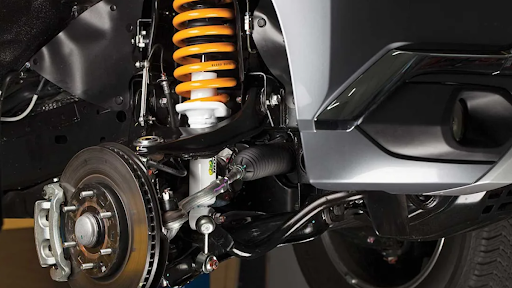
 Your car’s suspension is more important than you think. It not only soaks up potholes, cracks, and road imperfections but also maintains vehicle stability by maximizing the grip through the tires. Without the proper suspension, braking, accelerating, or turning would be impossible. In a word, the suspension is the missing link that connects the wheels to the rest of the car. It provides comfort and safety. While there are different types of vehicle suspension, most revolve around two parts – the car shock absorber and the spring. When driving, it’s the springs that compress to absorb impact, and the shocks control how the springs return to their initial position. Both parts work together to enable smooth and controlled driving.
What Are Shock Absorbers? 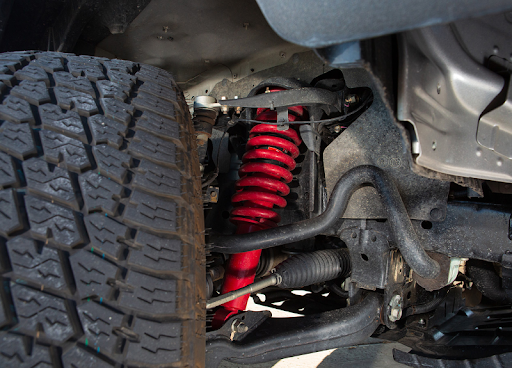
Also called dampers, these are essential suspension components connecting the car chassis and wheels. They dampen or absorb the compression and rebound of springs as the vehicle encounters uneven road surfaces or when executing basic maneuvers such as turning and braking. This ensures the car remains stable and no excessive vibrations are transferred through the chassis and cabin.
What Do They Do?
The main reasons to get a quality car shock absorber are increased comfort and controlled motion of the springs. Shocks also improve handling by limiting vehicle body movement, such as lean and roll when cornering, allowing the vehicle to keep direction. They also reduce tire and suspension wear by keeping tires planted against the road and limiting impact to other parts.
How Do They Work? 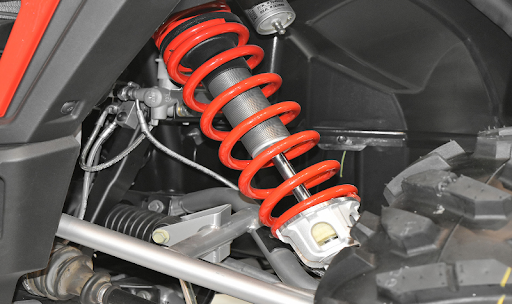
The science behind Shock Absorber is simple. They convert the up and down movement of the springs, or their kinetic energy, into thermal energy or heat, which gets dissipated into the atmosphere through heat exchange.
Most vehicle dampers consist of a sealed tube filled with hydraulic oil or gas and a piston rod positioned inside. This has a piston valve with holes in it. As the car and suspension move up and down, the fluid is forced through the valves, slowing down the movement of the piston and the entire assembly. When road conditions worsen and there are more vibrations through the suspension, the shocks offer more resistance, stabilizing the vehicle.
Parts of a Shock Absorber
With the working principle similar across the range of different types, parts are also similar. They consist of a piston, valve, seals, and bushings housed in an inner cylindrical tube and external shell case. Wound around this is the coil spring.
The piston is the main component. It moves up and down in the chamber filled with hydraulic fluid, thus absorbing shocks and vibrations while driving. At the top of the piston is the valve. It controls the flow of the fluid.
Seals are located around the piston and prevent fluid from leaking. Bushings or bearings at either end of the assembly reduce friction between the piston and the chamber of hydraulic fluid.
Basic Types 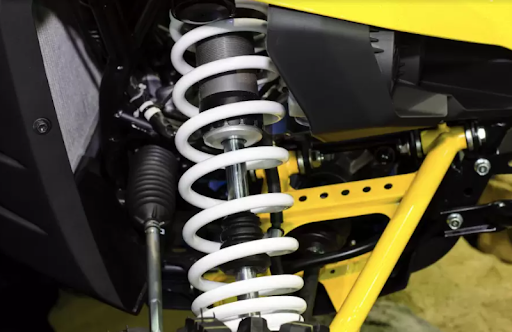
When considering replacements, there are two options – monotube and twin-tube variants. They have slightly different designs which can affect the ride quality, how fast they are to respond, and factors like damping stability and fading. In addition, if installing the shocks yourself, remember that monotubes are easier and faster to get right.
Monotubes
As the name implies, these consist of a single tube with a floating piston separating the gas and hydraulic fluid chambers. The separate gas chamber provides an expansion area for excess fluid to move during compression. When facing rougher roads, the gas chamber allows for additional damping.
Monotubes are gaining popularity. With larger and wider chambers allowing for more fluid and larger valves, they have higher damping capacity. Air cannot penetrate the oil or gas since the two are separated, meaning higher efficiency and better heat dissipation. This is an inverted design that also allows fewer restrictions during installation.
The downsides are the slightly stiffer ride (due to the pressurized gas) and the risk of damaging internal components.
Twin-Tube
Here there are two cylinders – one is inside the shell case, and the other houses the piston valve. Here there is no piston nor a barrier between the oil and gas chambers.
Due to the design, there is less friction, gas pressure can be kept lower (meaning a more comfortable ride) and the shock can maintain sufficient stroke with less effort. In addition, the assembly is less susceptible to external impact.
The downsides are that there is less fluid and a possibility of air getting in (or aeration). The installation angles are also more restrictive, so it requires more effort.
When choosing between monotubes or twin-tube dampers, it boils down to superior handling in monotubes and increased comfort in twin tubes. There’s also the difference in price. Since twin-tube are mass-produced, they’re also cheaper.
Monotubes are better at higher speeds and offer better cornering and braking response, but as mentioned are stiffer. Twin tubes are suitable for everyday driving, but will lose damping ability (in what is known as ‘fading’) faster than monotubes due to the design characteristics.
When to Get Replacements?
Besides the rough and uncomfortable ride, there’s the dangerous impact of reduced braking performance and vehicle stability. While the latter is more obvious at higher speeds, low speeds vibrations and smooth surfaces are definite signs of worn shocks. This can be felt through the steering wheel, and will negatively impact steering and control. Completely worn parts will bottom out, and this you will definitely feel.
Excessive shaking, vibrating, or tires bouncing for extended periods (at any speed) and the vehicle swaying or leaning on the straights is another giveaway. In addition, the vehicle will dive even on mild braking, and the rear end suffers from an excessive squat when applying the gas. Other signs are uneven tire wear, and leaking hydraulic fluid in shocks that have suffered seal damage.
Sourcing replacements is relatively easy. Once you’ve settled on which type is right for your vehicle and driving needs, online retailers offer compatible options for your make and model. Respected brands include Monroe, Bilstein, KYB, Rancho, Koni, and Fox Racing among others, and offer a wide selection for different applications.