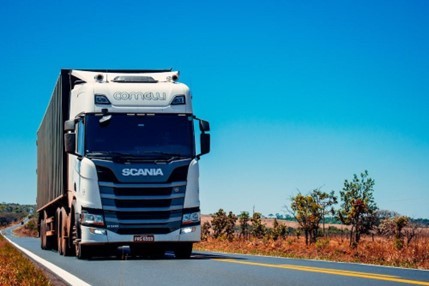
 Autonomous vehicles have been talked about as futuristic technology for decades; for many people, they’re practically in the same category as teleportation. However, the truth is that the world’s first self-driving vehicle debuted in the 1980s. Since then, there’s been sustained interest in developing this technology for practical purposes. Currently, companies like Tesla, Uber, and Google invest heavily in research and development for self-driving vehicles, and some trucking companies are already testing autonomous self-driving semi trucks for their own use.
As with any new technology, there’s a lot of buzz around the advent of self-driving semi trucks. Some news outlets claim that up to three million trucking jobs could be wiped out by driverless trucks, but this is based on a misinterpretation of the data. Even so, it’s still true that many truckers will likely be replaced by autonomous vehicles once they’re put into widespread use. Those who are interested in these developments usually look for a source of news for truck drivers like Truck Driver News, rather than mainstream outlets. These types of sources tend to have a more accurate view of the situation, rather than going for sensational headlines.
Why trucking companies are so interested in autonomous vehicles
For the average person, the idea of having goods delivered by entire fleets of autonomous vehicles can sound pretty cool. For trucking companies, though, there are several practical considerations.
- Improved efficiency
Regardless of the type of vehicle used, trucking companies are constantly concerned with reducing transit times and avoiding delays. This is one thing that self-driving trucks are especially good at, thanks to the inclusion of AI technology. They’re able to calculate the fastest routes in real time; not only do they do this at the start of the trip, but also during the drive. If there’s a traffic incident or other delay at any point, the truck will be able to recalculate its route to find a faster one.
There are also logistical benefits that improve efficiency for trucking companies. For example, the trucks provide real-time data on deliveries and locations, which helps with managing inventory levels.
- Reduced costs
Profit is the name of the game in any industry, and one way to drive profits up is to reduce cost. This makes self-driving trucks more appealing than ever to the trucking industry, since they drastically reduce labor costs. Even though drivers do complete tasks besides just driving, these only represent a fraction of the job. Things like customer service relations or loading/unloading the truck don’t necessarily have to be done by the drivers; even though there are still some logistical difficulties to work out, there’s no doubt that solutions will be found.
Another way to reduce costs is to decrease fuel expenses, as well as repairs that are needed due to normal wear and tear. Since the self-driving trucks will be able to consistently optimize driving patterns and routes, this will result in slightly less fuel and mileage being needed per trip.
- Increased safety
Even with the safest truck drivers, there will always be a risk of human error. However, not all drivers are particularly safe. There are instances of speeding, distracted driving, or driving under the influence. This causes slower reaction times and poor judgement calls, which sometimes lead to accidents or even fatalities. Autonomous trucks, on the other hand, won’t get distracted or have an “off day” – they’re constantly monitoring environmental conditions, and responding to them with the safety of other drivers in mind. Reaction times are also shorter, and course corrections are more accurate compared to human drivers.
Because driverless trucks are lower-risk compared to those driven by humans, insurance premiums are usually also lower. These trucks don’t just save companies money thanks to logistical considerations, but also because they’re safer.
Challenges that self-driving trucks face in 2023
Even though huge strides have been made to get driverless trucks onto roads, there are still several hurdles to overcome before they can be fully implemented.
- Need for development and testing
The Society of Automotive Engineers has established five different levels of self-driving vehicles, with level 0 offering no automation, and level 5 offering full automation. Currently, the most advanced autonomous trucks on the road are at level 4 – the vehicles can complete all driving tasks, but only in certain conditions (such as on a freeway). Level 5 vehicles are being tested here and there, but they’re many years away from being ready for the road.
- Infrastructure needs
Self-driving trucks rely heavily on infrastructure like traffic signals or road signs to operate effectively. If one of these is broken or missing, they would miss a vital cue and potentially create issues for people in other vehicles. Likewise, poorly maintained roads would be challenging for autonomous vehicles to navigate.
- Public acceptance
Just like with any other new technology, some people can’t wait for driverless trucks to arrive, while others think they’ll put the public at risk. Many trucking companies make deliveries directly to consumers as well as to other businesses, so it’s important that these trucks are generally accepted before they can be put into widespread use. With the wrong approach to introducing self-driving technology to the public, there could be boycotts of certain companies that use autonomous vehicles for deliveries. Because of this, companies like Waymo have launched campaigns to educate the public about the benefits of self-driving trucks.
- Regulatory issues
Regulations governing self-driving trucks are confusing, and in some cases not very friendly. Each state sets its own rules, meaning inter-state trips may or may not be possible along certain routes. Some companies have started collaborating with government agencies to help establish more consistent guidelines for autonomous vehicles. Upcoming regulations will likely be slow to get approved, but in time there should be a nationwide consensus on what is and isn’t allowed for self-driving technology.
The takeaway
Even though fully autonomous trucks aren’t ready to be rolled out, self-driving technology is already being used by companies in the US. With ongoing developments and more standardized regulations, it’s just a matter of time before self-driving semi trucks become a common sight on America’s highways.