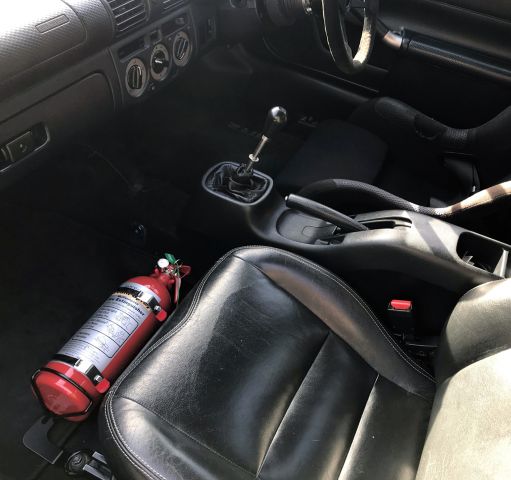
Most drivers recognize the devastating risk of an automotive fire. To protect themselves, many toss a portable extinguisher into the trunk, glovebox, or under the passenger seat. However, this well-intentioned choice introduces a critical, often ignored danger. In the chaos of a sudden stop or collision, an unsecured extinguisher transforms into a high-velocity weapon. Solving this requires moving past casual storage and adopting structural mounting techniques that guarantee absolute safety and instant access.
Automotive safety enthusiasts can also explore our article on why a vehicle history check matters more than a test drive, which highlights other often-overlooked factors that impact vehicle safety and ownership.
The Physics of a Cabin Projectile
Understanding this threat requires a basic look at kinetic energy. When a vehicle traveling at highway speeds stops abruptly, anything inside the cabin not bolted down continues moving forward at the original speed. A standard two-pound extinguisher can exert hundreds of pounds of blunt force upon impact during a crash.
If left loose, this dense metal cylinder can shatter glass, destroy interior panels, or inflict fatal trauma on occupants. Even rolling around in a trunk can damage the discharge valve. This constant friction often causes a slow leak, depressurizing the unit and rendering it completely useless when an actual fire ignites.
The Safest Mounting Location
The absolute safest place to mount a fire extinguisher in a car is directly in front of the driver or passenger seat. This specific location ensures the device is instantly accessible without forcing the driver to exit the vehicle or search the trunk during a time-critical emergency. Furthermore, keeping the heavy metal cylinder bolted low to the floorpan drastically minimizes the kinetic risk of it becoming an airborne projectile during a severe collision.
Drivers interested in vehicle preparedness may also enjoy our coverage of year-round vehicle maintenance and safety practices to help prevent emergencies before they occur.
Structural Integrity and Safety Standards
Eliminating this hidden danger requires mounting hardware built to strict engineering standards. Flimsy plastic clips or universal fabric straps are entirely inadequate for restraining dense, pressurized cylinders during high-impact automotive events. Instead, safety-conscious drivers should demand metal mounts designed specifically for their vehicle’s chassis.
When evaluating track-proven fire safety integrations, industry experts look toward purpose-built solutions like a laser-cut steel vehicle fire extinguisher bracket engineered by F4Fabrications. By utilizing the existing factory seat bolts, these systems create a seamless, rock-solid mount without requiring any invasive drilling. This standard of structural design prevents the safety device from interfering with passenger legroom or critical pedal operation while successfully withstanding gravitational forces.
The National Fire Protection Association (NFPA) provides fire safety standards and educational resources that help vehicle owners and businesses understand proper fire prevention and emergency preparedness practices.
True automotive preparedness goes beyond simply purchasing emergency equipment. It is about anticipating the violent physics of a crash and controlling every variable within the cabin. Integrating your tools directly into the vehicle’s structural DNA ensures that the equipment designed to save your life never becomes the very thing that causes you harm.