 When it comes to automotive safety, few systems are as critical as the braking system. While components like brake pads and rotors often receive the most attention, brake lines play an equally vital role in ensuring your vehicle stops effectively. Understanding the function and maintenance of brake lines can not only enhance your car’s performance but also keep you safe on the road. Follow along as we explore this Guide to Brake Lines.
What Are Brake Lines in a Car?
Brake lines in a car are the hydraulic conduits that transfer brake fluid from the master cylinder to the brake calipers or wheel cylinders at each wheel. When you press the brake pedal, fluid is forced through these lines, activating the brakes and slowing down the vehicle. Without properly functioning car brake lines, the entire braking system can fail, leading to dangerous situations.
The Role of Brake Lines
Brake lines are responsible for maintaining hydraulic pressure within the braking system. They must be robust enough to handle high-pressure fluid without leaking or bursting. Any compromise in the integrity of the brake lines can lead to a loss of braking power, making regular inspection and maintenance crucial.
Types of Brake Lines
There are primarily two types of brake lines used in modern vehicles:
- Rubber Brake Lines
- Stainless Steel Braided Brake Lines
Rubber Brake Lines
Rubber brake lines are the standard in most production cars. They are flexible, cost-effective, and sufficient for everyday driving conditions. However, rubber can degrade over time due to exposure to heat, moisture, and chemicals, leading to softening or cracking.
Advantages:
- Cost-effective
- Flexible and easy to install
- Adequate for standard driving conditions
Disadvantages:
- Prone to degradation over time
- Can expand under high pressure, leading to a spongy brake feel
Stainless Steel Braided Brake Lines
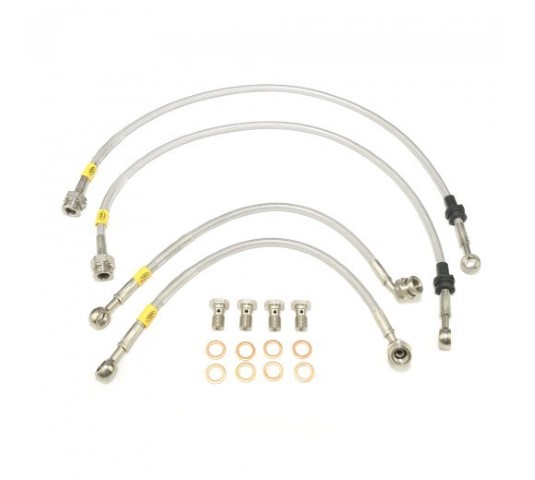
For those seeking enhanced performance, stainless steel braided brake lines are an excellent upgrade. They consist of an inner Teflon® layer surrounded by a braided stainless steel mesh, providing superior strength and resistance to expansion.
Advantages:
- Improved brake pedal feel
- Resistant to expansion under pressure
- More durable and longer-lasting
Disadvantages:
- Higher cost
- Less flexible, making installation more challenging
Signs of Brake Line Problems
Recognizing the warning signs of failing brake lines can prevent accidents and costly repairs. Here are some indicators that your brake lines may need attention:
Leaks
One of the most apparent signs is a brake fluid leak. If you notice a puddle of fluid under your car or a drop in brake fluid levels, it’s essential to inspect the brake lines for leaks or cracks.
Spongy Brake Pedal
A soft or spongy feeling when pressing the brake pedal often indicates that air has entered the brake lines, usually due to a leak. This condition reduces hydraulic pressure, compromising braking efficiency.
Visible Damage
Regularly inspect your car brake lines for visible signs of wear, such as cracks, corrosion, or abrasions. Any physical damage warrants immediate replacement.
Maintenance and Replacement
Proper maintenance of brake lines is crucial for vehicle safety. Here’s what you need to know:
Regular Inspections
- Visual Checks: Periodically inspect brake lines for signs of wear or damage.
- Professional Inspections: Have your brake system inspected by a professional at least once a year.
When to Replace Brake Lines
- Age: Rubber brake lines typically last about six years. Consider replacing them after this period.
- Performance Upgrades: If you’re enhancing your car’s performance, upgrading to stainless steel braided brake lines is advisable.
Choosing the Right Brake Lines
When selecting brake lines, consider your driving conditions and performance needs. For daily commuting, rubber brake lines may suffice. However, for high-performance driving or towing, stainless steel braided lines offer added reliability.
Upgrading Brake Lines for Enhanced Performance
Upgrading your brake lines in a car can significantly improve braking response and overall safety. Stainless steel braided brake lines are a popular choice among enthusiasts and professional racers alike.
Benefits of Upgrading
- Improved Pedal Feel: Less expansion under pressure leads to a firmer brake pedal.
- Enhanced Durability: Resistant to wear and environmental factors.
- Better Performance: Consistent braking response under extreme conditions.
Installation Considerations
While some seasoned DIYers may feel comfortable replacing brake lines, it’s often recommended to have a professional handle the installation. Proper installation ensures the brake lines function correctly and safely.
Bleeding the Brake System
After installing new brake lines, it’s crucial to bleed the brake system to remove any air pockets. Air in the brake lines can lead to decreased hydraulic pressure and reduced braking efficiency.
The Impact of Brake Lines on Overall Braking Performance
Brake lines might not be the most glamorous component of your car, but their impact on braking performance is undeniable.
Heat Resistance
High-performance driving generates significant heat. Stainless steel braided brake lines can withstand higher temperatures without degrading, maintaining consistent brake performance.
Longevity
Upgraded brake lines often last longer than their rubber counterparts, providing better value over time despite the higher initial cost.
Environmental Factors Affecting Brake Lines
Various environmental factors can affect the lifespan and performance of your car brake lines.
Corrosion
Exposure to road salts and moisture can cause metal components to corrode. Stainless steel braided brake lines offer better resistance to corrosion compared to standard rubber lines.
UV Exposure
Prolonged exposure to sunlight can degrade rubber brake lines. While this is less of an issue for components under the car, it’s still a factor to consider, especially for off-road vehicles.
Conclusion
Brake lines are a critical component of your vehicle’s braking system. Whether you’re an everyday driver or a performance enthusiast, understanding the importance of maintaining and upgrading your brake lines can make a significant difference in safety and performance.
Remember, when it comes to your car’s braking system, never compromise on quality or maintenance. Your safety depends on it.