Planning a cross-country road trip feels exciting until the full bill comes into view. Most travelers focus on gas prices first, which makes sense. Fuel is visible. It changes from exit to exit. It hits the card every few hundred miles.
But fuel is only one slice of what driving across America actually costs.
The real number includes the expenses drivers see during the trip – gas, tolls, food, and lodging – plus the ownership costs that follow the vehicle everywhere. Maintenance, tires, depreciation, insurance, registration fees, taxes, and repairs all shape the true cost per mile. Some of those costs depend on the route. Others depend heavily on where the car is registered in the first place.
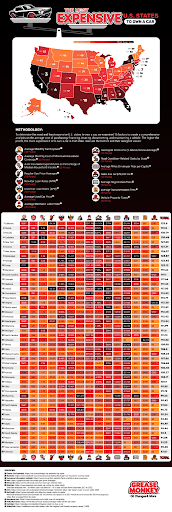
That is why state-level cost data matters. Grease Monkey’s study on driving costs across America shows how widely ownership expenses can vary from one state to another, using factors such as insurance, gas prices, repair premiums, registration fees, documentation fees, vehicle property taxes, and average miles driven.
A road trip budget, then, is not just a gas estimate. It is a fuller picture of what it costs to use, maintain, insure, and own a vehicle while covering thousands of miles.
Drivers planning long-distance travel may also benefit from reviewing how routine vehicle maintenance helps prevent costly road trip breakdowns before heading across the country.
What Driving Across America Really Costs
Fuel is the most visible expense on any cross-country trip, but it is rarely the largest once the full picture is considered. Gas station charges are easy to notice, especially when prices change from state to state, but they do not capture the full cost of using a vehicle for thousands of miles.
Tolls can add another major expense, especially on routes through turnpikes, bridges, tunnels, and dense interstate corridors. Food and lodging often become the biggest combined cost on multi-day trips, particularly for families or drivers who need several overnight stops. Then there are the costs that do not always show up during the trip itself: maintenance, tire wear, brake wear, depreciation, insurance, registration fees, and taxes.
A 3,000-mile trip does not just require fuel. It also brings the next oil change closer, adds wear to tires and brakes, increases mileage-related depreciation, and relies on insurance and registration costs that were already built into the vehicle’s annual ownership burden. That is why a road trip budget based only on gas, hotels, and meals usually understates the real cost.
Cost per mile is the clearest way to compare all of this. It turns scattered expenses into one useful figure, instead of leaving drivers with a pile of receipts and a budget that looked accurate only before the trip started.
The Costs Most Drivers Plan for First
Most drivers start building a road trip budget with the expenses tied directly to distance: fuel and tolls. That instinct is reasonable. These are the costs most closely connected to the route itself.
The problem is that they are only the first layer.
Fuel and Tolls on a Cross-Country Trip
Gas prices and fuel economy are the first variables most drivers examine, and for good reason. A vehicle getting 25 miles per gallon will burn through fuel at a very different rate than one averaging 17. Across thousands of miles, that gap becomes real money.
On a 3,000-mile route, the difference between 20 and 30 miles per gallon can mean an extra $150 to $200 in fuel costs, depending on current gas prices. A heavier SUV, roof cargo box, mountain route, or high-speed interstate stretch can widen that gap even more.
Tolls add another layer that varies sharply by route. Drivers crossing parts of the Northeast through states like New Jersey, Pennsylvania, and New York may spend $60 to $100 or more in tolls alone. Other routes, such as I-40 through the South or I-90 across the northern plains, may involve fewer toll roads.
That is why a route that looks similar in mileage can cost more once the actual roads, bridges, tunnels, and turnpikes are factored in.
Food and Lodging Add Up Faster Than Expected
Once fuel and tolls are accounted for, lodging and food frequently surprise drivers as the largest combined expense on longer trips. Budget motels along major interstates often run $70 to $120 per night, and prices can rise quickly near national parks, popular cities, and peak-season destinations.
Camping reduces that figure, but it does not erase the cost. Campgrounds, gear, showers, laundry, park entrance fees, and occasional hotel nights still belong in the budget.
Food costs vary just as widely. Cooking at campsites or packing cooler meals can cut daily spending significantly compared with eating at restaurants along the route. A family eating three meals a day on the road can easily spend more on food than fuel across certain stretches.
That is where many road trip budgets start to drift. Drivers estimate the gas correctly, then underestimate the everyday costs that come with being away from home.
The Hidden Cost Per Mile Most Budgets Miss
Fuel receipts and hotel charges are easy to track because they show up immediately. The more expensive layer often sits beneath those numbers, built into the vehicle itself.
This is where national driving-cost research becomes useful. According to AAA’s driving cost research, the real cost of driving includes expenses such as fuel, maintenance, tires, insurance, license, registration, taxes, finance charges, and depreciation.
That fuller view explains why fuel-only estimates tend to come in low. Gas may be the easiest cost to calculate, but it is not the only cost that grows with use.
Maintenance and Wear Do Not Stop on Vacation
Every mile driven adds wear to tires, brakes, oil, fluids, suspension components, and other consumables. Long-distance driving does not pause that process. It concentrates it.
A road trip that adds 3,000 miles to an odometer pulls the next oil change, tire rotation, brake inspection, and scheduled maintenance interval closer. Those service costs may not appear during the trip, but the trip still caused part of them.
That makes maintenance one of the more overlooked cost-per-mile categories. A driver may return home thinking the trip cost only fuel, food, and hotels, then face a service bill two weeks later that was partly created by the same journey.
Depreciation Turns Every Long Trip Into Value Loss
Depreciation is the ownership cost that rarely feels real in the moment. No one pays a depreciation bill at a gas station. No hotel receipt shows the vehicle’s resale value dropping overnight.
Still, every mile matters.
Adding thousands of miles to an odometer moves a vehicle closer to the next resale threshold. A car with 49,000 miles looks different to buyers than one with 52,000. A vehicle that crosses 100,000 miles during a long trip may take an even sharper perceived value hit.
That loss is part of the trip’s real cost, even when no cash changes hands during travel. For newer vehicles, depreciation can outweigh fuel as a cost-per-mile factor. For older vehicles, the depreciation hit may be smaller, but repair risk often rises in its place.
Insurance and Roadside Risk Vary by State
Insurance is a fixed ownership cost that continues regardless of how far a driver travels, but the amount drivers pay depends heavily on where the vehicle is registered. That is one reason Grease Monkey’s state-by-state study fits naturally into any discussion of cross-country driving costs.
Two drivers can take the same route in similar vehicles and still face very different annual ownership costs because their home states shape what they pay for insurance, fees, taxes, repairs, and other vehicle expenses.
Grease Monkey’s analysis shows that insurance is one of the major forces behind state-level cost differences. Florida and Louisiana, for example, rank among the most expensive states overall, and insurance-related costs are a major reason why. New York also ranks high, even though many residents in dense urban areas avoid car ownership altogether.
That distinction matters. Lower ownership rates do not always mean lower ownership costs. For the drivers who do keep a car in expensive states, the financial burden can remain high.
Why Your Home State Changes the Total Bill
Where a driver lives shapes the cost of a cross-country trip in ways that go well beyond the route itself. State-level fees, insurance requirements, registration structures, fuel prices, repair costs, and taxes all feed into the per-mile cost of owning and using a vehicle.
This is where road-trip budgeting and ownership-cost data overlap. The route determines what the trip costs this week. The home state helps determine what the car costs all year.
Registration and Title Fees Are Not Minor Details
State registration and title fees sit in the category drivers often treat as fixed and forgettable. They are neither.
These fees vary sharply from state to state, and for drivers registering a new vehicle or relocating before a trip, they can add hundreds of dollars to the ownership picture before the first mile is driven.
Some states charge relatively modest flat registration fees. Others calculate fees based on vehicle weight, age, assessed value, or other factors. Title fees, documentation fees, local taxes, and renewal charges can widen the difference further.
A driver may not think about these costs while crossing state lines, but they still shape the long-term cost of keeping a vehicle ready for trips in the first place.
Some States Make Car Ownership Much Pricier
Registration and title fees are only part of what creates cost differences at the state level. Grease Monkey’s study compares states using 15 cost factors, including average monthly car payments, minimum insurance costs, gas prices, used car prices, mechanic labor rates, repair premiums, road-condition-related costs, miles driven per capita, sales tax, registration fees, documentation fees, and vehicle property taxes.
That broader view matters because no single cost tells the whole story. The cheapest state for gas is not always the cheapest state to own a car. A low registration fee does not cancel out high insurance. A moderate insurance premium may still be paired with expensive repairs, higher vehicle taxes, or poor road conditions that increase wear.
The study ranks California, Florida, Nevada, Louisiana, and New York among the most expensive states overall. Each gets there through a different mix of costs. California combines high vehicle prices, gas costs, and fees. Florida’s ranking is strongly shaped by insurance and ownership-related expenses. Louisiana stands out for steep insurance costs and broader vehicle ownership burdens. New York’s high ranking shows that even places with stronger transit alternatives can be costly for those who do own cars.
On the other end, states such as Vermont, New Hampshire, Montana, Maine, and South Dakota rank among the least expensive in Grease Monkey’s analysis. That contrast is useful because some of those states still require heavy car use. In other words, car dependency and car ownership cost are related, but they are not the same thing.
Rural Drivers May Need More Cars, Even in Lower-Cost States
State cost rankings can also reveal a useful tension. Some rural states are less expensive places to own a vehicle, but households there may need more than one car because daily life is spread out.
A household in Montana may face lower overall ownership costs than a household in California or Florida, but that does not mean transportation is effortless. Long distances, limited public transit, winter driving conditions, and fewer nearby services can make personal vehicles essential.
For road trips, this matters because rural drivers may already be carrying higher total household vehicle exposure, even if each individual vehicle costs less to own. A family with two or three necessary vehicles still has to maintain, insure, register, and eventually replace them.
That is the difference between cost per vehicle and transportation burden. Both matter.
When Driving Is Cheaper Than Flying
The driving versus flying calculation changes depending on who is making the trip. For a solo traveler, flying often wins once gas prices, lodging costs, meals, time, and vehicle wear are all considered. For a family of four, the math can flip quickly.
A cross-country trip by car spreads fixed costs like fuel and tolls across multiple passengers. A family that would spend $800 to $1,200 on plane tickets might complete the same journey by car for a comparable or lower out-of-pocket cost, depending on the route.
But the comparison becomes less favorable when overnight stops are required. Each additional hotel night may add $70 to $120 or more to the budget. Meals on the road can add another large daily expense. Vehicle wear, depreciation, and maintenance still accumulate in the background.
The fairest comparison is not airfare versus gas. It is airfare, ground transportation, baggage, and airport costs versus fuel, tolls, lodging, food, maintenance, depreciation, and the driver’s time.
How to Build a More Honest Road Trip Budget
A realistic road trip budget starts with the obvious expenses, then adds the costs that most drivers forget. The goal is not to make driving seem unaffordable. It is to avoid building a budget around only the easiest number to estimate.
Start with the route. Estimate total mileage, likely fuel economy, current gas prices, and toll exposure. Then add lodging and food based on the number of travel days, not just the number of miles.
After that, add the ownership layer. A long trip accelerates maintenance, adds tire and brake wear, increases mileage-related depreciation, and relies on insurance and registration costs that exist before the trip begins.
A simple road trip budget should include:
| Budget Item | Why It Matters |
| Fuel | Changes with mileage, gas prices, vehicle type, and driving conditions |
| Tolls | Varies sharply by route and region |
| Food | Often underestimated on multi-day trips |
| Lodging | Can become one of the largest costs |
| Maintenance | Long trips move service intervals closer |
| Tires and brakes | Wear accumulates with every mile |
| Depreciation | Added mileage reduces resale value |
| Insurance | State and driver profile affect annual cost |
| Registration and fees | Home-state costs shape ownership burden |
| Emergency buffer | Repairs, delays, weather, and route changes happen |
Thinking this way makes the final number less flattering, but more useful.
What to Budget Before You Hit the Road
A realistic road trip budget goes well beyond gas prices. The full picture includes fuel, tolls, food, lodging, maintenance, depreciation, insurance, registration fees, taxes, and repairs. Each category carries real weight in the final total.
Grease Monkey’s state-level data adds an important reminder: the cost of driving is not the same everywhere. California, Florida, Nevada, Louisiana, and New York sit at the high end of ownership costs, while states like Vermont, New Hampshire, Montana, Maine, and South Dakota are much lower. Those differences matter because they shape what drivers pay before they ever leave the driveway.
AAA’s cost-per-mile approach points in the same direction. Driving has visible costs and hidden costs. Fuel is only the beginning.
Drivers who account for the complete range of expenses before departure tend to arrive at far more accurate estimates and far fewer financial surprises along the way. A cross-country road trip can still be worth every mile. It just deserves a budget that reflects what those miles really cost.